There is a point near the end of a film, commercial, music video, or branded project when the pieces start to come together. The footage has been shot. The edit has found its rhythm. Sound, graphics, and effects move the project closer to the version people will actually see.
Color finishing is part of that final process, but it is not simply about making an image more polished or visually appealing. At its best, it helps carry the story.
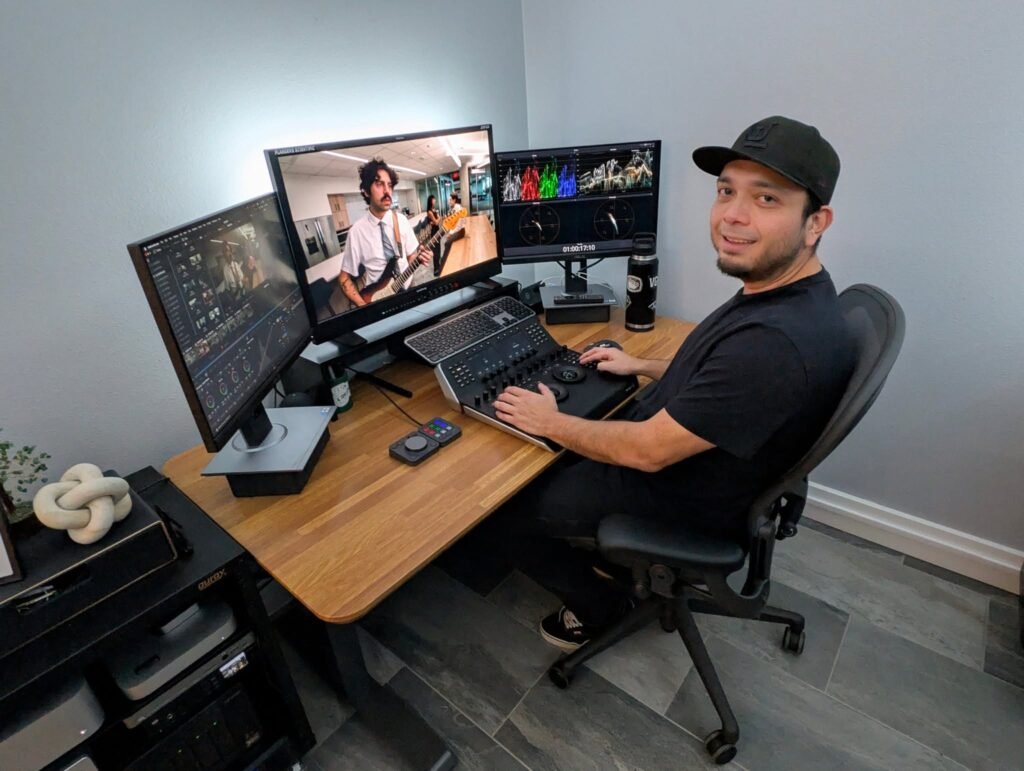
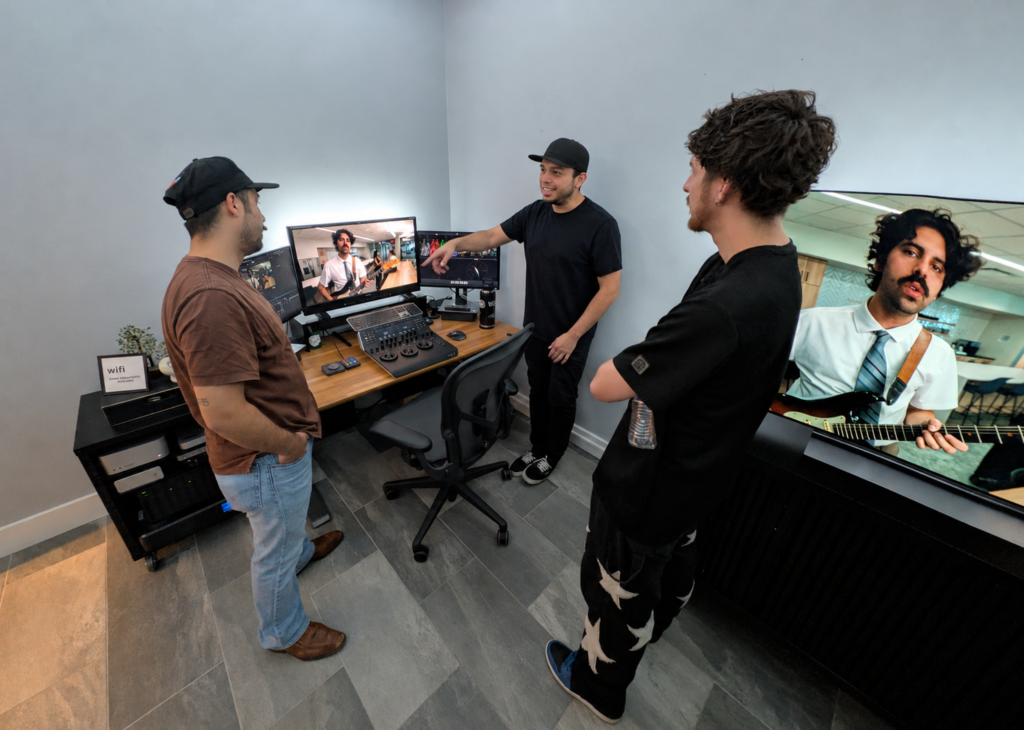
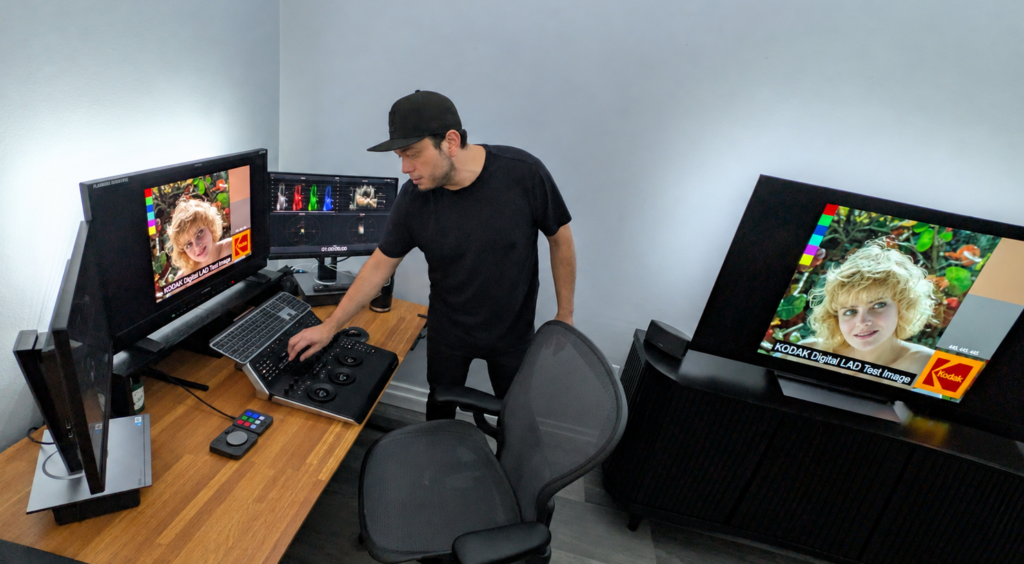
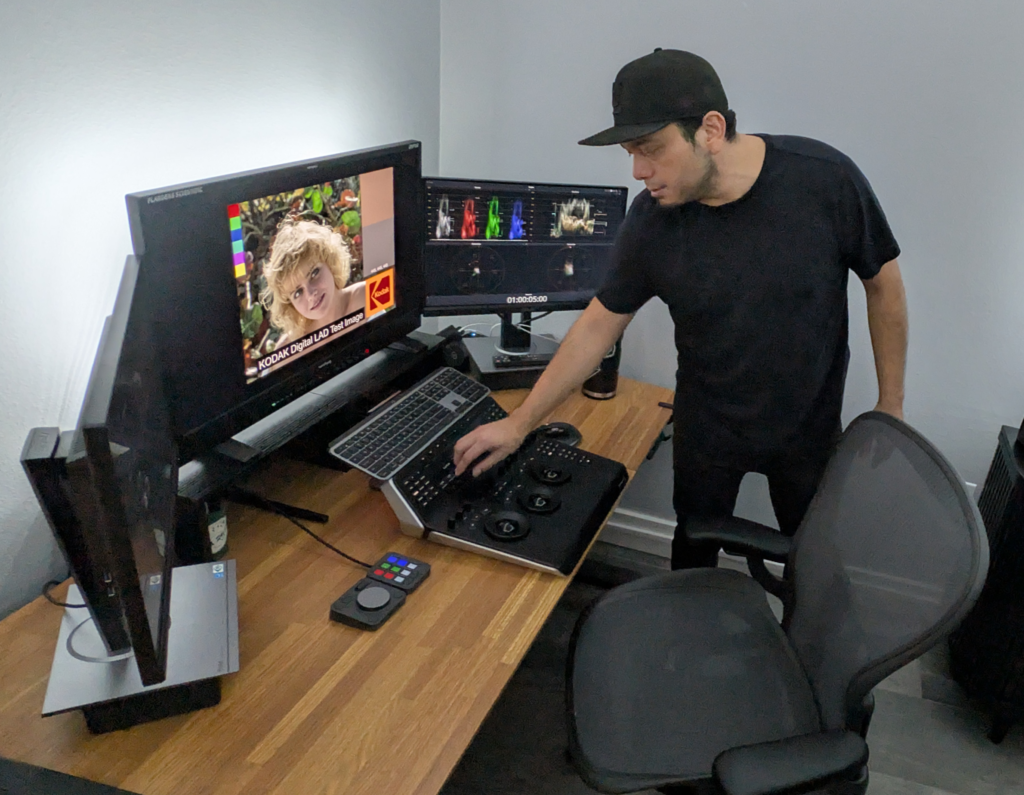
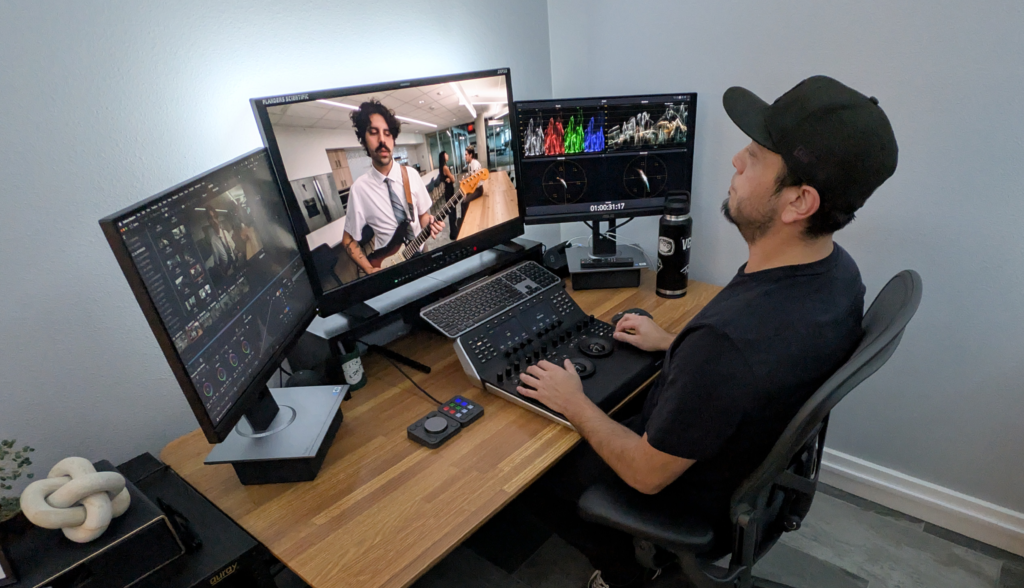
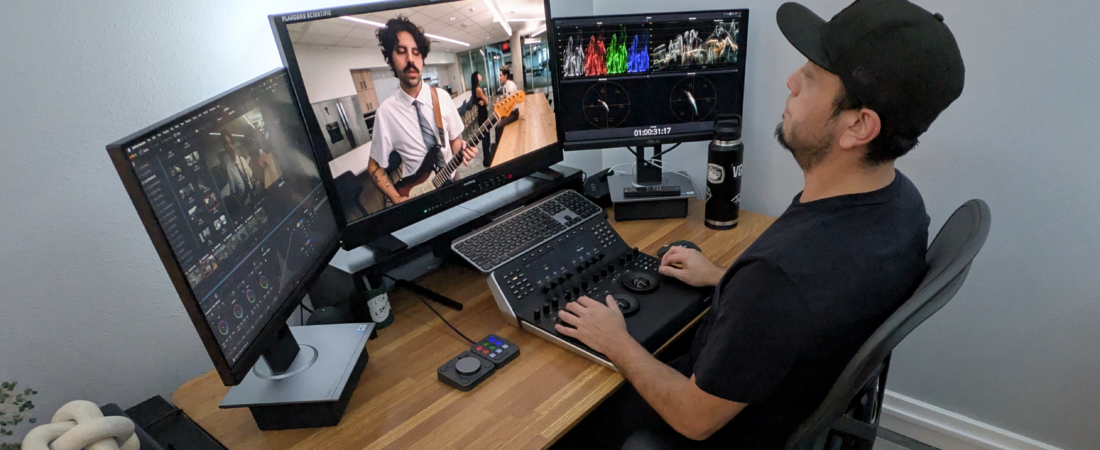
That is the work happening at Suite Bread, a Pearland-based color house serving filmmakers, cinematographers, directors, agencies, producers, and production teams across the Houston region as well as remote clients. The studio focuses on color grading for projects ranging from corporate work and commercials to music videos, short films, and features.
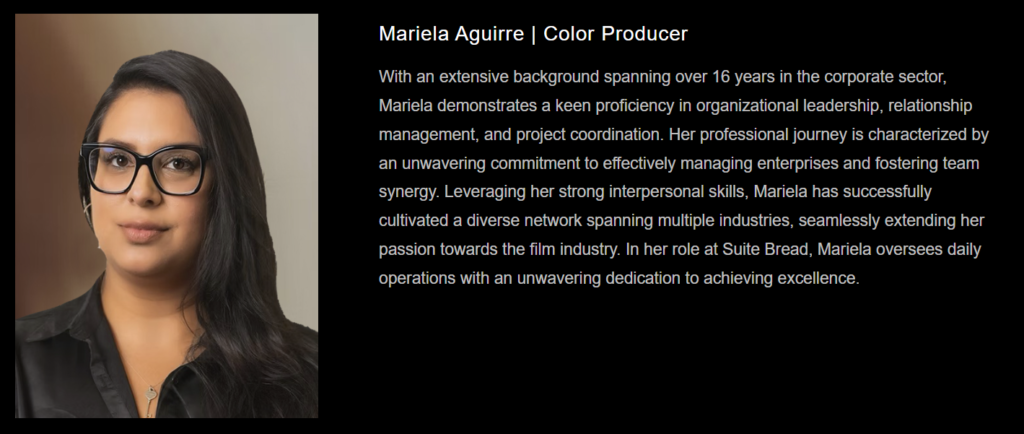
Suite Bread is also building something larger than a service business. Color Producer Mariela Aguirre and the studio’s colorists want the space to become part of the infrastructure and community connection Houston-area filmmakers need to do stronger work.
“We have the creatives.” Aguirre said. “Now it’s building more of the infrastructure and the layout of the land for filmmakers to really thrive here.”
Built Around a Partnership
Aguirre is a Houston native with deep roots on the city’s south side. Her path into film and post-production was not traditional, but it made sense once the right opportunity presented itself.
Before Suite Bread, Aguirre spent 16 years working across corporate operations, including legal, accounting, customer service, executive support, production and operations, and design. She later launched a business consulting and digital marketing company, followed by a nonprofit. She had experience building systems, managing people, handling client needs, and understanding the moving parts that allow a business to operate.
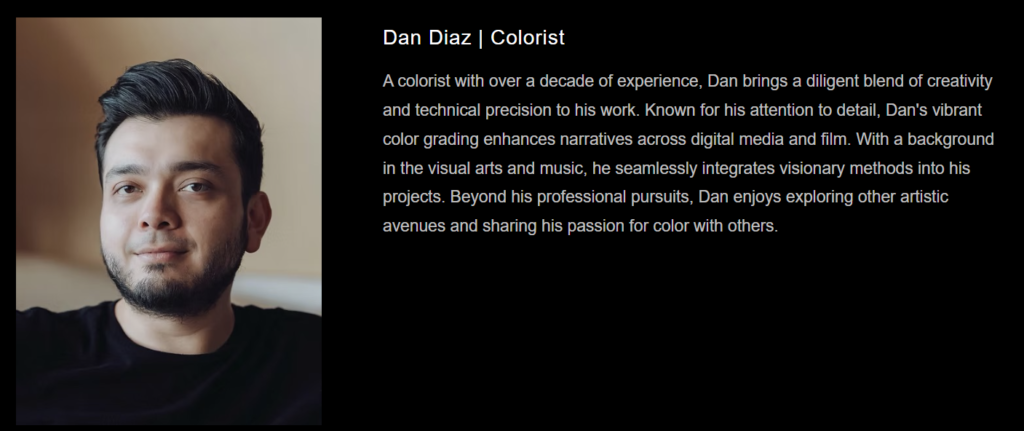
She had also known colorist Dan Diaz for more than 26 years.
When the local company where Diaz had been working closed after its owner moved, he found himself back in the freelance world. He wanted to focus on color grading, but had little interest in managing the accounting, logistics, client communication, and business operations required to build a sustainable company around that work.
Aguirre saw a clear division of strengths.
“I told him, ‘Why don’t you let me take that on?’” she said. “I’ll have all the business side and the logistics, operations, all of that. Now you just get to color grade.”
That conversation became the foundation of Suite Bread.
The name itself is personal. It is a play on a combination of studio suite and pan dulce: sweet bread, connecting the studio’s work to a familiar cultural reference for Aguirre and Diaz, who are both of Mexican descent. The name came together during a brainstorming session in a coffee shop and immediately felt right.
Today, Aguirre handles the business side, client experience, and growth of the company. The studio’s colorists are able to focus on the craft, while clients have a dedicated partner helping move their projects through the finishing process.
For Aguirre, building Suite Bread is also tied to a larger desire to create something useful in a growing but still underserved production market.
“I like to build something from scratch,” she said. “I think there’s so much to invest here.”
The Work Behind the Image
Suite Bread is a color house. Its work centers on color grading and color finishing, the process of refining and shaping the image after a project has been shot and edited.
For a general audience, the simplest way to explain color work is that it helps make an image consistent from one shot to the next. A scene shot in changing light, across different locations, or over several production days can carry small visual differences that pull an audience out of the story. Color finishing helps bring those images into alignment.
But the work can go much further.
A colorist can shape contrast, saturation, exposure, skin tones, texture, visual separation, and the overall mood of a scene. The goal is not to override the work done by the cinematographer or director. It is to help carry that work through to the final image.
Aguirre describes color grading as a partnership with the rest of the production team.
“It’s the DP with lighting, with production design, with makeup,” she said. “It’s all of these different areas that create the image on screen, and we’re just part of that.”
That team mindset is central to how Suite Bread approaches its work. Rather than treating color as a final correction applied after every other creative decision has been made, the studio wants to help clients think about color as part of the larger visual plan.
One project Aguirre described involved a local thriller short film. During a dramatic scene, a visible outlet and cord pulled attention away from the story. The finishing work helped remove the distraction and keep the viewer focused on the character and the moment.
“The goal is to keep the audience attached to the story,” Aguirre said.
A Colorist’s Perspective
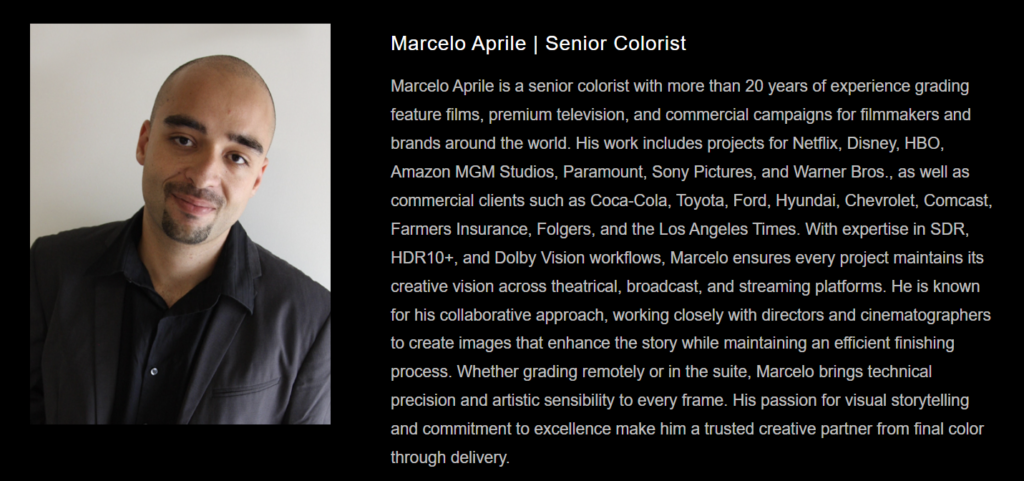
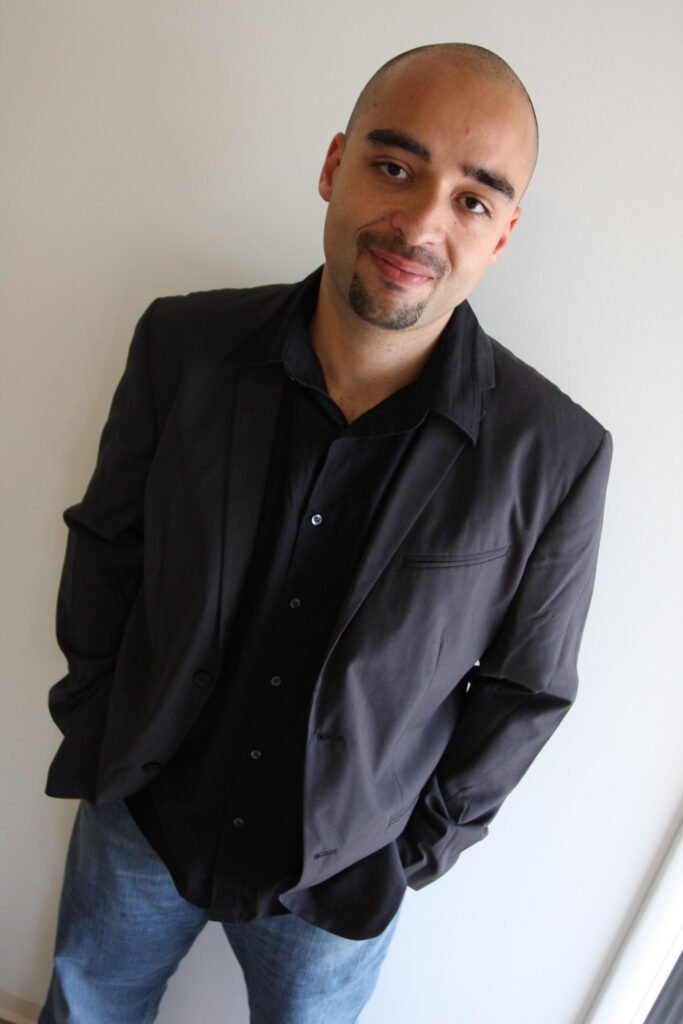
Suite Bread just announced the addition of Los Angeles-based Senior Colorist Marcelo Aprile to their team. He brings more than two decades of experience in post-production. His career began in 2001 at a major Los Angeles post-production facility, where he eventually moved into color grading as a specialization. He later worked with other companies, helped open a company with partners, spent three years working in Brazil, and worked with post-production operations including Deluxe and Technicolor before moving into freelance work.
Now based in Los Angeles, Aprile is joining Suite Bread as a freelance senior colorist, bringing that experience to projects coming through the Pearland studio.
Aprile’s approach to color is grounded in story and collaboration.
“The way I see what I do is we’re storytellers,” he said. “We’re trying to help the filmmakers tell their story.”
Some clients come in with reference images, film scenes, or a color palette they want to pursue. Others arrive with footage and a broad request to make it look good. In either case, Aprile starts with a conversation about what the project needs to communicate.
He asks about the mood of the story, what a character is experiencing, and what the audience should understand in a particular moment. Sometimes, he said, the question is what the audience should not understand yet.
Those conversations can guide choices around contrast, color, saturation, texture, and the overall feel of an image. A scene can be sad without looking traditionally dark. A brighter image can create an expectation that the story then turns on its head. Those choices may not be obvious to the viewer, but they can shape the way a scene feels.
“I like to play with that dichotomy,” Aprile said. “It’s a sad scene, but my color is bright and happy. You go through the shot and think, ‘This is going to be happy,’ and then it is unexpectedly very sad.”
For Aprile, color grading is not just about making footage look better. It is about using the image to reinforce the story already being told.
He recently worked on a feature where he began to build a grittier, more contrast-heavy feeling to reflect the character’s struggle. As the story moved forward, the image became softer, warmer, and more colorful as the character’s experience changed.
The work was meant to be subtle, allowing the audience to feel the progression without being told exactly what was happening.
“We were trying to get you there slowly,” Aprile said. That work drove the story visually and had an impact.
A Better Process Starts Early
Although color work often happens near the end of a project, Suite Bread believes some of the most important conversations should happen much earlier.
Aprile noted the ideal time to bring a colorist into the process is during pre-production, when a team is still discussing the visual goals for the project. That can include understanding camera and lens choices, lighting, production design, wardrobe, makeup, exposure, texture, and how a final image needs to feel.
The colorist is there as part of the team together working toward the final result. The goal is to work alongside other specialists, offering another point of experience that can help avoid unnecessary complications later.
Aprile said that collaboration can save time, money, and frustration. A production team may be able to address something practically on set that would otherwise require a more expensive fix in post-production. In other cases, the team can make an informed decision about whether a creative choice will work better through lighting, camera work, visual effects, or color finishing.
“We all gain from exchanging ideas,” he added.
The studio can absolutely work with projects that arrive after the edit is complete, but early involvement gives the team more context and creates a clearer path to the result the client wants.
A Place to Build
Suite Bread works with a broad range of clients and project types. Houston’s market includes a large volume of corporate and commercial work, but the studio also supports music videos, short films, features, and projects from independent filmmakers. The company has worked with clients outside the region while remaining focused on building relationships in Houston and Pearland.
For larger or more sensitive projects, Aprile said the delivery process depends on the client’s requirements. Projects may be delivered through hard drives, secure links, studio FTP systems, or client-selected services. He said he uses a vpn, firewalls, and offline storage where appropriate to protect client footage. And he takes security and privacy very seriously.
The company’s work extends beyond the grading suite. Aguirre says being involved with the production community is very important and she is active in the Houston Cinema Arts Society. Suite Bread has participated in workshops, panels, and industry events and has started hosting local mixers for cinematographers and post-production professionals.
“We want this space to be about more than the work,” Aguirre said. “We want it to be a place for community.”
Suite Bread is located at 2743 Smith Ranch Road, Suite 502A, in Pearland near 288. Find out how they can bring color to your story and give it new life at: www.suitebread.com