Pearland’s next workforce development plan aims to make it easier for businesses to find skilled employees and for residents to find careers closer to home.
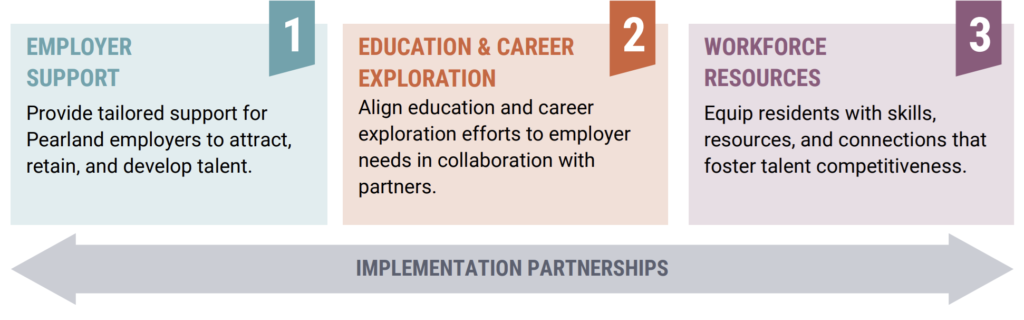
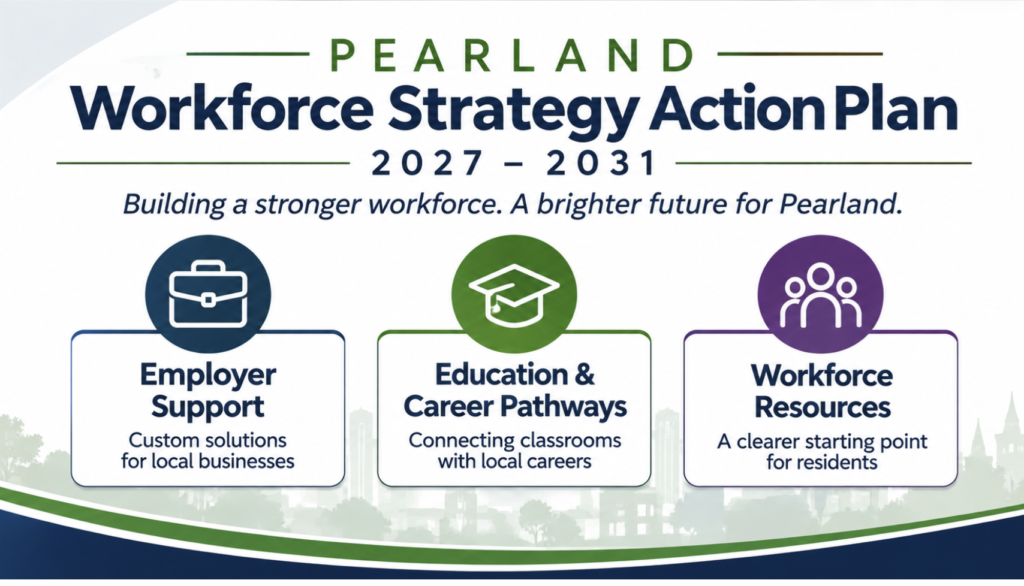
The 2027–2031 Workforce Strategy Action Plan, developed jointly by the Pearland Economic Development Corporation and Pearland Chamber of Commerce with consultant TIP Strategies, builds on programs established under the community’s previous workforce strategy. The updated plan organizes the next five years of work around three priorities: employer support, education and career exploration, and workforce resources for residents.
In an Oct. 12 article introducing the newly adopted plan, PEDC Workforce Director Mou Sarkar described the shift as moving from establishing workforce programs to expanding them and making them work together more consistently.
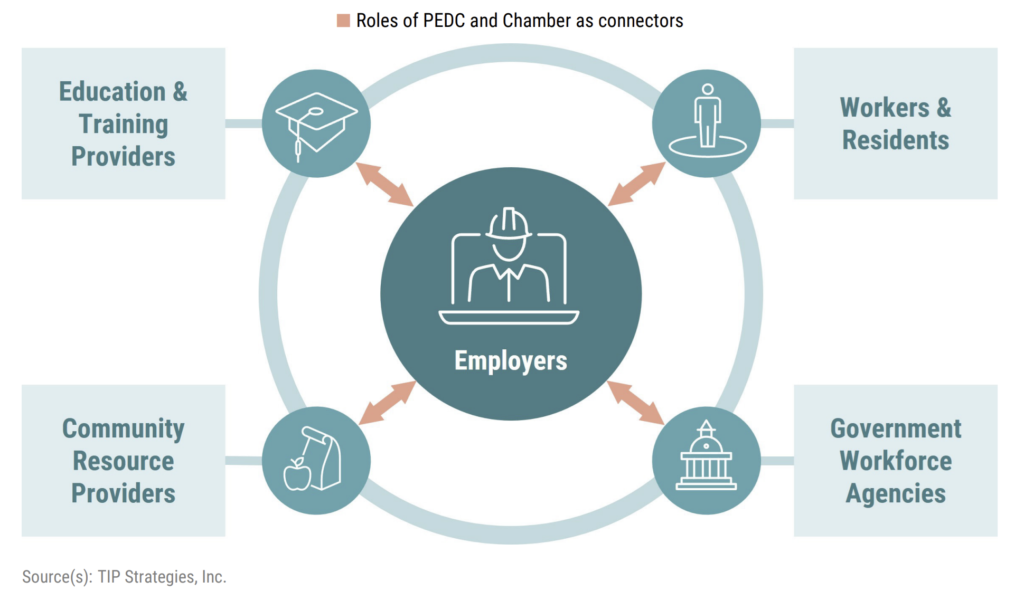
The plan also puts the workforce priorities of the broader 2024 Pearland Prosperity economic development strategy into action. Its central approach is to keep PEDC and the Chamber in the role of connecting businesses, educators and community organizations, rather than becoming direct providers of training or social services.
Building on the First Plan
The previous workforce strategy helped establish Work in Pearland, expand partnerships between employers and colleges, and create the Community Resource Network to connect residents with services that can help them enter and remain in the workforce.
According to the updated plan, Work in Pearland has grown to include more than 100 employer booths and more than 5,000 registered jobseekers. As of early 2026, more than 1,300 users had submitted at least one application through the platform. Annual job fair attendance increased from about 300 candidates in 2022 to approximately 1,500 in 2025.
PEDC and the Chamber also helped employers access more than $2 million in training and upskilling grants. Those efforts supported partnerships with Alvin College and San Jacinto College, including biotech and biomanufacturing training. The plan reports that a new certificate program funded 17 students and led to multiple local hires.
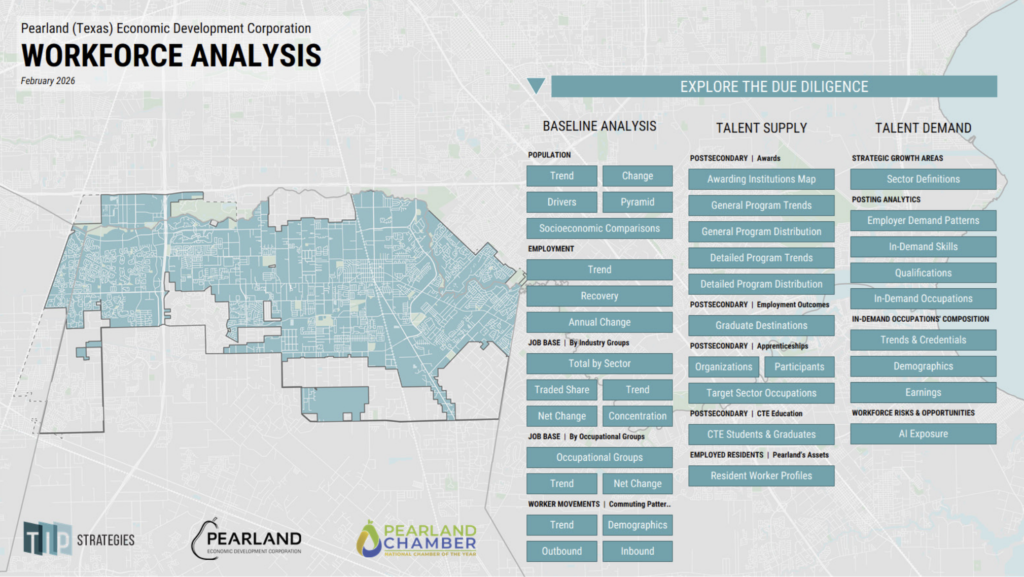
The updated strategy draws on input from more than 70 stakeholders through interviews, roundtables, employer tours and workshops, along with an analysis of employment, education and industry trends.
More Tailored Support for Employers
The first priority is to move from offering a collection of workforce resources to providing a more coordinated, customized service for employers.
Proposed actions include maintaining employer workforce profiles, creating an online menu of hiring and training resources, and developing tools to help businesses recruit, retain and develop employees. The plan also calls for continuing the HR Roundtable and helping employers connect with grants, customized training and education partners.
The approach recognizes that businesses have different needs and capacities. A large employer may be able to help develop a training program, while a smaller business without dedicated human resources staff may need more immediate help finding candidates or improving retention.
Connecting Classrooms with Local Careers
The second priority focuses on helping education and training programs respond to employer needs while giving students a clearer understanding of local career options.
The plan calls for sharing industry information with school districts and colleges, identifying gaps in career pathways, and supporting career and technical education programs that lead to in-demand jobs. Its target sectors include healthcare and life sciences, professional services, energy and gas material processing, manufacturing, and industrial support.
Recommended steps include expanding internships, apprenticeships, job shadowing, employer visits and classroom presentations. The plan also proposes teacher externships, which would give educators workplace experience they can bring back to their classrooms.
Some recommendations remain exploratory. These include examining whether the P-TECH early college high school model could fit local schools and identifying ways to address barriers such as transportation, equipment costs and shortages of qualified CTE teachers.
A Clearer Starting Point for Residents
The third priority would expand Work in Pearland beyond its job board into a more comprehensive starting point for employers, students and adult jobseekers.
The plan calls for a website that connects users with job opportunities, career guidance, training resources and support services. The Community Resource Network, which includes more than 70 nonprofit partners, would continue helping residents address barriers such as transportation, childcare, housing and food needs.
A proposed Pearland’s Future Workforce program would create a central online resource for internships, fellowships, apprenticeships and other work-based learning opportunities. It would also expand internship support into a structured program with networking events and professional development workshops.
Communication and other workplace skills are another emphasis. The plan’s analysis found communication was the most requested skill across all five target sectors, reinforcing employers’ calls for stronger preparation in problem-solving, leadership and working with others.
Keeping More Opportunity Close to Home
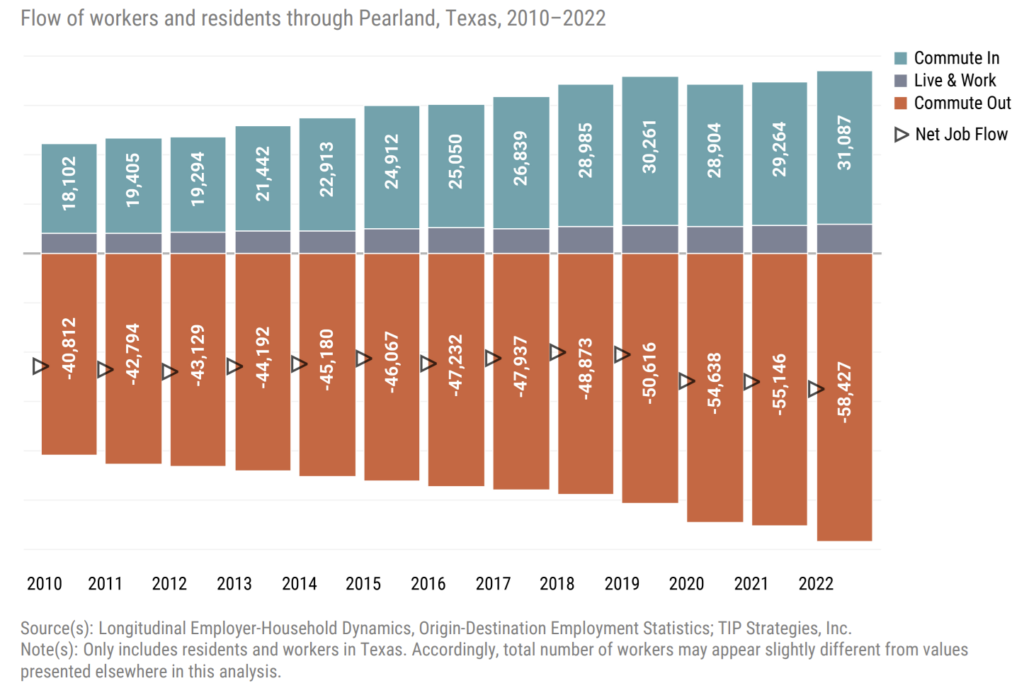
The strategy addresses a longstanding feature of Pearland’s economy: many residents leave the city for work.
Using 2022 commuting data, the plan reports that nearly 91 percent of Pearland’s working residents commuted outside the city. That creates an opportunity to connect some of those residents with local employers, although the plan also recognizes that Pearland businesses recruit from across the Houston region.
Implementation will depend on continued cooperation among employers, school districts, colleges, workforce agencies and community organizations. The plan identifies possible measures of progress, including job placements, participation in training and internships, industry credentials earned and employer use of workforce resources.
For residents and businesses, the intended result is a system that is easier to navigate: clearer connections between education and employment, more useful support for hiring and training, and fewer obstacles between a local job opportunity and the person who could fill it.
Learn more at: https://pearlandedc.com/latest-news/connecting-talent-and-opportunity-pearlands-next-chapter-in-workforce-development
Download the Pearland Economic Development Corporation’s 2027-2031 Workforce Strategy Action Plan
*Graphics and Illustrations posted by permission of Pearland Economic Development Corporation.