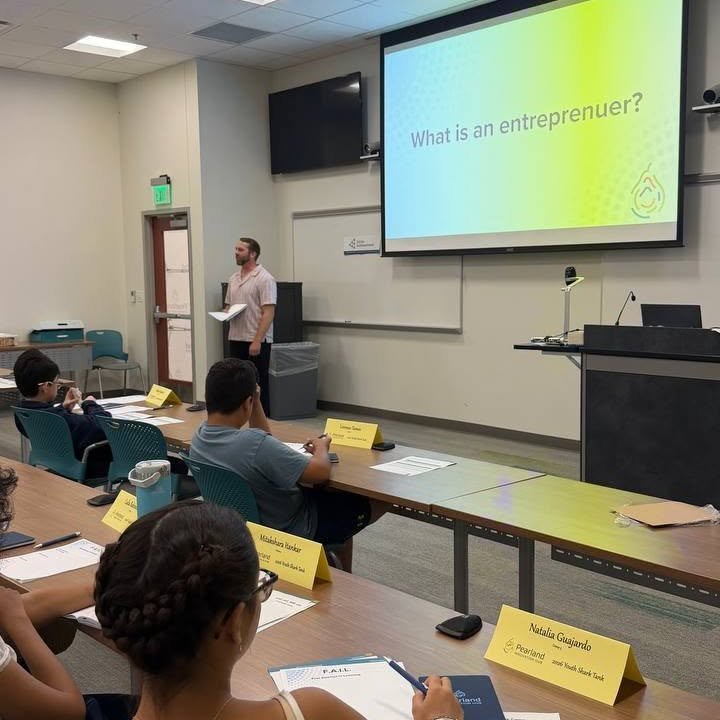
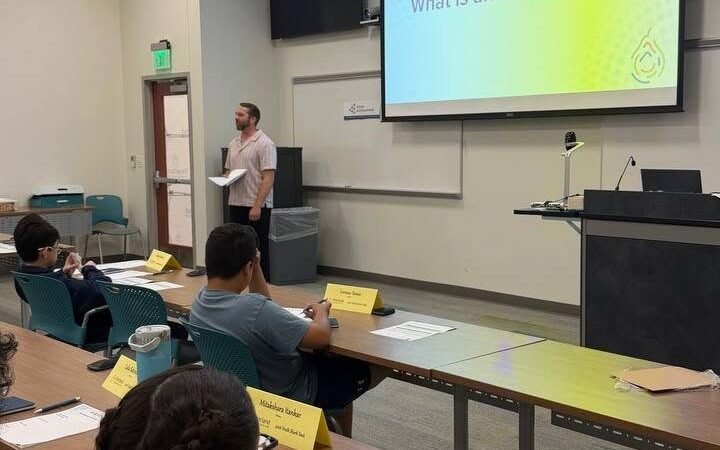
Drawing on years of experience working with employers, Kruer is helping students connect their real-life experiences and skills to meaningful career opportunities.
When Will Kruer was in high school, he was doing just about everything students are encouraged to do.
He made the honor roll, participated in band, played soccer, ran track, joined the finance club, spent time with friends, and stayed involved in school events.
By most measures, he was preparing himself for a successful future.
There was just one problem. He had no idea what he wanted to do for a career.
“I was doing all the things you’re supposed to do as a student, but I couldn’t tell you what any of those experiences meant for my future,” Kruer said.
It’s a challenge he now recognizes in students and job seekers across the country. Young people are encouraged to get good grades, participate in activities, develop skills, and prepare for the workforce. But connecting those experiences to a career path is often left for them to figure out on their own.
Kruer, a Pearland-based entrepreneur and co-founder of CareerCatalyst by Path & Proof, is working to change that.
Through CareerCatalyst, he and his team have developed a career development platform that helps individuals examine their experiences, identify strengths, understand where they create value, and connect those discoveries to career opportunities.
The approach grew from an unlikely combination of Kruer’s personal career journey and years spent working on the employer side of hiring.
A Career Path That Didn’t Go According to Plan
Kruer earned a finance degree and began his career in business operations and finance, eventually managing financial responsibilities across multiple business entities.
On paper, the path made sense. He had studied finance, developed relevant skills, and entered a professional field that aligned with his education.
But something was missing.
“The work didn’t fit me,” Kruer said. “I couldn’t sit behind a computer all day. I was good at connecting with people. I was good at solving needs.”
A colleague later suggested recruiting might be a better fit. Kruer made the transition and discovered something that would eventually shape his approach to career development.
He enjoyed working with people, understanding their experiences, identifying their strengths, and connecting those capabilities to what businesses needed.
He also began recognizing how easily traditional career guidance can overlook what makes someone successful or fulfilled at work.
A person might have the education and qualifications for a particular career but find that the work itself doesn’t fit their strengths, interests, or motivations. Kruer had experienced that firsthand.
Looking Beyond Personality Tests
For decades, personality assessments and career interest inventories have been common tools in career exploration.
Kruer doesn’t dismiss their value. He believes they can offer useful insights and encourage self-reflection. But he questions whether they should play such a central role in determining someone’s career direction.
“People don’t always behave the way they think they’ll behave,” Kruer said.
He points to his own experience as an example.
When answering personality assessment questions about social interaction, Kruer might describe himself as someone who prefers predictability and feels uncomfortable with the uncertainty of dealing with people.
An assessment might interpret those answers as a preference for independent, structured work.
But his actual experiences tell a different story.
Throughout his career, some of his most energizing moments have involved working with colleagues, building relationships, navigating unpredictable situations, and solving problems alongside others.
He may not enjoy every type of interpersonal work, such as traditional sales, but he thrives in other roles involving frequent interaction.
The distinction matters.
“If I only looked at how I answered those questions, I might end up right back behind a spreadsheet doing something that doesn’t energize me,” Kruer said.
CareerCatalyst takes a different approach.
Rather than beginning with a personality category or asking users to select a career they might enjoy, the platform starts with their lived experiences.
Through guided exercises, individuals explore situations they’ve encountered, challenges they’ve overcome, accomplishments they’re proud of, failures they’ve learned from, and activities that give or drain their energy.
The platform helps organize those experiences into a clearer understanding of their capabilities and how those capabilities might translate into different career opportunities.
The objective isn’t to put someone into a category. It’s to help them recognize patterns they may have never considered.
What Employers See That Students Often Don’t
Kruer’s perspective comes from more than his own career journey.
Before launching CareerCatalyst, he co-founded PEOPLEfirst Talent & Retention Consulting, a firm that has helped more than 60 organizations with recruiting, employee development, leadership, and retention.
The experience gave him an inside look at how companies evaluate talent and what they expect from employees. He noticed a disconnect.
Employers routinely say they want candidates with strong communication, critical thinking, adaptability, initiative, and problem-solving abilities. Yet many hiring managers struggle to develop interview questions that effectively evaluate those capabilities.
On the other side of the hiring table, candidates often possess relevant experience but don’t know how to explain it.
A student who organizes an event may have demonstrated project management, communication, budgeting, and leadership. A student-athlete may have spent years navigating pressure, responding to feedback, working through conflict, and adapting to changing circumstances.
Those capabilities have value in the workforce, but students don’t necessarily recognize them as professional skills.
And employers don’t always make the connection either.
“The candidates who are getting job offers are the ones who can build trust and articulate how they can solve the hiring manager’s problem,” Kruer said.
The challenge, he believes, is that many students have never been taught how to make that connection.
CareerCatalyst was developed to address the gap between what individuals have experienced and what employers need to understand.
Bringing Career Readiness Into the Classroom
Today, Kruer volunteers with Pearland Independent School District’s Career and Technical Education (CTE) programs, helping students prepare for the transition from school to work.
He starts with a question that often comes before the resume: What value can you offer an employer? Students examine their skills and interests, then practice translating those qualities into specific, marketable language that a hiring manager can understand.
From there, he works with students on resumes and interview preparation. Much of the conversation, however, centers on what it means to be hirable and employable: the communication, professionalism, etiquette, accountability, and interpersonal skills that shape an employer’s first impression and a new employee’s success.
Kruer sees those so-called soft skills as an opportunity for young people to distinguish themselves, especially when they can back them up with examples from school, work, sports, volunteering, or everyday life.
“A student can have the grades, the activities and the technical skills,” Kruer said. “But if they can’t explain what they bring to the table or demonstrate how they work with people, an employer may never see their potential.”
For educators, the challenge is also one of capacity. Career counselors, CTE instructors, and college career services professionals may be responsible for supporting hundreds or even thousands of students, each with different experiences, interests, and goals.
CareerCatalyst was designed to complement those efforts with a structured approach to career discovery, value proposition development, and job readiness that students can work through with support from educators.
A Different Kind of Outcome at Northern Kentucky University
The approach has also been used with students at Northern Kentucky University (NKU), where CareerCatalyst worked with a student cohort on connecting their experiences and education to possible career directions.
Students came away with practical tools they could use in a job search: potential career paths, stronger resume language, LinkedIn profiles, interview stories, individual value propositions, and networking strategies.
But Kruer says the most meaningful outcome wasn’t a document or a polished interview answer.
It was the shift in how students viewed the programs and majors they had already chosen.
As they began to understand how classroom learning, personal experiences, and developing skills could translate into real-world opportunities, Kruer observed greater excitement and engagement. The work they were doing in school started to feel connected to something tangible beyond graduation.
That distinction matters for colleges interested not only in career readiness and employment outcomes, but also in student engagement and the sense of purpose students find in their education.
Rather than treating career preparation as an activity reserved for the final semester, the experience suggested the value of helping students see the connection between their education and future possibilities while they are still learning.
From Career Identity to Career Opportunity
The CareerCatalyst platform walks users through a structured process that begins with understanding their career identity.
Rather than immediately asking what job someone wants, the platform encourages them to examine who they are, what they’ve experienced, and what those experiences demonstrate.
Users then identify evidence of their skills and capabilities, develop language to communicate their value, and explore career paths that align with their strengths and interests.
From there, the platform helps them apply those discoveries to practical career preparation, including resumes, interview stories, networking strategies, and job searches.
The approach is intended to complement the work already happening in schools, colleges, and workforce development programs, giving students a more personalized way to engage in career exploration while providing educators with a structured process they can incorporate into their existing efforts.
Kruer sees technology, including artificial intelligence, as a useful part of that process, but not as a substitute for personal experience or human judgment.
AI can help individuals organize information, identify patterns, and articulate what they’ve learned. It cannot replace the experiences that make each person’s perspective unique.
The goal is to use technology to help individuals understand themselves more clearly, not generate a career identity for them.
Rethinking What It Means to Be Career Ready
For Kruer, CareerCatalyst represents the connection between two problems he has spent years observing.
Employers struggle to identify and develop the talent they need. Individuals struggle to recognize their own capabilities and understand where they belong in the workforce.
He believes addressing those problems begins earlier than the job application.
It begins when students are exploring their interests, making education decisions, participating in extracurricular activities, and discovering what kind of work gives them a sense of purpose.
For school districts and colleges, that means looking beyond whether a student has selected a career pathway or completed a resume.
It means helping students understand why a particular path might fit, what evidence supports that direction, and how they can continue developing their capabilities as their interests and opportunities change.
Kruer often thinks about the student he once was: involved, academically successful, doing everything he thought would prepare him for the future, yet uncertain about where he belonged.
It’s an experience that continues to influence the work he does today.
His hope is that students won’t have to spend years in the wrong career before discovering what their experiences were telling them all along.
CareerCatalyst by Path & Proof is focused on helping individuals make those connections earlier, while giving educational institutions another way to support career readiness, workforce alignment, and meaningful transitions into employment.
For Kruer, the underlying idea is simple: Career development shouldn’t begin by asking people to choose a job.
It should begin by helping them understand what they have to offer.
CareerCatalyst is a career development platform created by Path & Proof LLC. The company works with educational institutions, athletic programs, workforce development organizations, and individuals to support career exploration, career readiness, and transitions into employment.