Texas lawmakers are expected to enter the 2027 legislative session with water near the top of the agenda, but the discussion will not be limited to whether the state needs more supply. The more difficult questions will be who pays, which water sources can be developed, how water can move between regions, and who has the right to control it.
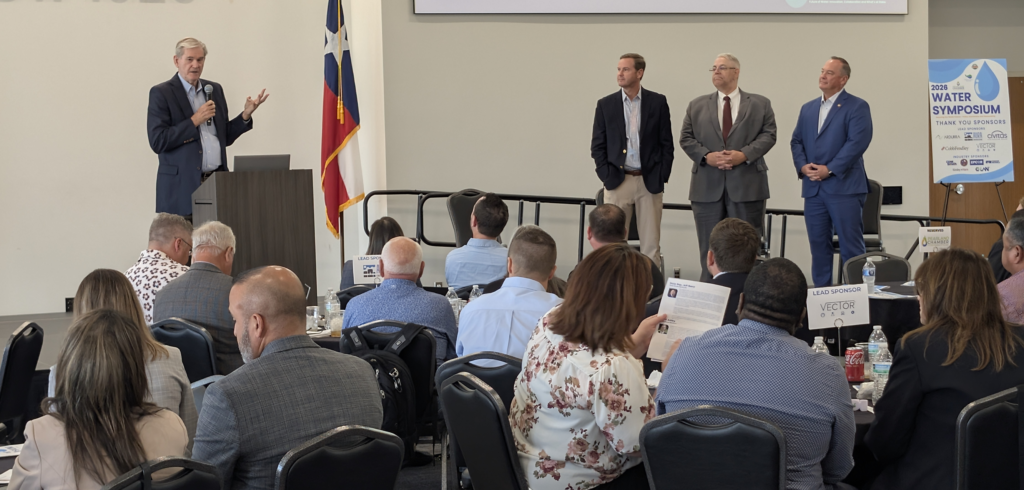
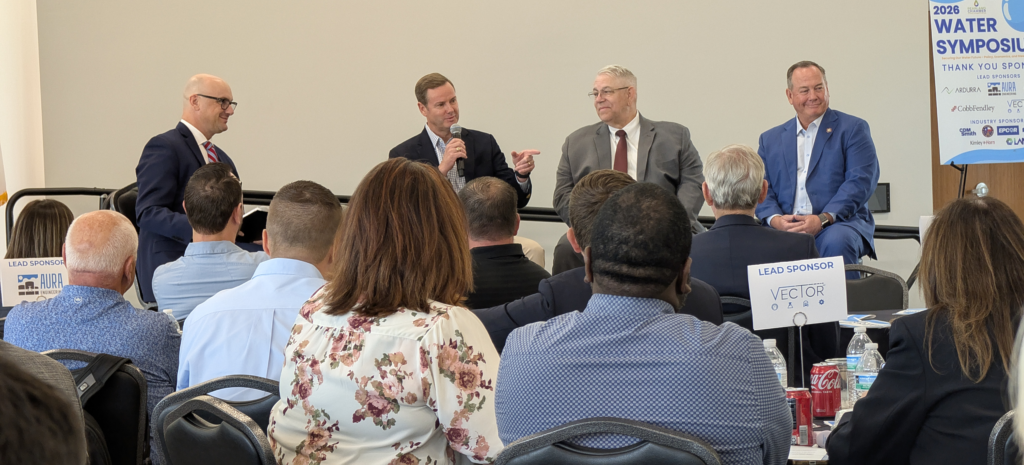
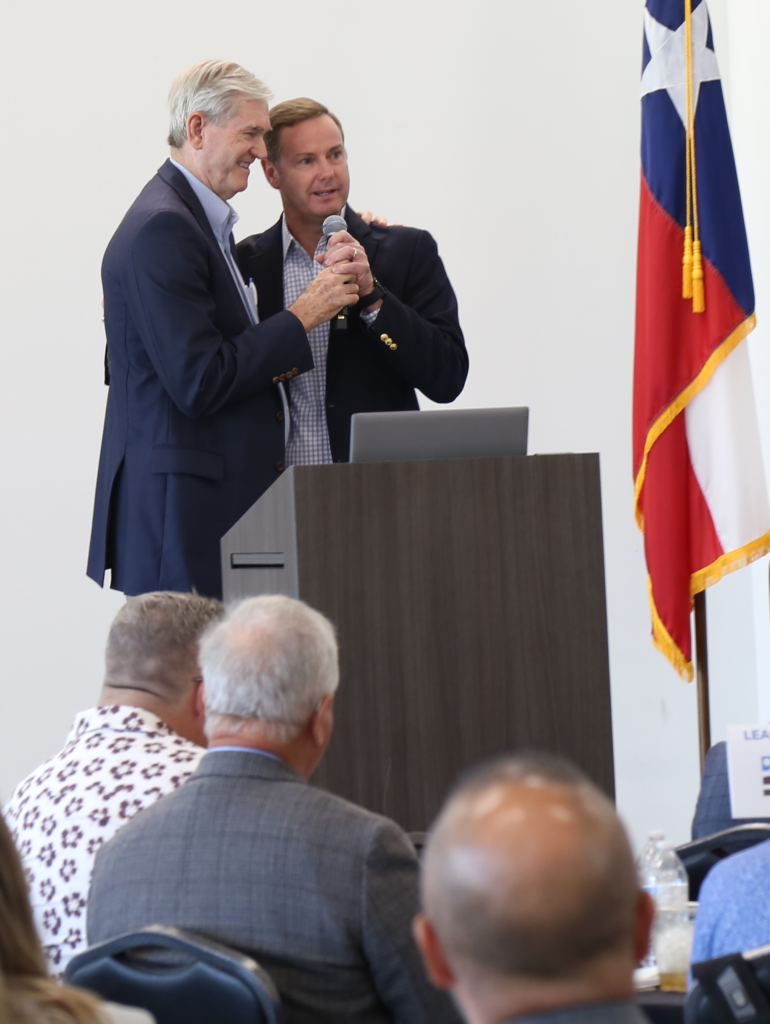
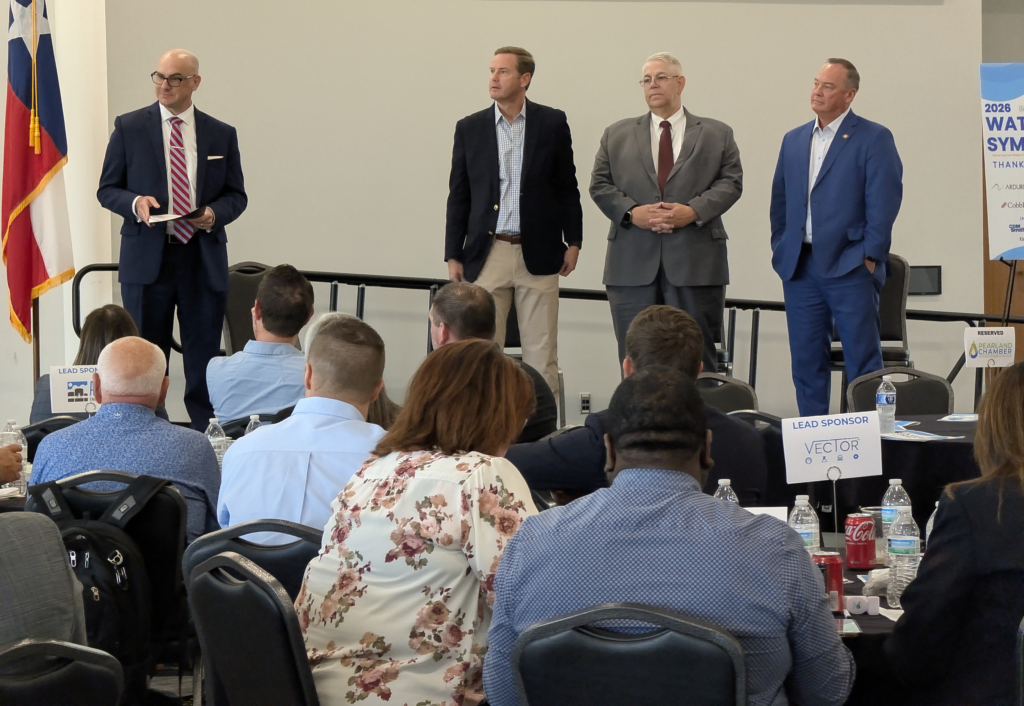
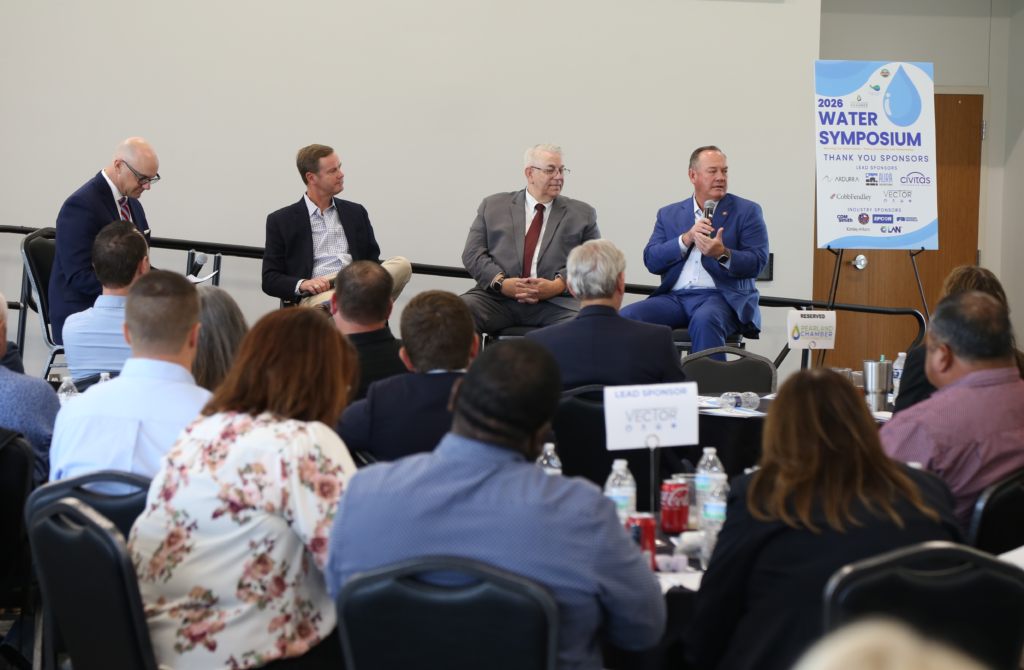
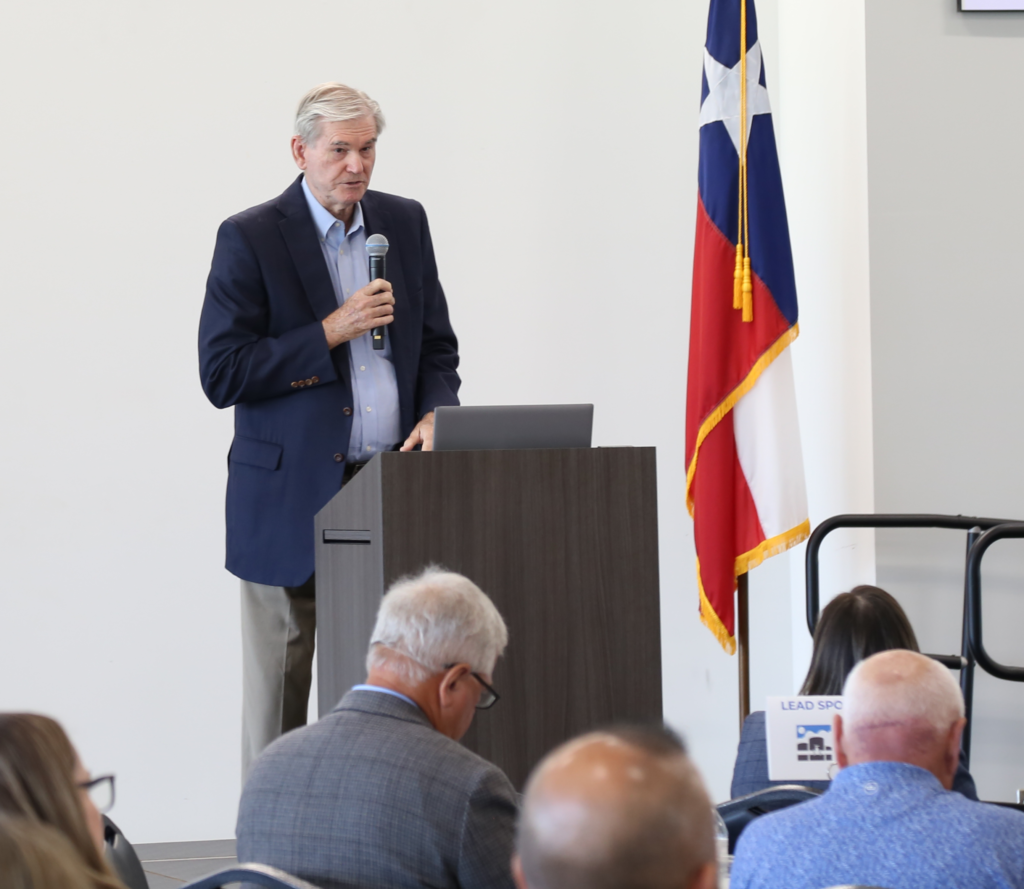
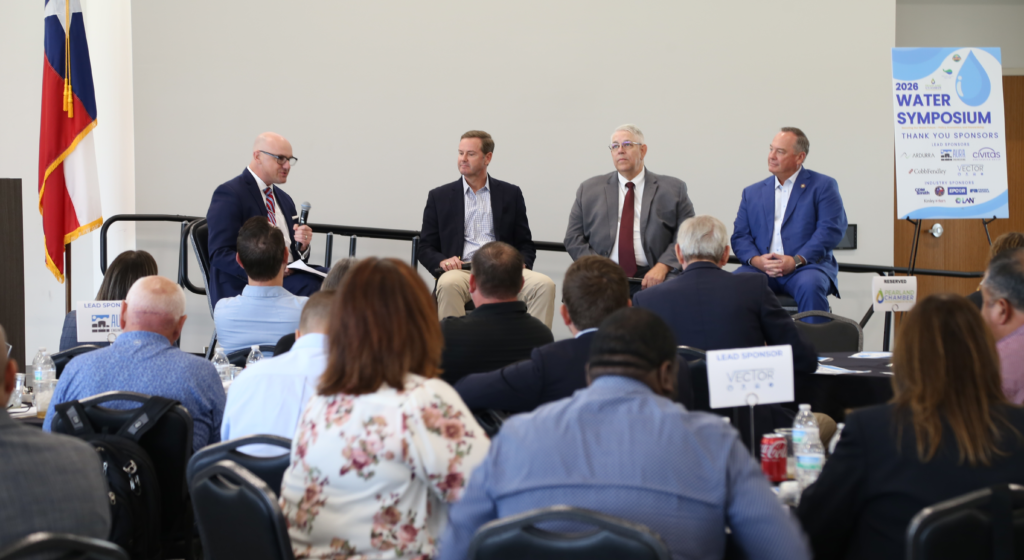
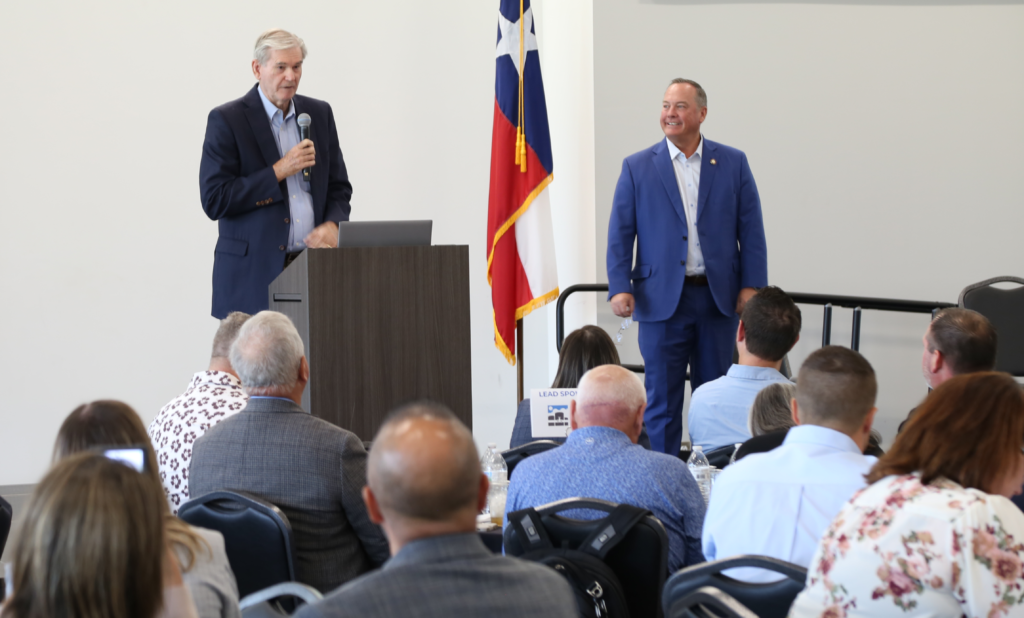
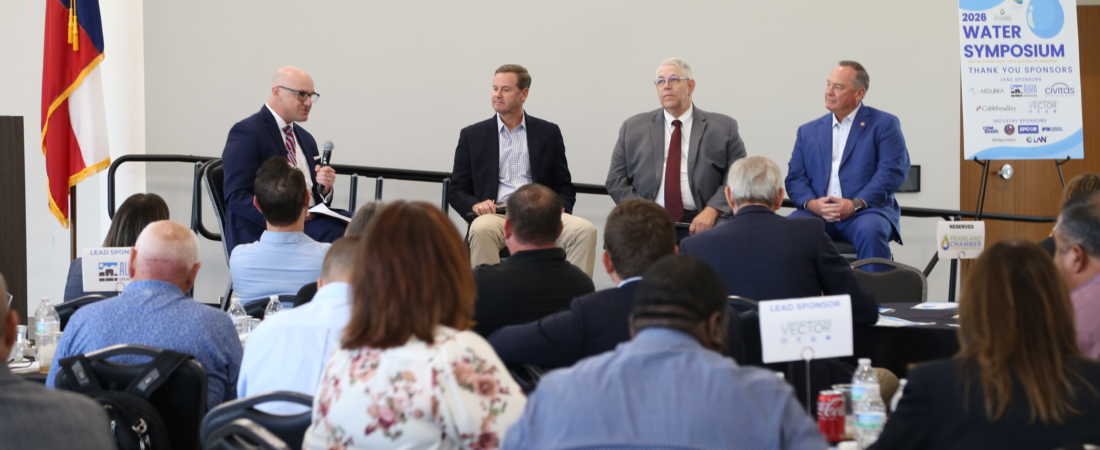
That was the message of the Pearland Chamber of Commerce’s closing Water Symposium session, “Legislative Outlook: The Upcoming Session and What It Means for Water.” Moderated by Texas 2036 Director of Infrastructure and Natural Resources Policy Jeremy Mazur, the panel brought together State Rep. Jeff Barry of House District 29, State Rep. Trent Ashby of House District 9, and State Rep. Stan Kitzman of House District 85.
The three lawmakers came from different parts of Texas, and their districts face different water pressures. Barry represents the Pearland area and parts of Brazoria County, where growth, industry, flood control, and regional infrastructure are central concerns. Ashby represents a large East Texas district, where a proposed effort to pump and export groundwater has become a defining issue. Kitzman’s district includes agricultural and growing communities west of Houston, and he chairs the bipartisan Texas Legislative Water Caucus.
Their conversation made clear that water may be one of the most consequential, and most complicated, issues in Austin next year.
Water is becoming a headline issue
Mazur began by describing recent legislative sessions as consequential for water policy. He said the legislature had made major advances in 2023 and 2025, but he asked why water had become such a prominent issue for lawmakers across Texas.
Ashby’s answer began with growth.
Texas continues to add residents, businesses, industrial facilities, and new development. That growth is not confined to the state’s largest cities. It is reaching suburban, exurban, and traditionally rural areas, placing new pressure on water systems that were not built for today’s population or tomorrow’s demand.
Ashby said the explosive population growth seen in Brazoria County reflects a statewide challenge. “Communities expect safe, reliable water when they turn on the tap, but meeting that expectation requires infrastructure, supply planning, and investment long before new residents or employers arrive.”
He said water was the most requested committee assignment among incoming House members during the 2013 session, which followed the 2011 drought of record. In his view, the importance of water has only grown since then.
The issue is not simply household demand. Texas must also account for agriculture, manufacturing, energy production, and new technology-driven demand. The state’s ability to remain competitive for jobs, investment, and population growth depends on its ability to secure water.
“There is no Texas without water,” Kitzman said, describing water as a resource that has shaped settlement, agriculture, and economic development from the state’s earliest history.
The Water Fund Was a Start
The panel repeatedly returned to the Texas Water Fund, which lawmakers created in 2023 and initially funded with $1 billion.
Ashby described the fund as a significant step, but not a solution that should make the state complacent. He said the legislature later approved an additional commitment of $1 billion a year for 20 years, creating a planned $20 billion investment intended to support new water supplies and aging infrastructure.
About half of that funding is directed toward new supply, while the other half is intended to help communities address infrastructure needs, including aging water systems.
But the speakers emphasized the gap between available funding and statewide need.
Ashby said lawmakers had recently heard that the Texas Water Development Board received approximately $175 billion in requests connected to the Water Fund. Kitzman said the broader state water plan was estimated at about $154 billion, while the most recent figure discussed during the panel was roughly $174 billion.
The exact estimates may change as projects are updated, but the panel’s central point was that Texas has a large water-planning bill, and the Water Fund alone will not cover it.
Kitzman said the legislature’s recent actions represented the beginning of a long-term commitment, not the end of the work. Ashby agreed, warning that Texas should not assume it has solved its water challenges simply because lawmakers created a major new funding source.
For legislators, the 2027 issue will be whether to continue building on that commitment and how to direct limited dollars toward the highest-priority needs.
That means difficult choices between new supply projects, pipe replacement, treatment-plant expansions, reuse systems, groundwater projects, desalination, and emergency resilience.
Groundwater exports could drive debate
The panel’s most pointed discussion centered on groundwater, particularly the prospect of moving it from water-rich areas of East Texas to fast-growing regions elsewhere in the state.
Ashby described a proposed project involving a wealthy landowner and private-equity investors who had acquired approximately 11,000 acres across three East Texas counties. The proposal, he said, involved drilling 43 high-capacity commercial wells and transporting groundwater to the Dallas-Fort Worth area.
The proposal has created intense local opposition.
For Ashby, the issue is not merely whether a project can be financed or engineered. It is whether East Texas communities should lose access to a resource that supports their own residents, farms, businesses, and future economic development.
He said the proposal could become a major test of Texas’ historic “rule of capture,” the doctrine that generally allows a landowner to pump groundwater beneath their property for beneficial use, even if that pumping affects neighboring wells.
Ashby said the legislature is likely to have a serious conversation about the rule of capture in 2027. The chairman of the House Natural Resources Committee, he said, is expected to pursue stakeholder input and consider legislation related to the issue.
That process could involve landowners, agricultural interests, industrial users, cities, groundwater-conservation districts, and others with a stake in the outcome.
Ashby described himself as a strong supporter of private-property rights, but he argued that the conversation changes when one landowner’s pumping could substantially reduce the supply available to neighboring property owners and communities. “If I’ve got a guy that’s next door to me that’s going to pump my aquifer dry and ship that to some other part of the state,” he said, “then I’ve got a problem with that.”
The rule of capture is not abstract
Kitzman explained the rule of capture in practical terms. Under current Texas law, a landowner who drills a well may generally pump groundwater beneath their property for beneficial use. If that pumping causes a neighboring well to decline, the neighbor may have limited recourse under the traditional doctrine.
The law has deep roots in Texas, and any effort to change it would involve major questions about property rights, water ownership, and local control.
But the panel noted that groundwater and surface water are often connected.
Ashby described concerns about alluvial flows, the connection between groundwater and nearby surface water. In the East Texas proposal he discussed, heavy groundwater pumping near the Trinity River could potentially affect river flows.
That matters far beyond the immediate area.
The Trinity River feeds Lake Livingston, which supplies water to the City of Houston. Ashby said that connection helps illustrate why water debates can shift quickly from local disputes to statewide issues.
Water politics, the panel suggested, is often regional rather than partisan. A rural community may oppose exporting groundwater to an urban area. A downstream city may worry about reduced river flows. A growing metropolitan region may insist it needs more supply. Each argument may be valid from the perspective of the people making it.
The challenge for the legislature will be finding rules that protect communities and resources without preventing legitimate water development.
Not every county has the same protections
Barry noted that 99 Texas counties do not have groundwater-conservation districts.
Those districts can establish rules related to wells, commercial pumping, and water exported from their areas. But counties without such districts may have fewer tools to evaluate, regulate, or challenge large-scale groundwater projects.
Barry said this can create an imbalance. Groundwater-conservation districts are often funded through fees, rather than taxes, and may have limited resources to fight large, well-funded water-export proposals.
He said he would like to see the Texas Attorney General’s Office support groundwater-conservation districts when they are trying to protect local resources.
Barry also pointed to a Texas Water Development Board study, directed by the legislature during the previous session, examining the health of Texas aquifers. He said that work could provide important information as lawmakers consider how much groundwater can be exported, how aquifers should be defined, and whether existing rules are sufficient.
The coming debate, he said, will require the state to better understand what is happening below ground before it makes long-term commitments above ground.
Moving water will not be easy
The speakers generally agreed that Texas will need to move water between regions in some form. The disagreement will be over how, where, and under what rules.
Mazur noted that state water plans have long considered projects that move water from one part of Texas to another, often from wetter regions to areas experiencing faster growth or greater scarcity.
Ashby said he believes Texas will have to move water around the state. But he also said those projects will create major conflicts over property rights, infrastructure corridors, and the use of eminent domain.
Pipelines, canals, transmission lines, reservoirs, and treatment facilities all require land and political agreement. A community may oppose a project proposed by another region, particularly if it believes the project will use local water while delivering most of the benefit elsewhere.
Barry described a related issue in the state’s regional water-planning process.
Texas’ water plan is developed from the ground up. Regional water-planning groups identify needs and projects, then submit their plans to the Texas Water Development Board. But Barry said conflicts can arise when one region proposes a project in another region’s area without a clear process for resolving the dispute.
He offered a hypothetical example: One planning region may identify a proposed reservoir in Brazoria County as part of its future supply strategy, while the people and communities in Brazoria County may not support the project.
Under the existing structure, Barry said, the regions operate largely independently, and the system lacks a strong conflict-resolution process when projects overlap or compete.
He said the legislature should consider a better process that gives meaningful weight to the views of the region where a proposed project would be built.
Without that, he warned, water planning could pit neighboring communities and regions against one another.
Reuse, produced water, and new technology
The panel did not view new supply only through the traditional lens of reservoirs and pipelines.
Ashby said water reuse and produced water are likely to become more important to Texas’ future water strategy, especially for industrial applications. Produced water is the water that comes from oil and gas production, and it can contain contaminants and salts that require treatment before it can be used safely.
Kitzman said Texas needs to continue developing technology that can clean produced water, expand desalination, and make other unconventional supplies more usable.
Those options require energy, he said, and that creates another connection: Water technology needs power, while energy production and new energy infrastructure can also create water demand.
Kitzman pointed to the potential role of smaller nuclear-reactor technology as one example of the kind of energy development that could help support future water treatment and supply systems.
Ashby also described atmospheric water generation, a technology he said he had recently encountered at a legislative hearing. The concept involves extracting water vapor from the air and condensing it into usable water.
He said companies are developing systems suited to both arid West Texas conditions and the more humid climate east of Interstate 35. The technology is not a statewide answer on its own, but Ashby cited it as an example of how new approaches may help reduce pressure on traditional sources.
The panel’s outlook was cautiously optimistic: Texas will need conventional water infrastructure, but it should also support innovation that can make reuse, treatment, desalination, and alternative supplies more viable.
Data centers will be part of the water conversation
The panel’s discussion came after an earlier symposium session on water demand from data centers, and the issue surfaced again in the legislative outlook.
Ashby said the legislature is expected to address data centers in the next session. He anticipated “guardrails” around the facilities’ water use, cooling systems, and related infrastructure demands.
He said lawmakers could become more prescriptive about what types of water data centers can use, particularly as communities evaluate whether large facilities should rely on potable water, reclaimed water, produced water, or other sources.
Barry said Brazoria County could be an attractive location for data-center development, but he urged local leaders to identify appropriate locations and establish “technology corridors” where facilities, infrastructure, and community expectations can be better coordinated.
He also noted that data centers are connected to broader infrastructure needs, including major power-transmission projects. Texas must provide the electricity to operate new facilities, and it must also consider the power requirements of desalination, water treatment, and other water-supply projects.
The message was not that Texas should reject data centers. It was that communities, utilities, and lawmakers need to understand the full infrastructure picture before approving projects.
Pearland and Brazoria County
For Barry, the local priorities begin with collaboration, communication, and financing.
He said Brazoria County needs stronger coordination among cities, counties, water providers, drainage districts, engineers, businesses, and residents. The region must identify water and flood-control priorities, communicate those priorities clearly, and develop financing plans to carry them out.
Barry argued that public communication is one of government’s persistent weaknesses. Residents are often not told early or clearly enough about the future plans, costs, and tradeoffs involved in securing water, drainage, transportation, and other essential infrastructure.
The result can be surprise and resistance when a project finally reaches the public.
His prescription was simple: identify the plan, communicate it, and finance it.
That approach echoed the broader message of the symposium. Water infrastructure is expensive, slow to build, and easy to take for granted until a shortage, drought, flood, or system failure makes the consequences visible.
A major session ahead
Mazur closed the discussion by noting that the 90th Texas legislature was scheduled to begin in early January 2027. Based on the panel’s conversation, water is likely to be one of its most active policy areas.
The upcoming session could include debates over groundwater rights, water transfers, reuse, produced water, desalination, data-center demand, regional planning, property rights, infrastructure funding, and the future role of the Texas Water Fund.
The panelists did not suggest that there would be easy answers.
They did suggest that Texas cannot delay the conversation. Population growth continues. Infrastructure ages. Industrial demand evolves. Agricultural producers need reliable supply. Communities need protection from both drought and flooding. New technologies offer potential, but they also introduce new needs and unanswered questions.
The legislature’s job in 2027 will be to decide whether Texas can turn those pressures into a coherent strategy before the next water crisis forces the issue.