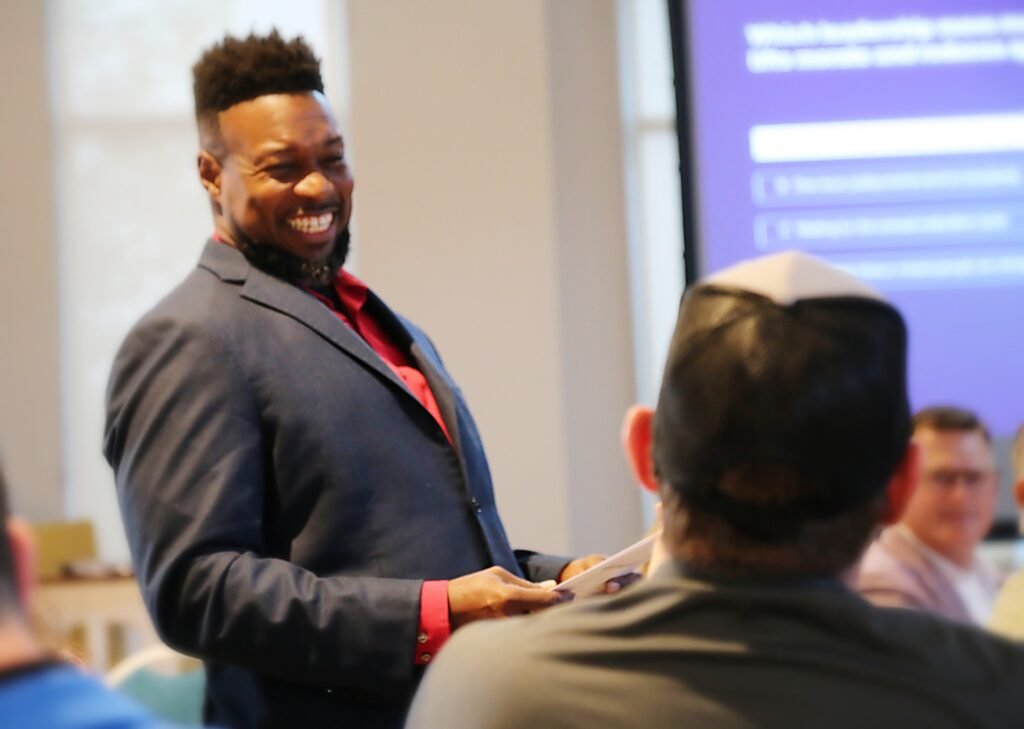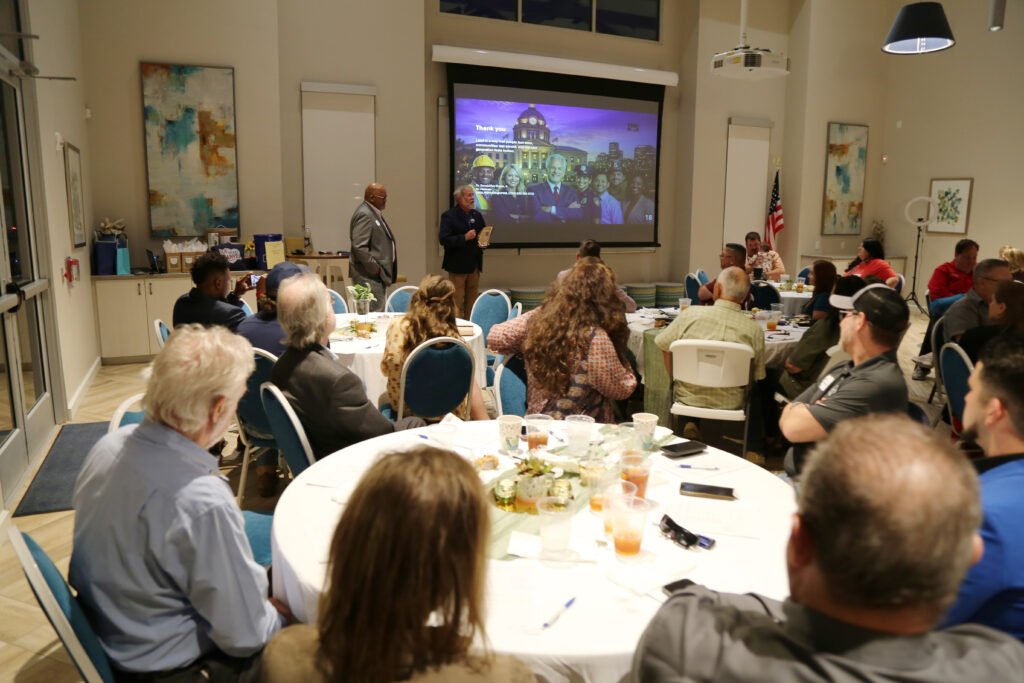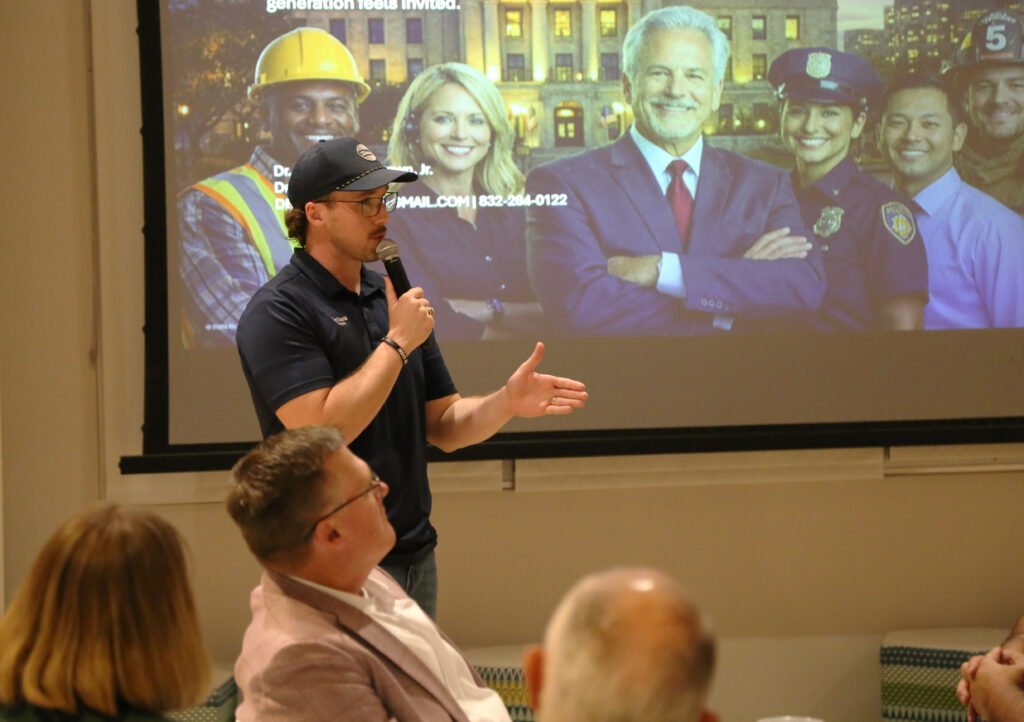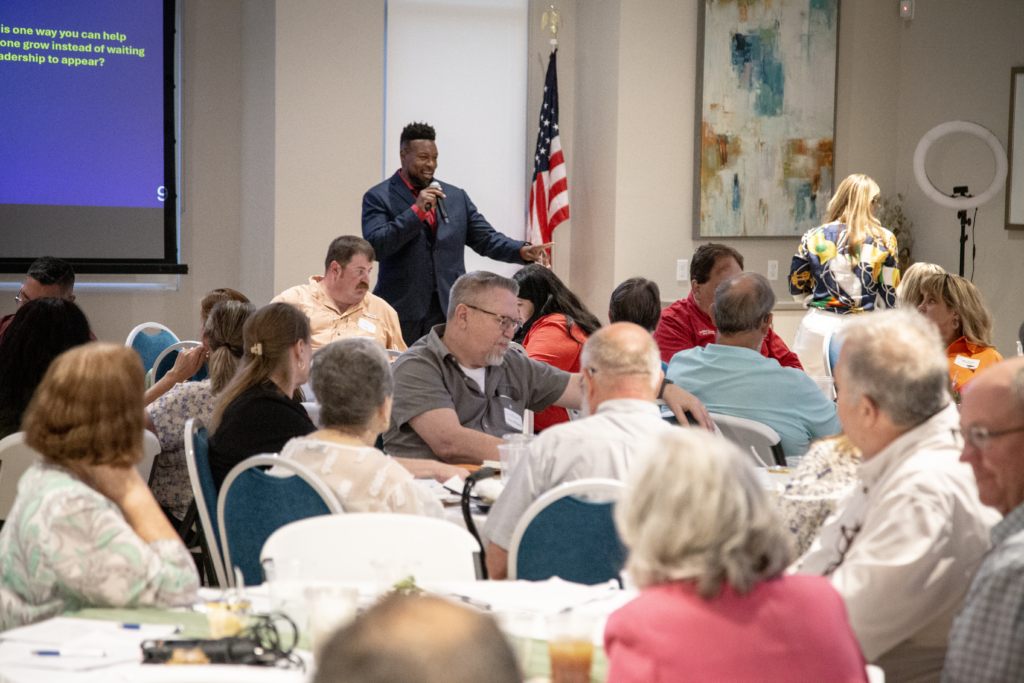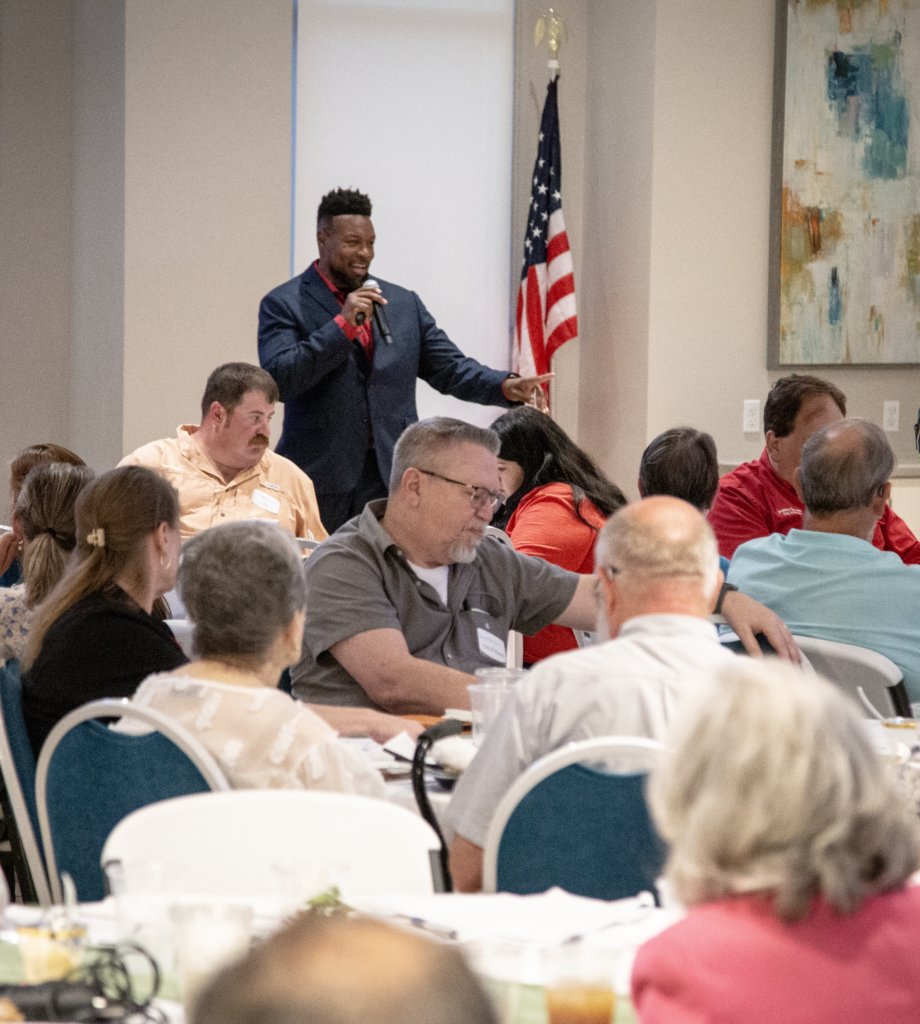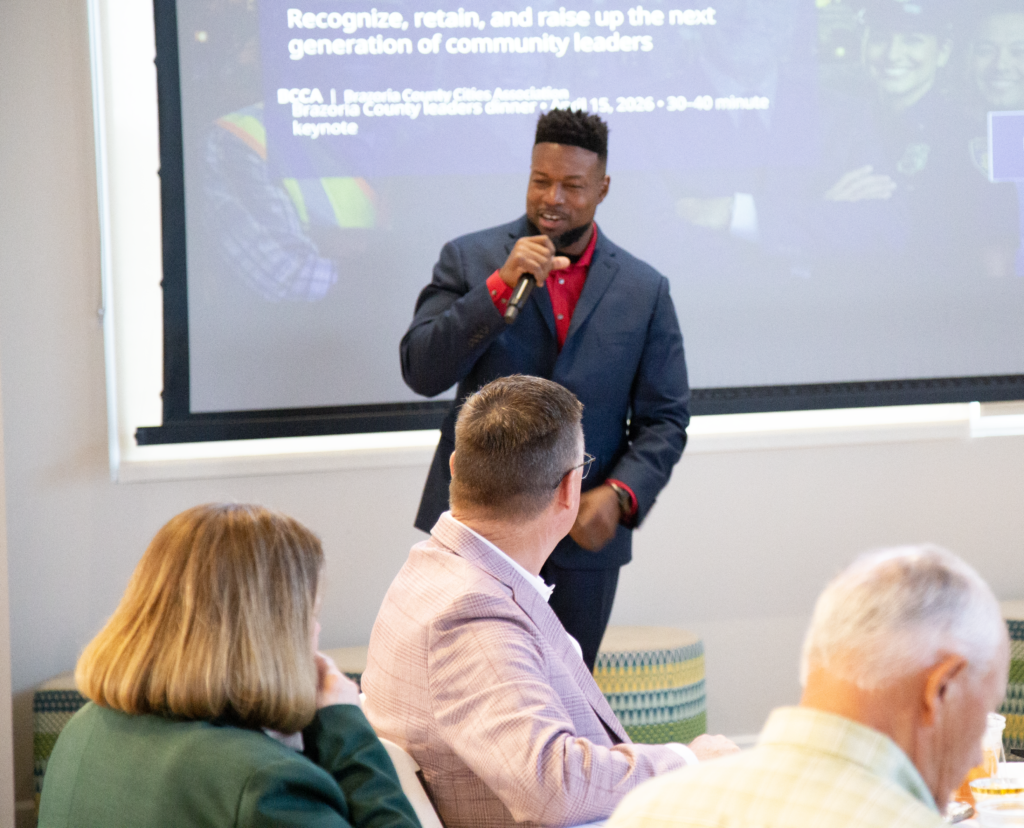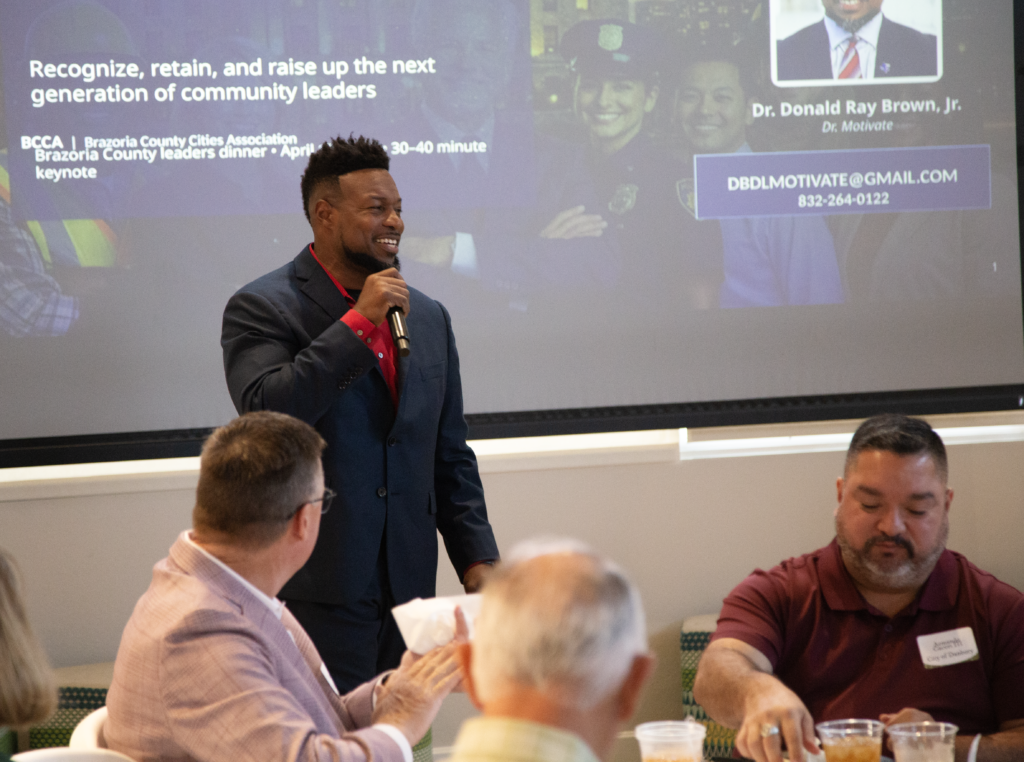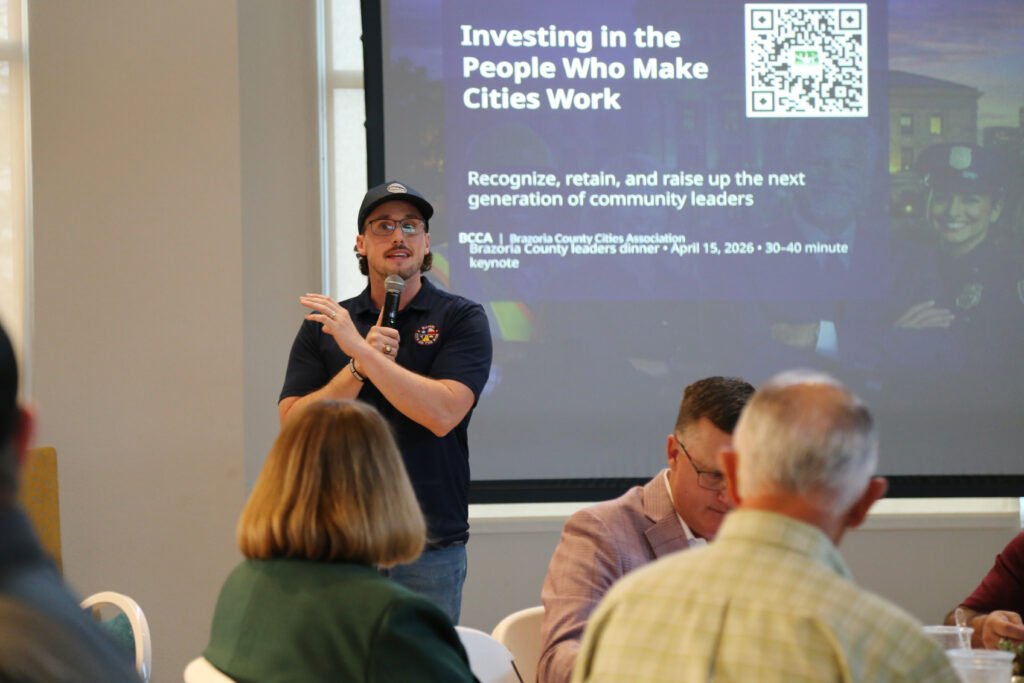
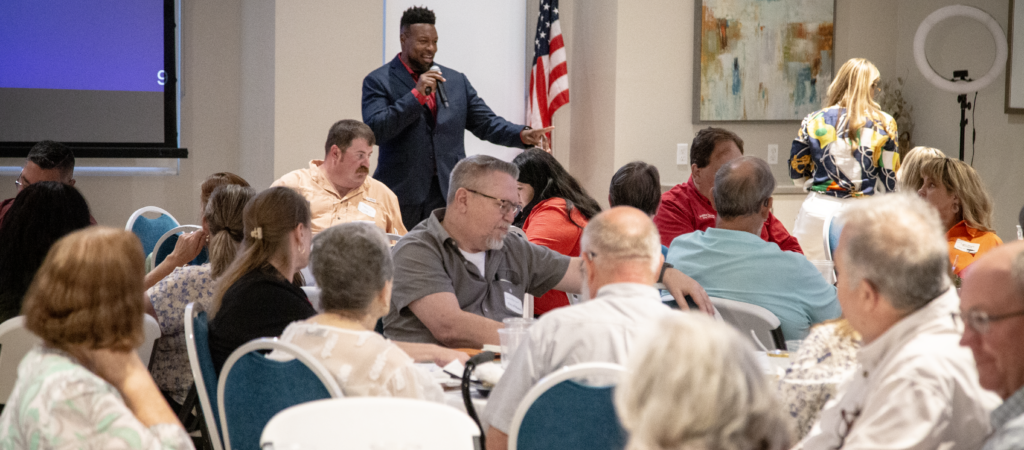
City leaders from across Brazoria County gathered on April 15 for the Brazoria County City Association meeting, where “Dr. Motivate” Donald Brown led an energetic leadership training focused on investing in people, strengthening culture, and preparing the next generation of public servants. The evening combined networking, shared professional development, and practical tools for city officials to take back to their councils, departments, and communities.
Dr. Brown, an Alvin native, educator, coach, and leadership trainer, framed his session around a central idea: the backbone of every city is the people whose work is often unseen but absolutely essential. He reminded attendees that every council vote, service call, and response to the community depends on staff members and volunteers who care deeply about their communities, even when their contributions are not visible to the public. Stronger cities, he argued, “require leaders who are present, intentional, and committed to recognizing and developing those people.”
Using a workbook and a series of reflective prompts, Dr. Brown invited participants to name roles in their cities or counties that carry more unseen weight than most residents realize. Around the room, tables quickly filled with conversation about city secretaries, front line staff, and others who quietly keep local government running. He then led a discussion on why specific recognition tied to a person’s actual contributions is far more powerful than generic praise, citing a Maxwell maxim that people “don’t care how much you know until they know how much you care.”
A major portion of the training focused on retention, culture, and leadership behavior in the face of budget constraints and public pressure. Dr. Brown asked the room to think of calm leaders they had seen protect both their teams and the public experience during difficult situations, and to identify what those leaders did well; listening, staying composed, and coaching staff, rather than simply solving every problem for them. He emphasized that when money is tight, culture becomes a competitive advantage, and non financial factors like trust, respect, meaningful work, and growth opportunities often determine whether employees stay engaged.
Dr. Brown also pushed the group to think long term about succession planning and the “leadership bench” in their organizations. He asked each leader to identify two people already showing leadership potential who need more intentional development, and introduced concepts like “stretch assignments” and “stay conversations” as practical tools. Rather than waiting until a vacancy appears, he said, cities should be shaping future leaders now through ongoing conversations about career paths, responsibilities, and readiness to step into broader roles.
To help participants translate ideas into action, Dr. Brown walked through a simple 30 day leadership playbook built around four weekly rhythms: recognize, listen, develop, and repeat. He challenged attendees to choose one concrete step they could implement in the next seven days, such as identifying three people whose steady work deserves visible recognition or scheduling intentional check ins with key team members. A “commitment card” exercise encouraged leaders to write down a specific action they will take in the next 30 days to strengthen their culture and invest in their people.
Throughout the session, Dr. Brown’s passion for service and youth development was evident. He briefly shared about his nonprofit, which provides youth sports, enrichment, and community programs, and invited attendees to consider how their own leadership decisions today will shape the opportunities available to the next generation.
He closed with a simple challenge: lead in a way that makes people feel safe, valued, and supported, so that communities can thrive and future leaders feel empowered to step forward.