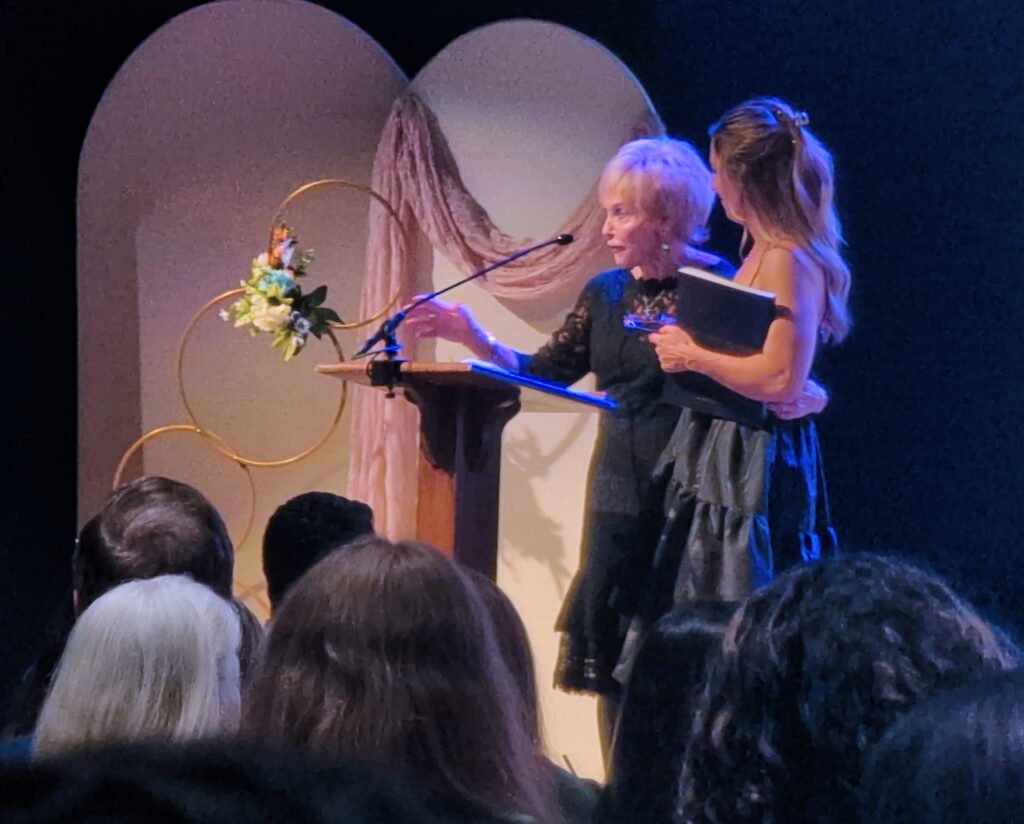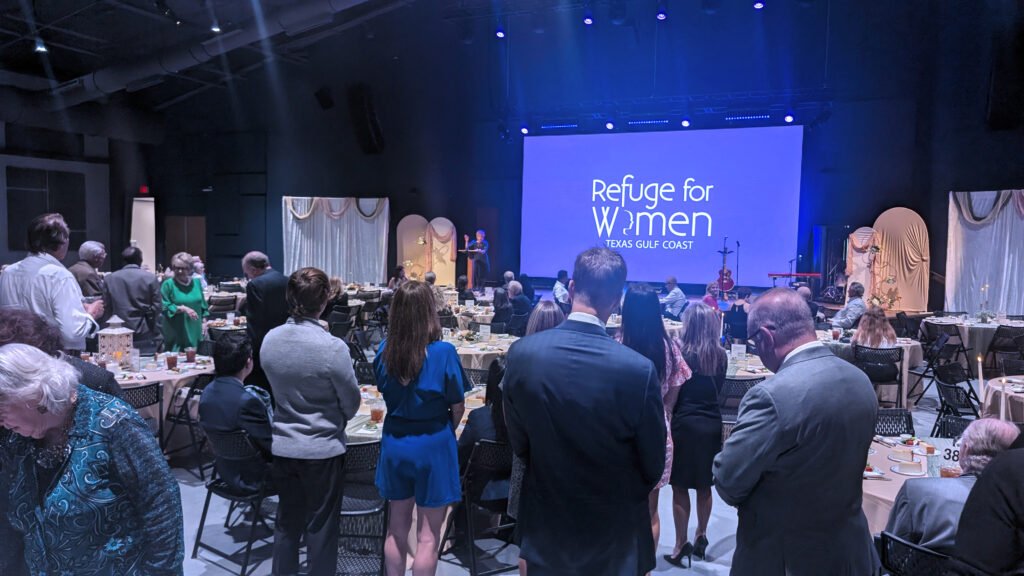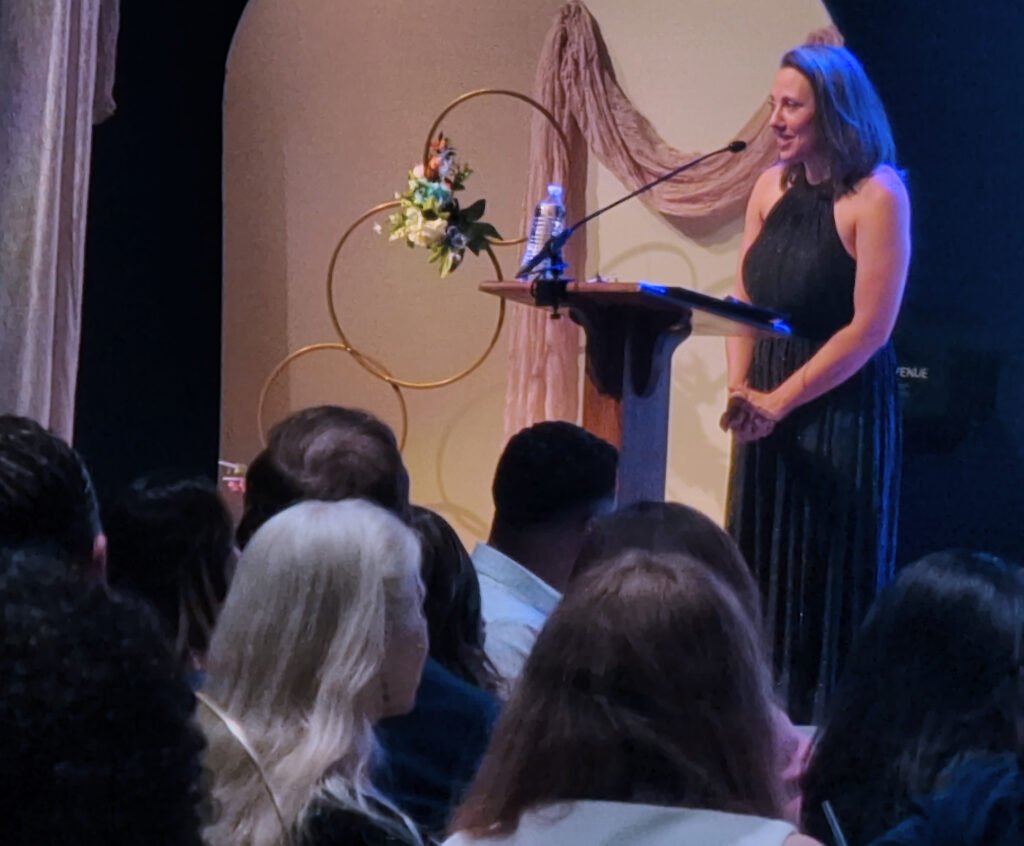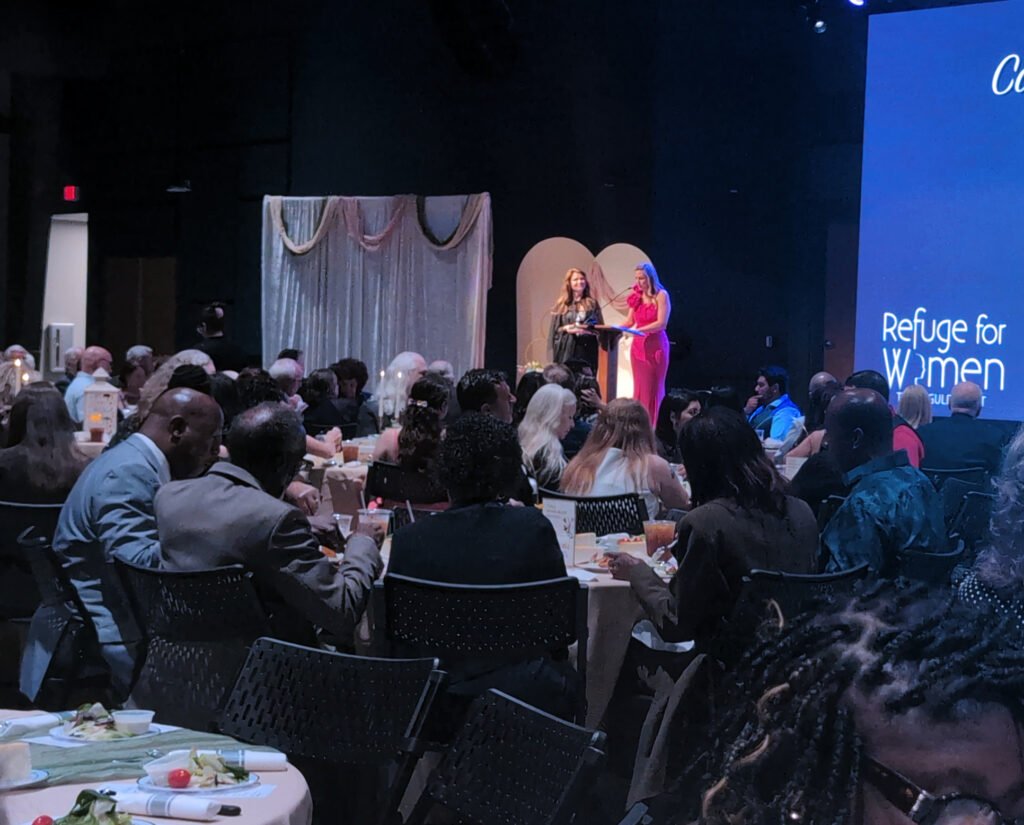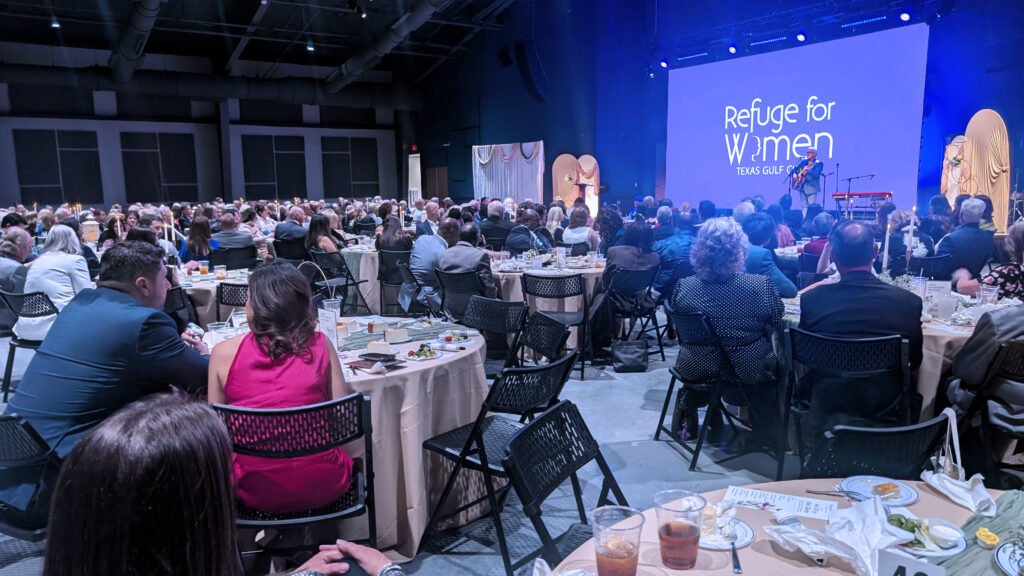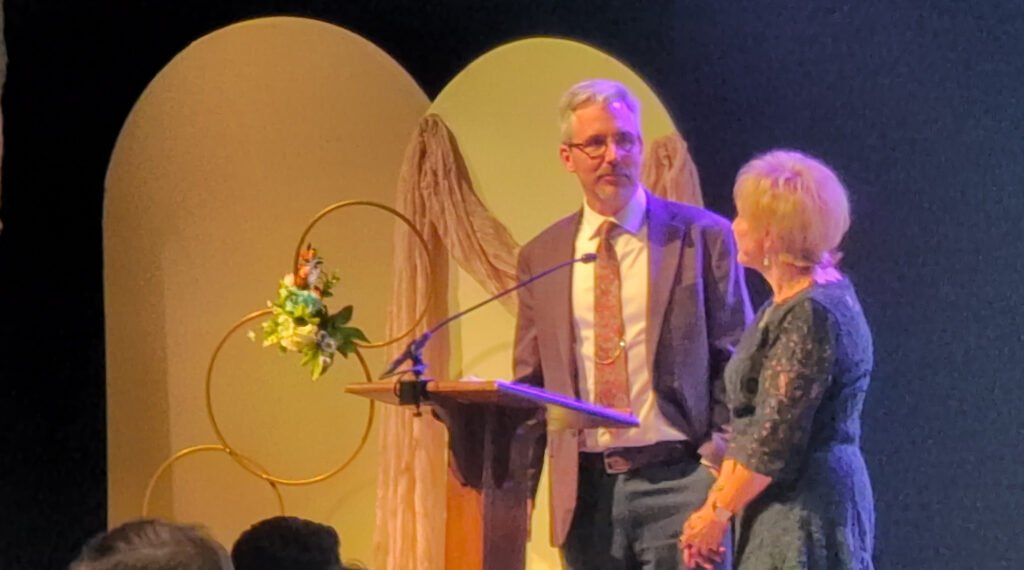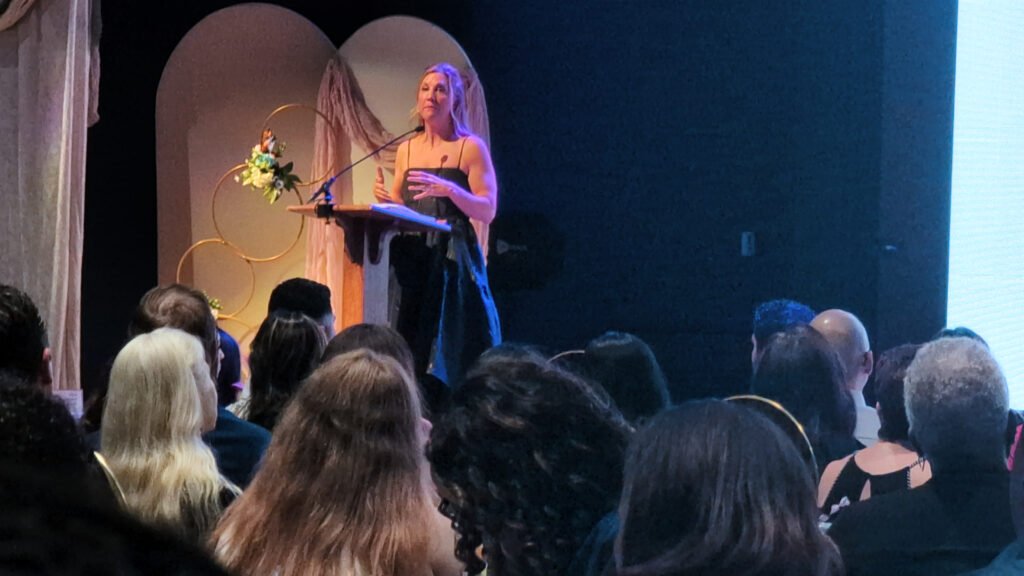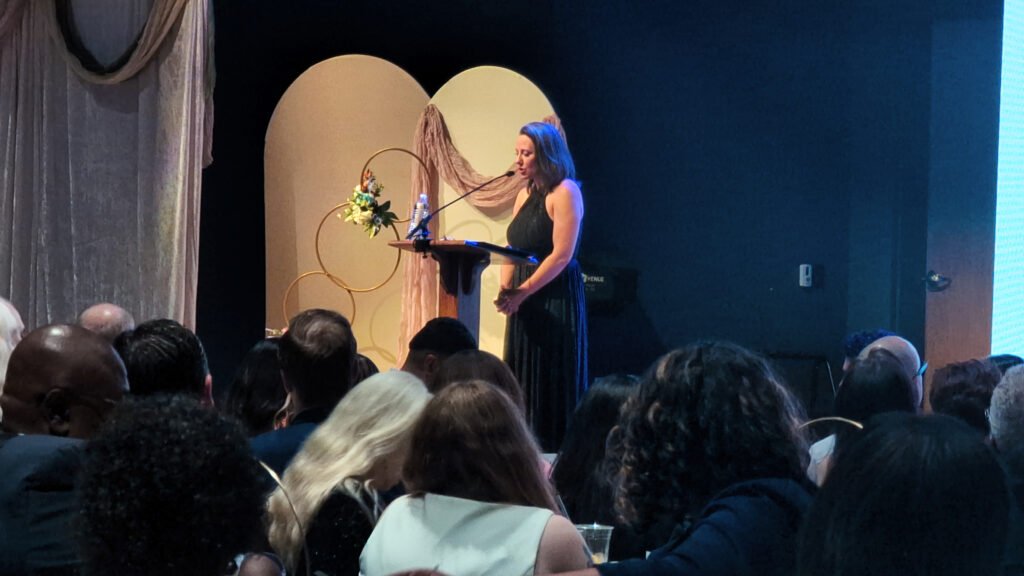
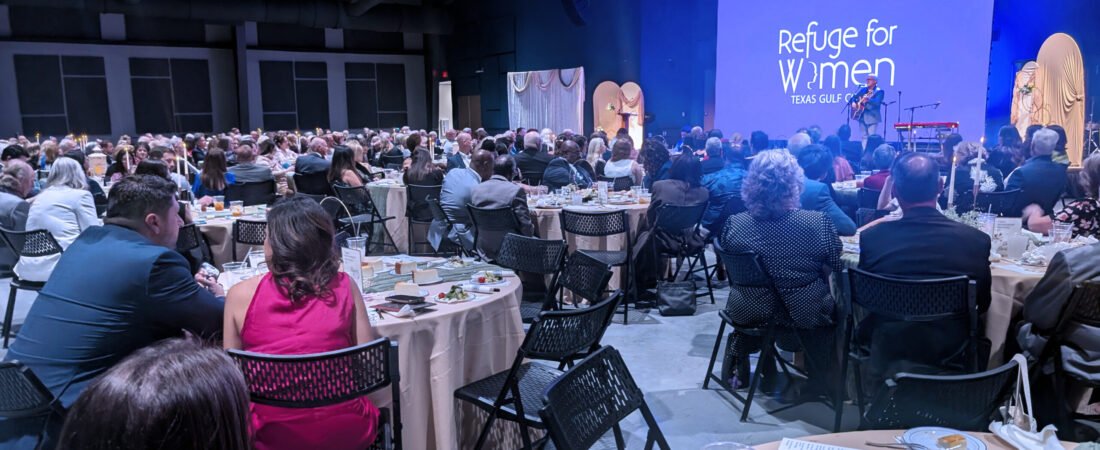
Refuge for Women Texas Gulf Coast turned stories of pain into a night of visible hope and resolve at its recent gala, a first of its kind gathering for the Houston area that blended worship, survivor testimony, community recognition, and a clear call to action in the fight against sex trafficking.
Guests arrived to more than just dinner and a silent auction. They were invited into a space filled with stories of healing and restoration for survivors of trafficking and sexual exploitation. The stories shared acknowledged both the deep pain women have endured and the courage, resilience, and hope now unfolding in their lives. The theme, “Her Story, His Glory,” wove through awards, music, survivor stories, and data, reminding attendees that every statistic represents a person with a name, dignity, and a future.
The program also underscored Refuge for Women’s distinct identity as a faith based residential aftercare ministry that pairs trauma informed care with spiritual restoration. As leaders noted, in a city where human trafficking often “hides in plain sight,” the Church and its partners are called to be light, practically and prayerfully, for some of Houston’s most vulnerable women.
A central part of the evening focused on gratitude, offering formal recognition for those who help make long term, holistic care possible including Parkway Church who was named Church Partner of the Year. “Parkway members invest time, energy, and presence, embodying what leaders called ‘ministry that is stronger when it is warmed up together through faith, service, and genuine care.’”
The gala also highlighted the generosity of major sponsors, including BMW Clear Lake as title table sponsor, as well as local businesses, foundations, and congregations that underwrote the event and provided the evening’s meal. Together, these partners extend Refuge’s impact well beyond what its staff alone could accomplish.
Music and testimony helped the crowd feel the weight of the issue while also anchoring the night in worship. Veteran Christian artist Wayne Watson performed several songs, including a duet that many guests recognized from his decades long ministry. His presence, one emcee noted, was both an artistic highlight and a reminder that the Church’s creative gifts belong in the fight for justice.
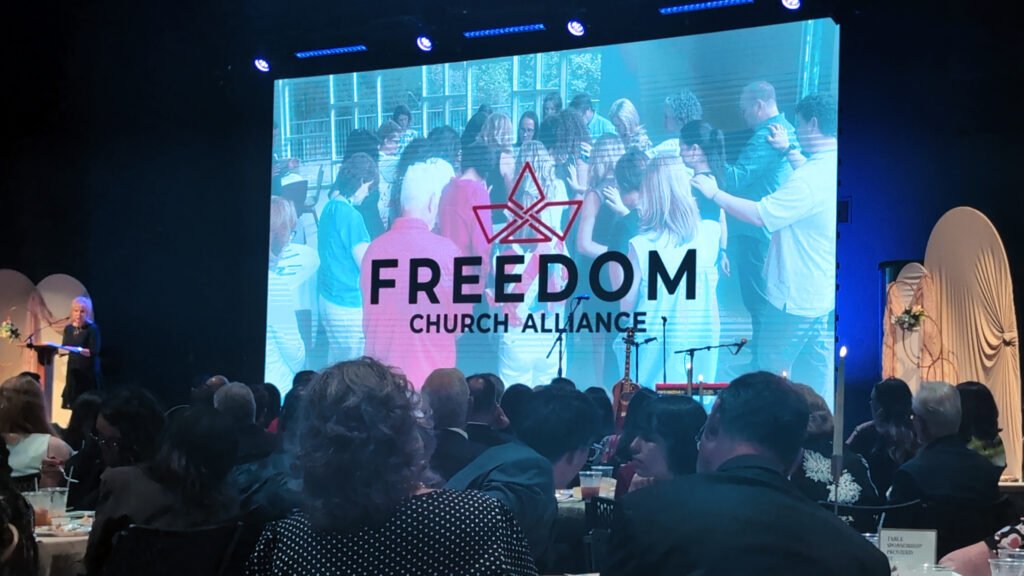
Speakers then zoomed in on Houston’s particular vulnerabilities. Leaders from Refuge for Women and Freedom Church Alliance reminded attendees that the region is widely recognized as a major hub for trafficking, a reality driven by factors such as the I-10 corridor, proximity to the border, and the draw of major sporting events like the World Cup. They emphasized that behind the heartbreaking statistics are people “longing to take their next step toward Jesus” and toward safety, and that trafficking “doesn’t just happen over there.” It is near churches, schools, and neighborhoods across the city.
The evening featured a video highlighting Refuge for Women’s national work. Founded in 2009, the ministry now operates six locations across the United States, including the Texas Gulf Coast home, and offers a three phase continuum of care: emergency housing, long term residential counseling and life skills development, and transitional living that supports women as they pursue work or education. Throughout these phases, women receive medical and psychological care, trauma responsive curriculum, spiritual support, and practical help to rebuild their lives, from detox to obtaining IDs that were once used as tools of control.
Churches Unite to Fight Trafficking
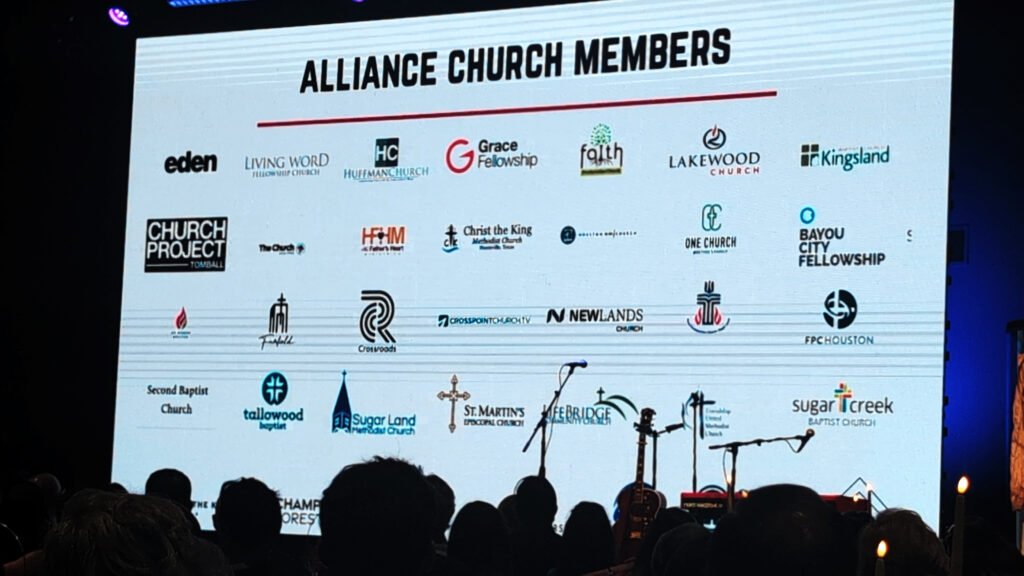
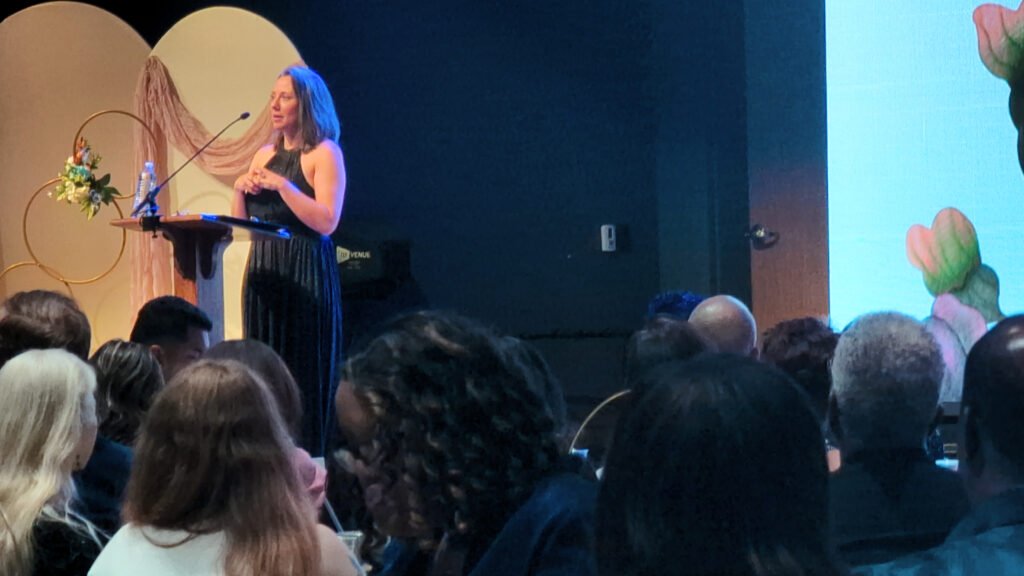
One of the evening’s most educational segments came from Christa Freyhof, Executive Director of Freedom Church Alliance, who laid out how collaboration among churches, law enforcement, and frontline ministries amplify the impact of every dollar and volunteer hour. “Fourteen years ago,” she explained, “a missions pastor at Sugar Creek Baptist Church saw that no single church, agency, or nonprofit could tackle trafficking alone, and helped birth an alliance now composed of 35 churches across Greater Houston.”
Christa shared a recent example. “Before a large, multi-state sting operation, federal and state agents contacted Freedom Church Alliance to ask them to prepare for an estimated 60 survivors, ranging from infants to the elderly, who would need immediate care after traffickers were arrested. Within 12 hours of sending out an Amazon wish list, alliance churches had provided diapers, formula, clothing, water, and other necessities for malnourished survivors and their children, all while praying for the officers heading into the operation.”
Her data driven presentation underscored the alliance’s reach.
• Freedom Church Alliance currently partners with nine vetted, gospel centered anti-trafficking organizations, including Refuge for Women.
• Nearly 50 percent of its budget, about $142,000 last year, went directly to frontline ministries.
• Another roughly $31,000 funded direct survivor support, such as hotel rooms, meals, utility bills, and counseling when law enforcement or partners call in urgent needs.
• Through its “Go Bag” outreach, alliance churches assembled and distributed 716 bags filled with clothes, toiletries, and comfort items to law enforcement agencies, hospitals, and partner organizations, ensuring survivors have dignifying essentials after raids or rescues.
Christa also introduced the alliance’s new digital outreach effort, which uses a secure platform to send simple, compassionate text messages, like: “Hey girl, how are you today? How can I pray for you?” to women being advertised online.
Since September, volunteers have reached over 2,500 women through this platform. 360 have chosen to keep engaging, and 24 have asked for additional help such as food, counseling, or residential care.
When a woman is ready to leave exploitation, Freedom Church Alliance connects her to partners like Refuge for Women, demonstrating in real time how the body of Christ can function as a coordinated network of rescue and restoration.
If data and strategy anchored the evening’s educational side, it was personal stories that brought the issue to eye level. One of those came from Sandy, a long-time church member who described how the crisis of trafficking moved from background awareness to a burden she could no longer ignore.
Her turning point came after watching the film Sound of Freedom with a friend. The movie’s depiction of child trafficking left them in tears and spurred an immediate response when a QR code appeared on screen, inviting viewers to buy tickets for others. Sandy laughed at herself for unknowingly purchasing far more tickets than she intended, but she also described how that moment left “an ache” in her heart and a growing question: “What can I do?”
That question resonated deeply with her own history. From age 12 to 18, Sandy was molested by her stepfather, a secret she carried alone. Her mother died never knowing the abuse that occurred in their home. On the day she turned 18, Sandy left with nothing but a small car and a part-time job at a toy store. Her boss, sensing something was wrong, took her in, a simple act of hospitality that became a lifeline.
A few years later, Sandy married and eventually found her way to Sagemont Church, where she encountered Christ under the leadership of Pastor John Morgan. She had never been in church or read the Bible, but she described how learning scripture slowly brought healing she did not initially recognize. Now, she told the room, she is “forever grateful” to be in a position to help others who feel trapped and powerless, and to stand alongside ministries like Refuge for Women.
Her story bridged past and present, saying: “Trafficking doesn’t just happen over there… Trafficking is right around this church, and every church represented here and every school.”
The keynote story was a testimony from Deanna, a survivor whose story traced how exploitation can disguise itself as opportunity, how trauma teaches people to tolerate harm, and how faith and community can rewrite a life’s trajectory.
Deanna began by showing a photo of her twin five year old daughters, fresh from a dance recital. She wanted the audience to see where her story ends. With two little girls who “will never have to question if their story matters,” and a mother surrounded by spiritual family she said that was thanks to Refuge for Women.
Her story jumped to the first time she ran away, from home at age eight, not out of rebellion but as an act of survival. By five, she had been introduced to sexual experiences no child should be forced to process, taught that this was “normal” and part of what it meant to be a woman. She carried not only sexual abuse but also emotional weight from a parent who blamed their suffering on her, internalizing the belief that if something was wrong, it must be her fault.
She said these early wounds formed a belief system. That her value came from her body, that being wanted was the closest thing to safety, and that if she needed to survive, she already knew how. By seven she was repeating what she had seen, telling other children that it was normal, a chilling picture of grooming taking root inside a child’s understanding of herself.
After high school, Deanna dreamed of becoming a model or actress, someone admired and respected. She met a man who claimed to be an agent and offered what looked like a way out of her past. At first, his promises felt hopeful. Then they morphed into nights of being taken from place to place, advertised and sold, her “work” measured solely by what someone would pay and how quickly she could be discarded.
At one point she remembers thinking, “If I don’t make it out of this tonight, no one will even know where to look.” Over time, what had begun as fraud evolved into coercion and, eventually, force, not always, she noted, through overt violence, but through relentless psychological and relational pressures that narrowed what felt possible. She learned to call her situation a “choice” because it kept things from getting worse and created an illusion of control, even as fear and manipulation drove nearly every decision.
Her exploitation later shifted into a more public, socially sanctioned form, complete with lights, cameras, applause, and substantial profits for others. From the outside, it looked like confidence and independence. Inside, nothing had changed. “What felt like love was actually grooming,” Deanna told the room, noting that trauma can attach you to what harms you and make it feel normal.
She described her turning point as through an encounter with Jesus much like the one in John 4, where a Samaritan woman with a painful relational history found herself fully known and fully loved at a well.
Deanna shared how, as she met Christ, she discovered that sin is not only the wrong others commit against us, but the brokenness that distorts our understanding of love, value, and freedom. Healing, she emphasized, was not something she could manufacture alone. It involved:
• Her own willingness to be honest, receive help, and believe her story could be different.
• God’s pursuit, seeing and staying with her in places she felt stuck.
• Jesus’ redemption, stepping into her story not to condemn it but to offer “living water,” a new identity and secure belonging.
• The Holy Spirit’s renewal, reshaping beliefs formed in trauma and bringing peace where fear had always lived.
• The helpers God placed in her life, safe, consistent people who did not rush her healing or demand performance.
She connected her story to Refuge for Women’s mission. Walking alongside women through safe housing, counseling, education, workforce development, and spiritual care so that “freedom isn’t just leaving something, it’s becoming someone new.” After many institutional programs, Deanna said Refuge was the first place that felt like true home, full of peace, love, and family anchored in lived out faith.
Since her own “freedom date” on December 22, 2011, she said she has watched woman after woman move from survival to stability to thriving, reshaping not only their own lives but the generations before and after them. “Heal people help people,” she said, capturing the gala’s conviction that redeemed stories become conduits of hope.
Deanna closed by turning gratitude into invitation. “In a country where a trafficker can make an estimated $200,000 to $600,000 per year from a single woman,” she explained, “Refuge for Women can walk that same woman through a year of care for about $46,000, thanks to its model and stewardship. Every dollar given to Refuge stretches nearly 50 percent further than in many traditional care models, allowing donors’ gifts to reach deeper into healing and long-term stability.”
She broke the need down into tangible terms.
It costs roughly $126 per day to provide one woman with safe housing, counseling, and the practical and spiritual support that helps her believe her life has value.
The invitation. At least 30 people committing to $126 per month, enough, together, to fully fund a year of care for a woman transitioning from survival to thriving.
“Your generosity doesn’t just help,” she told the room. “It multiplies.” In practical terms, that means more beds open, more counseling hours funded, more go bags packed, and more digital messages answered when a woman texts back, “I need help.”
As the evening drew to a close, the sense in the room was that this gala was a beginning, not a conclusion. With over 300 people in attendance, more than 20 churches and 10 businesses represented; leaders from Refuge for Women, and Freedom Church Alliance emphasized that when God’s people stand together, praying, giving, serving, and welcoming, spaces are created where the broken are seen, the weary are strengthened, and the forgotten discover they were never beyond God’s reach.
Her story really does become God’s glory, when communities like Houston choose to listen, to believe, and to act.
To learn more about and support their work, reach out to:
Krista Schoeffler at: krista.schoeffler@refugeforwomen.org
or visit: https://www.refugeforwomen.org/texasgulfcoast