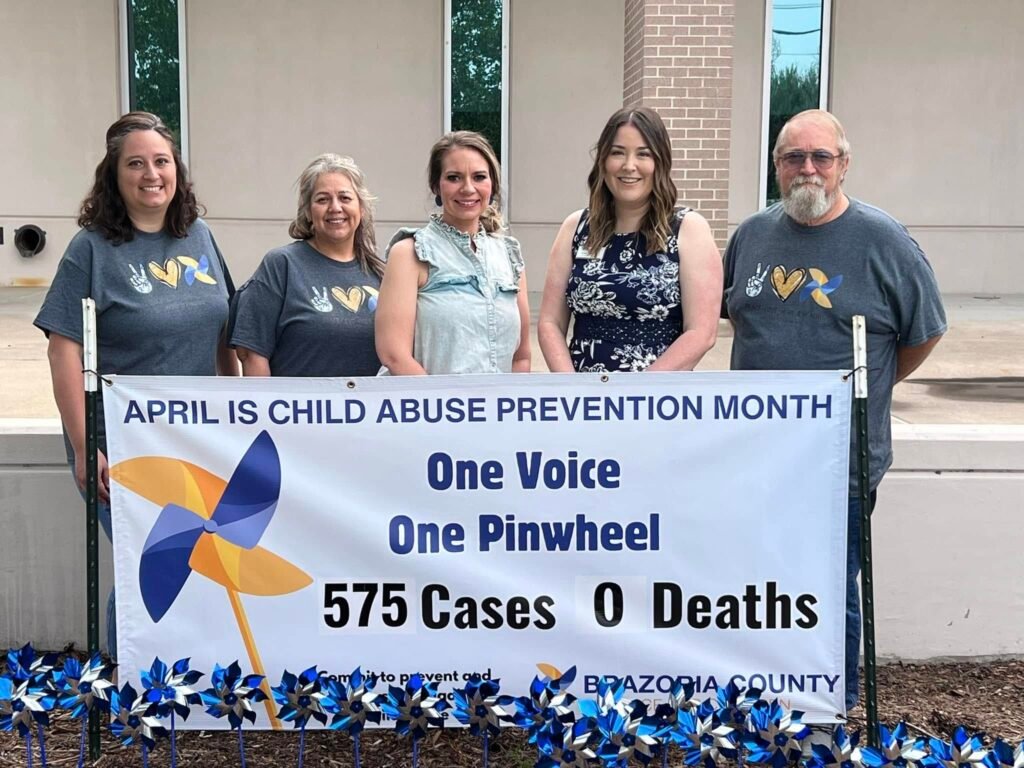
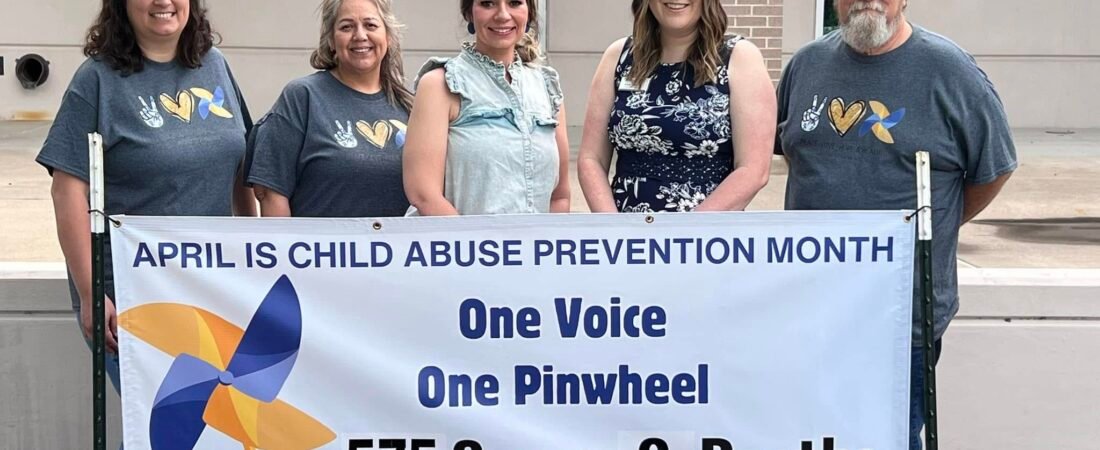
When a child discloses abuse, the road ahead can feel frightening, confusing, and overwhelming for both the child and the adults who love them. Brazoria County Alliance for Children (BCAC) exists to make sure children and families do not have to walk that road alone.
For 15 years, Executive Director Kristi Hawkins has worked at the organization, including seven years in her current leadership role. This nonprofit child advocacy center, founded in 2004, serves families across Brazoria County through offices in Angleton and Pearland.
Its mission, Hawkins said, is rooted in providing support, hope, healing and someone to walk alongside children and families who have experienced crime or abuse.
Before joining BCAC, Hawkins spent six years as a rehabilitative case manager with Gulf Coast Center, where she worked with children and teenagers diagnosed with mental illnesses. She visited homes and schools, helped young people develop coping and communication skills, and, at times, made reports to Child Protective Services when concerns of abuse or neglect emerged.
“I didn’t know what happened to children after you report to CPS.” Hawkins said. “I just knew I made the report.”
She found the answer when she joined Brazoria County Alliance for Children, beginning as a forensic interviewer and family advocate. Today, she leads an organization built around helping children and caregivers through one of the hardest experiences a family can face.
A Safe Place for Children
Brazoria County Alliance for Children is not a law enforcement agency, CPS office, or prosecutor’s office. It does not investigate cases or determine what happens in court. Instead, it works alongside those agencies to offer a child-centered response after a report of suspected abuse or crime has been made.
“It’s a safe place for children to come and talk about their experience or exposure to abuse if they’re ready,” Hawkins said. “You cannot make a child talk if they’re not ready, and we would never want to force them to talk about their experience.”
The organization partners with law enforcement, Child Protective Services, the district attorney’s office, medical providers, counselors, and other agencies involved in a multidisciplinary response. Its purpose is to help children and their caregivers understand the process, access support, and begin healing.
Children who come to the center may have experienced sexual abuse, physical abuse, neglect, exposure to drugs, or violent crime. The majority of the center’s cases involve sexual abuse, Hawkins said.
“About 60 to 65 percent of our kids, every year, it’s sexual abuse,” she said. “That was something that I was not really prepared for.”
On average, about 550 children come through the organization’s doors each year. In 2025 alone, staff reviewed nearly 3,500 CPS reports involving Brazoria County in order to coordinate with law enforcement and CPS partners and offer services when appropriate.
Hawkins said the volume illustrates a difficult reality: Child abuse and children’s exposure to crime are more common than many people realize. “It’s much more prevalent than I ever thought,” she said. “I just had no idea how much was going on in Brazoria County.”
What Happens After a Report
A teacher, counselor, family member, neighbor, coach, clergy member, or another concerned adult may be the first person a child tells about suspected abuse. In Texas, everyone is required to report suspected child abuse or neglect, not only educators, medical professionals, and other licensed workers.
Once a report reaches CPS or law enforcement, BCAC may become involved. The organization receives CPS reports from throughout Brazoria County and works with its agency partners to determine when services should be offered.
Its four core services are forensic interviews, family advocacy, medical evaluations, and counseling.
A forensic interview is often one of the first services provided. The term may sound intimidating, but Hawkins described it as a developmentally appropriate conversation that gives a child room to speak in their own words.
“It’s just essentially asking questions and giving a child that open space to talk about their experience,” she said.
The forensic interviewer first works to build rapport with the child, talking about neutral subjects, interests, and everyday life. The conversation then moves carefully toward why the child is there. Interviewers use open-ended questions and do not pressure children to talk or supply information.
The interviews are recorded so children do not have to repeat traumatic details separately to multiple investigators. The process also allows trained professionals to gather needed information while limiting additional trauma for the child. “They’re recorded, so the children don’t speak with law enforcement or CPS about what happened.”
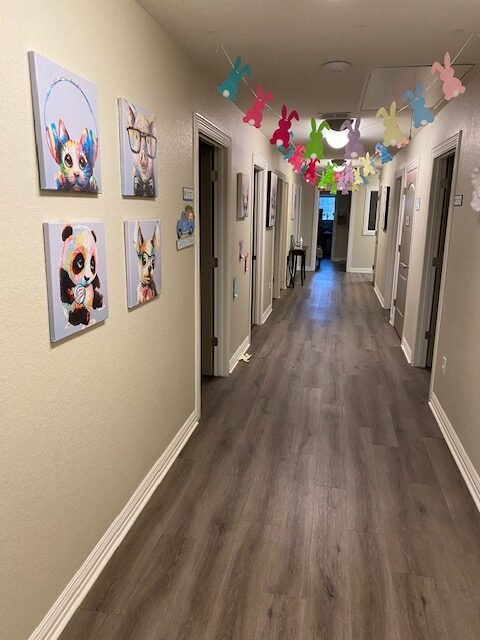
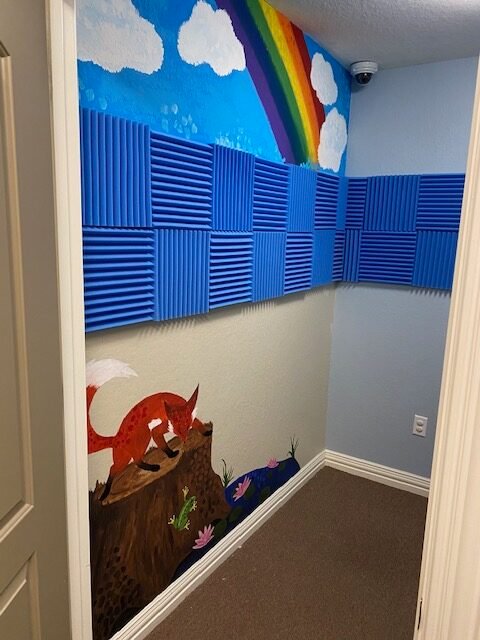
The child advocacy center setting itself can make a difference. Unlike a police department or government office, the center is designed to feel comfortable and welcoming for children.
At its Angleton location, families enter a space with colorful art, toys, movies, snacks, and child-friendly waiting areas. The organization serves children ages 2 through 17, as well as adults with developmental disabilities or delays.
“We don’t have a badge. We don’t have a gun,” Hawkins said. “I think that brings a lot of comfort for kids, because a lot of kids, the police department is where the scary bad guys go. They get to come to a place where it’s safe.”
The center also maintains safety boundaries. Alleged perpetrators are not permitted on site or allowed to be near the child there.
Support for the Whole Family
The organization’s work does not end with an interview. Family advocates offer crisis intervention, resource referrals, and ongoing support for non-offending caregivers. They help families understand what may happen next, identify needs, and remain connected to services during an investigation that can last months or even years.
“We provide those resources, crisis intervention, and ongoing follow-up phone calls so that people know that we’re still here for you,” Hawkins said. Some children may need a medical evaluation, which the organization can coordinate through Texas Forensic Nurse Examiners. Counseling is also available, including trauma-focused cognitive behavioral therapy designed to help children manage trauma and symptoms related to post-traumatic stress. All services are provided free of charge. “No one asks to experience the crime and abuse,” Hawkins continued “Luckily, all of the services are free for the clients.”
The center can usually arrange forensic interviews and family advocacy quickly, including after-hours when immediate action is needed to help keep a child safe. Medical evaluations and therapy can sometimes involve short waits due to capacity, but the organization works to connect families to outside counseling partners when necessary.
Transportation can also be a challenge, particularly for families trying to attend regular therapy appointments. Another barrier is fear. Some families may hesitate to report suspected abuse because they are worried about what will happen next, whether their child will be removed from the home, or whether they will be blamed. Hawkins explained that is why community education is so important.
“There are very few of the children we see at our center who go into foster care,” she said. “Many of these children are in loving homes, because it’s not always someone in the home who is the abuser.” Even when an alleged perpetrator lives in the home, she said, the other caregiver may not know what has been happening.
“They’re blindsided themselves,” Hawkins noted. “They’re left asking: ‘How did I not see the signs? How did I not know that this was happening to my child?’”
What the Community Should Know
One of the most important things residents should understand, Hawkins added, is that suspected abuse usually does not involve a stranger. In approximately 95 percent of cases, she said, the child knows the alleged perpetrator. Often, the caregiver knows that person, too.
That can make disclosure, reporting, and healing especially complicated. Alleged perpetrators may engage in grooming behavior, gradually normalizing conversations, physical contact, or situations that become increasingly inappropriate over time.
“A lot of times this is someone who is in their life that the children see often,” she said.
Children may also have complicated feelings about the person who harmed them, particularly when that person is a parent or someone else they love. A child may want the behavior to stop without wanting to disrupt the entire family.
“Kids may feel like they’re under a lot of pressure,” Hawkins said. “Especially as they get older, they know that things within the home can change if they outcry abuse. That’s a heavy weight that they have to carry.”
For other trusted adults working with children, Hawkins said changes in a child’s behavior should be taken seriously. Warning signs can include becoming withdrawn, falling asleep at school, falling grades, unexplained bruises or injuries, or simply seeming unlike themselves.
Those signs do not necessarily mean abuse or neglect is occurring, she noted. But it does mean something could be happening and they should prompt adults to pay attention and make space for a child to talk.
A simple statement can matter: “I’ve noticed that you seem different. I’m here to listen if you ever want to talk.”
If a child discloses something concerning, Hawkins urges adults to listen calmly and to not ask detailed or leading questions. The adult’s role is not to investigate. It is to make a report and help connect the child to people trained to respond.
“Don’t make any promises that you can’t keep,” Hawkins said. “I wouldn’t have a strong reaction either. That can be hard, especially if it’s a child that you know, but just focus on taking it all in and listening.”
Adults should not ask whether the child is sure or press for a detailed account. Instead, they can ask open questions, such as whether there is anything else they think the adult should know to help keep them safe.
“If a child has told you something happened, they trust you,” Hawkins explained. “They’re telling you for a reason, and they’re asking for help, even if they’re not saying, ‘I need help.’”
A Community Role in Healing
A major priority for BCAC is expanding awareness, particularly in Pearland and the northern part of Brazoria County.
The organization already works closely with law enforcement, CPS, the district attorney’s office, medical providers, and counseling partners. It also works with school districts and wants to provide more training for teachers and staff on recognizing signs of abuse, responding appropriately when a child makes a disclosure, and creating trauma-informed classrooms. “We want more people to know about us before they need us,” Hawkins shared.
The nonprofit also relies on support from the community. Donations help sustain its services, but access to schools, businesses, churches, civic groups, and neighborhood organizations is equally important.
“I would love to have doors open,” she added. “My focus is: how do we get into the areas that need to learn more about the signs of abuse, the symptoms of abuse, and how to respond to the outcry?”
If reports are not made, children cannot be connected to the help that may be available through the center.
“When you make that report of abuse, you are doing the right thing,” Hawkins said. “This is the right step to do it.”
Community members can support the organization by inviting staff to speak or train their organizations, attending and sponsoring fundraising events, donating, and helping spread awareness of available services.
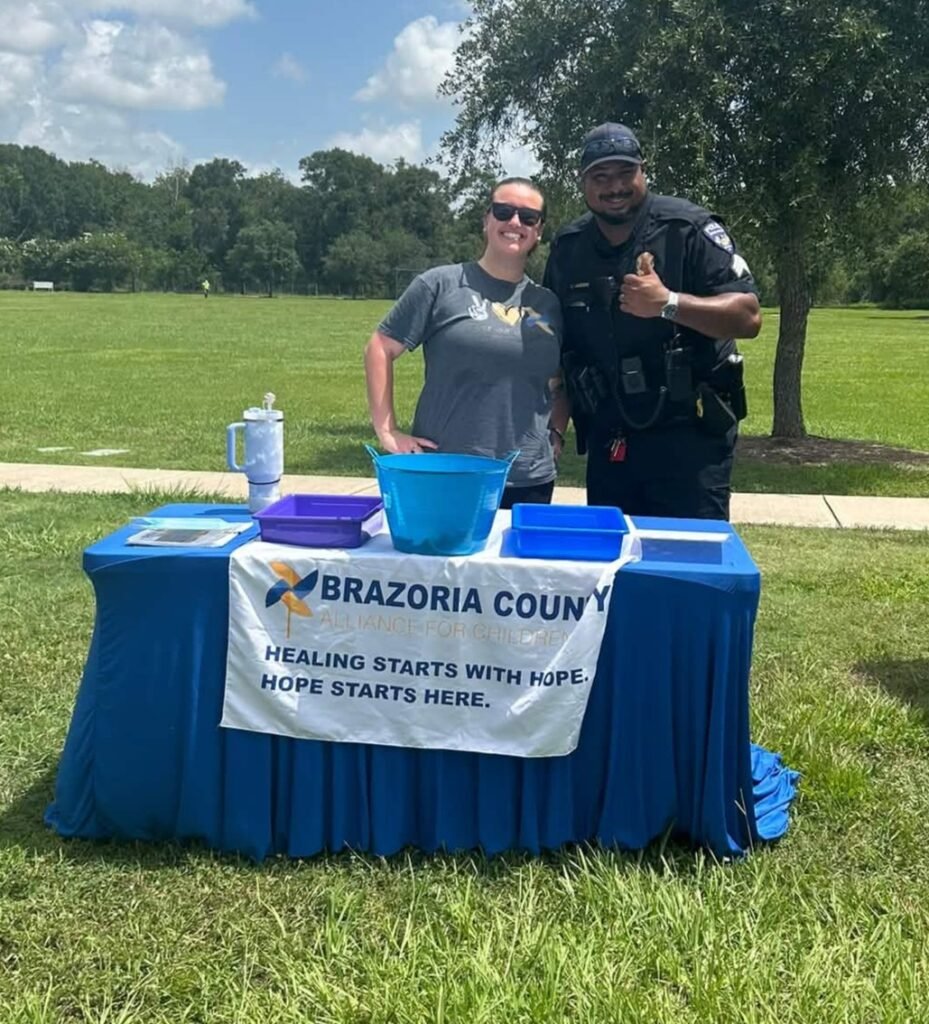
Brazoria County Alliance for Children hosts several annual fundraising and outreach events, including a themed Partners in Hope gala, a Pearland-area bingo event, and Krawfish for Kids in Angleton. The organization also provides birthday gifts and Christmas gifts for children in foster care throughout Brazoria County, with community members purchasing items from anonymized wish lists.
For Hawkins and her staff, the clearest measure of the organization’s impact often comes in small moments.
“I cannot tell you how many children don’t want to leave our office,” she said. “They’re comfortable here. They’re sitting down, especially after their interview. There are kids who are like, ‘I’m not ready to go. I want to stay here. I want to keep coloring. I want to eat my snack.’”
That moment of comfort does not erase what brought a child to the center. But it can provide the first sign that they have found a place where they are heard, believed, and supported.
“For us, that is what matters most,” Hawkins noted. “In the middle of a difficult experience, we want children to know they are not alone. This is a place made for them, where they can feel safe, be heard, and begin to heal.”
Families and community members who need help, want to report suspected abuse, or would like to learn more about Brazoria County Alliance for Children can contact the organization through its offices in Pearland and Angleton or visit its website at cac-bc.org.
Anyone who suspects a child is being abused or neglected should make a report to the Texas Abuse Hotline at 800-252-5400 or online at txabusehotline.org. In an emergency or when a child may be in immediate danger, call 911.