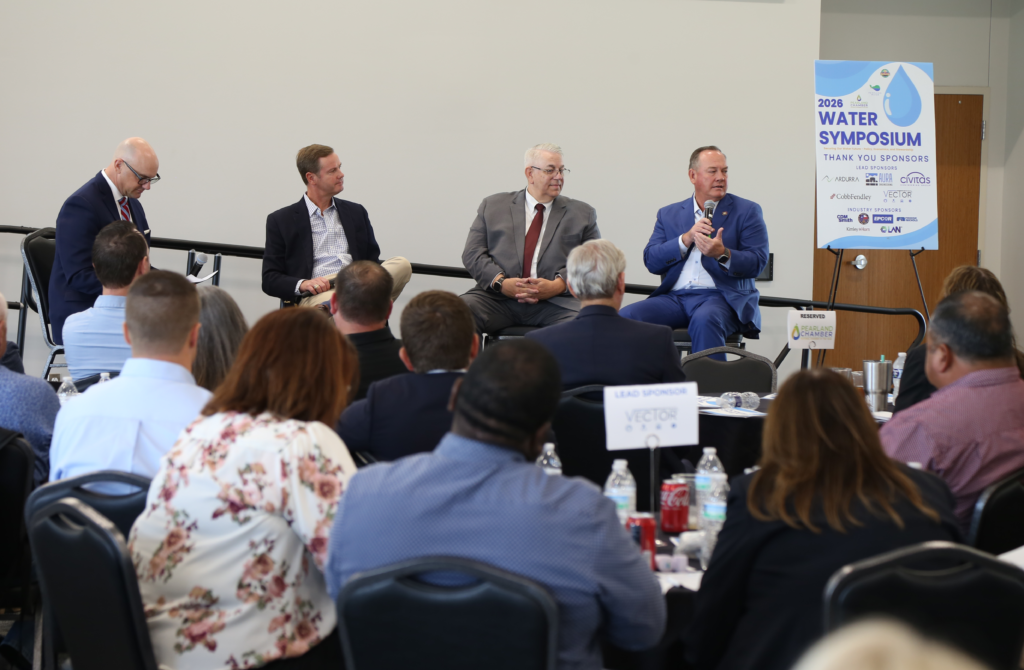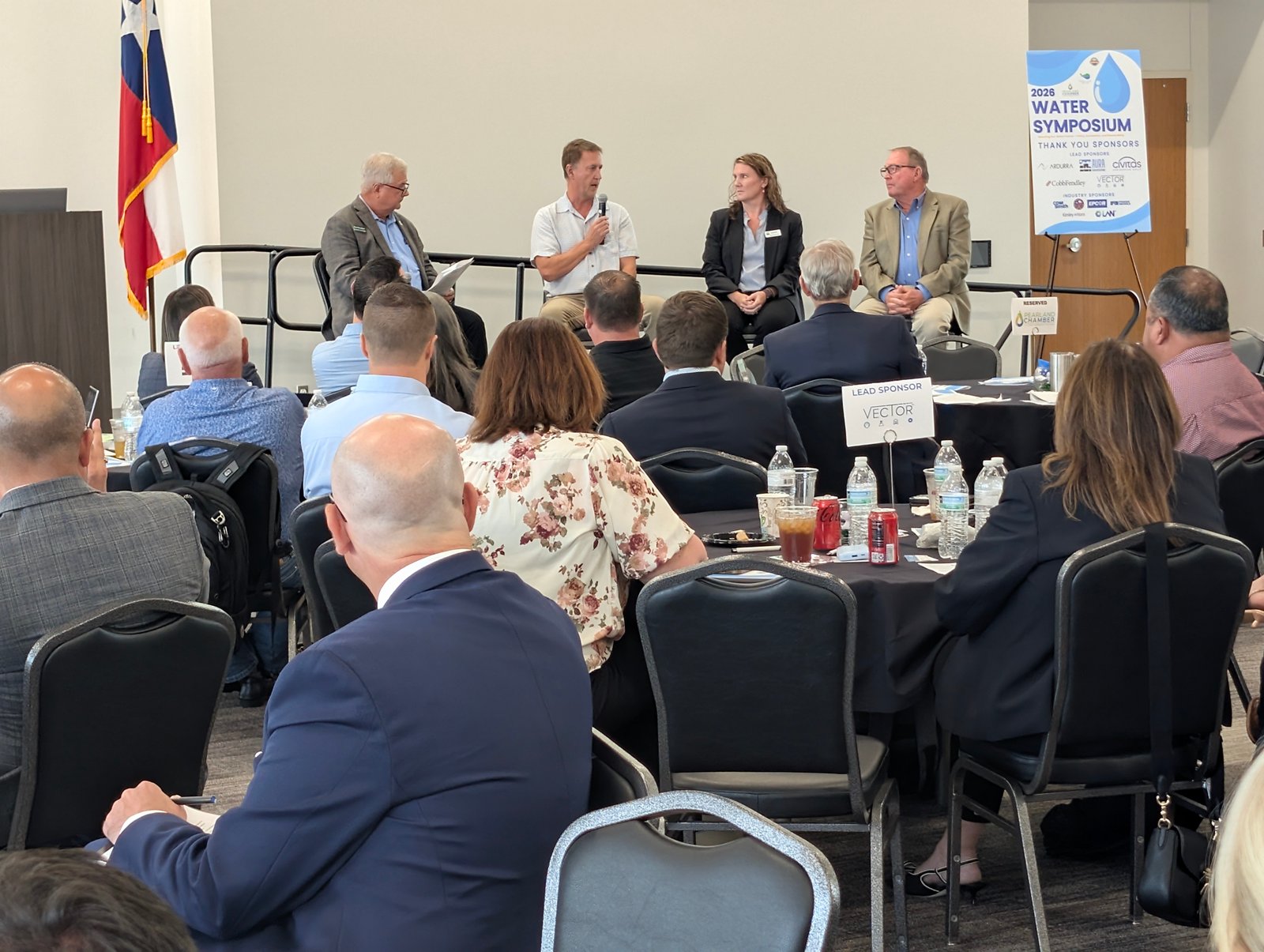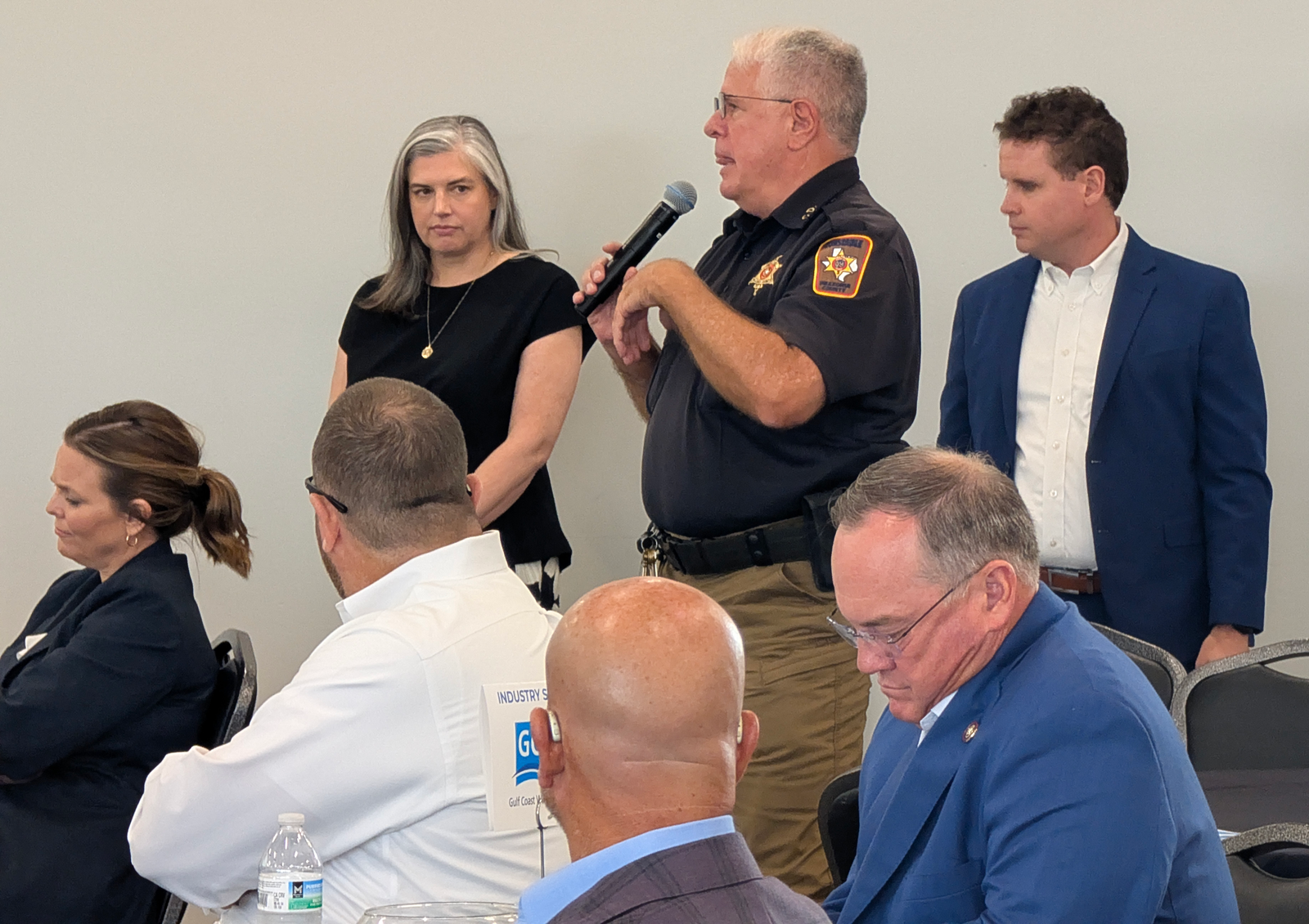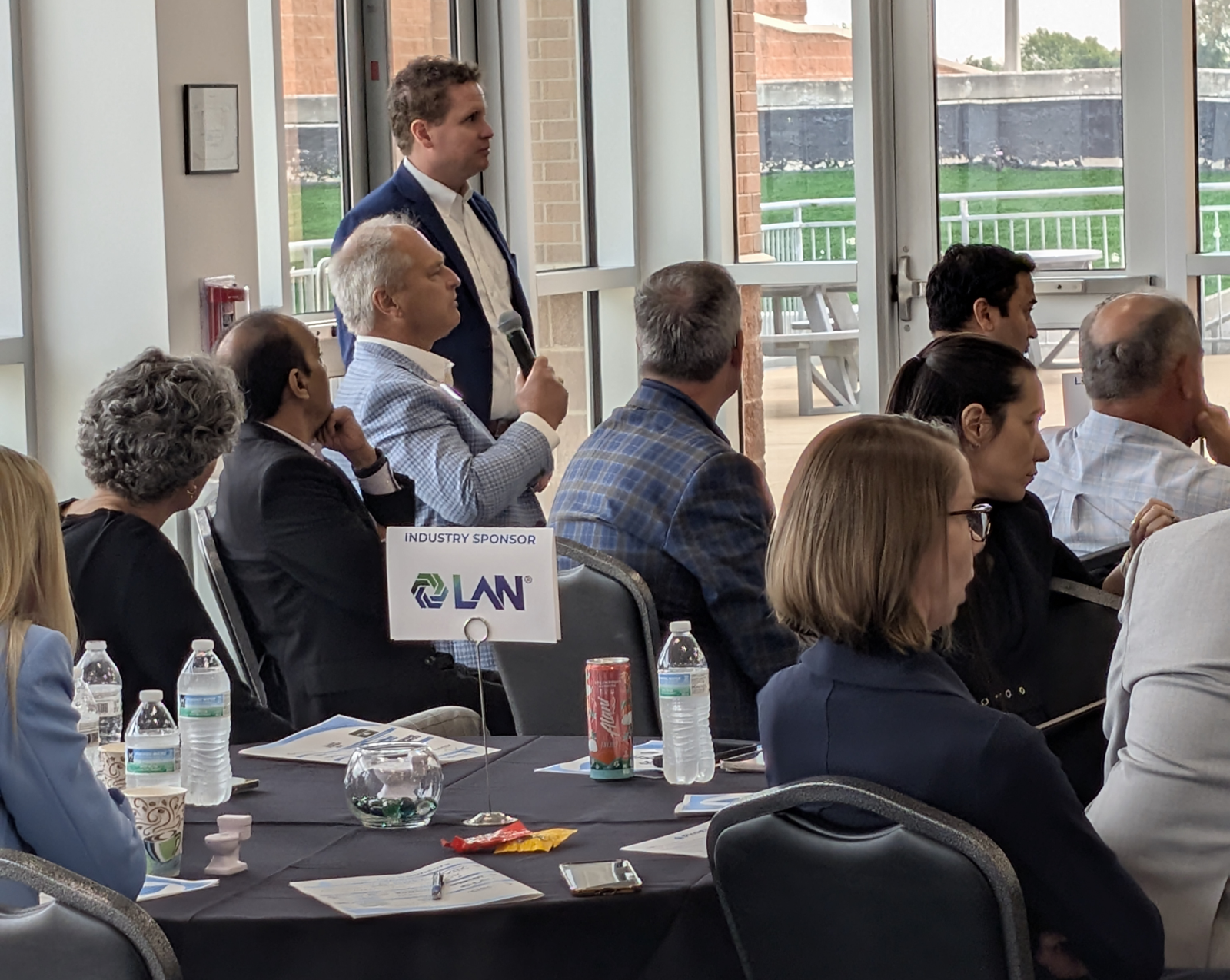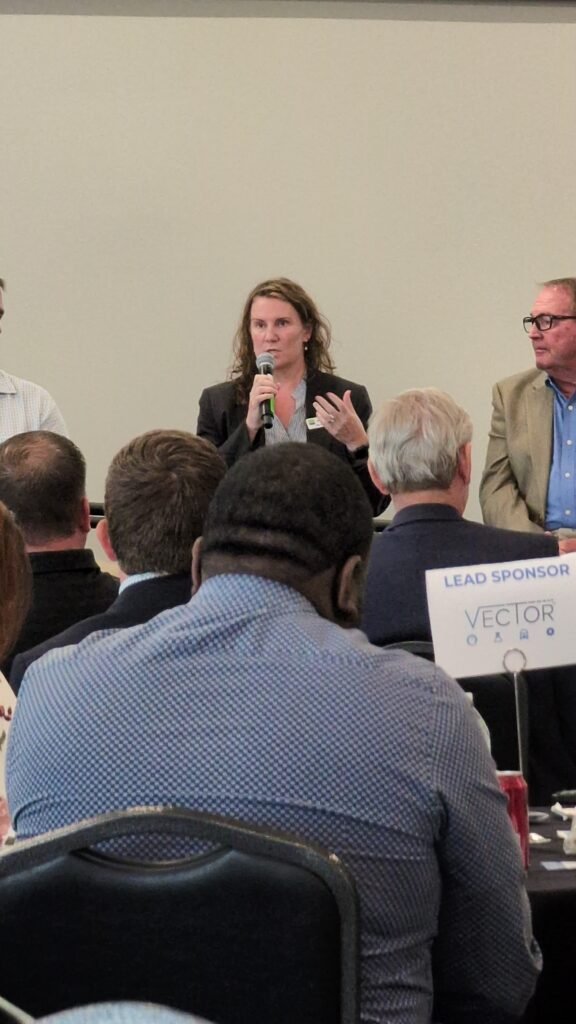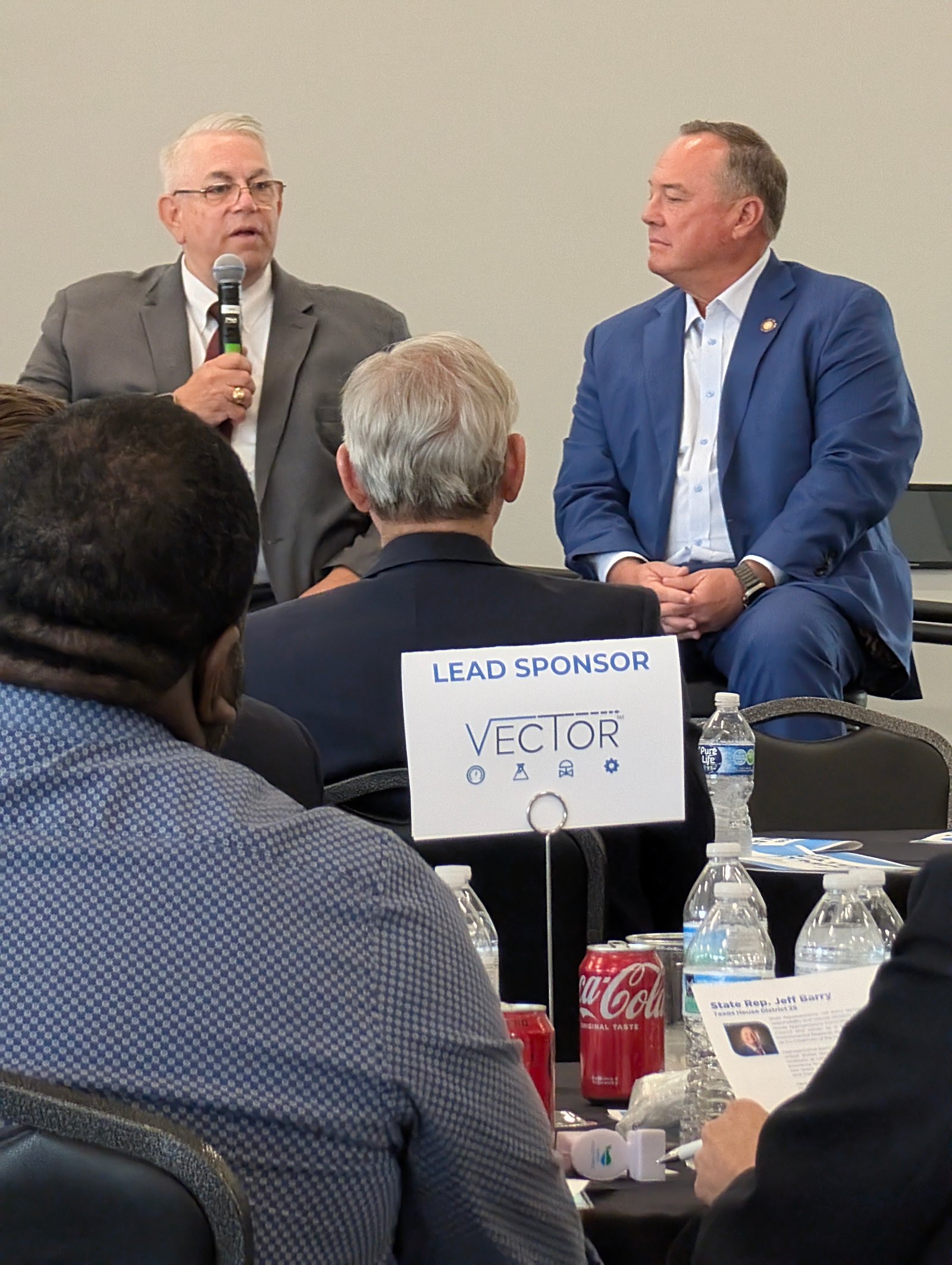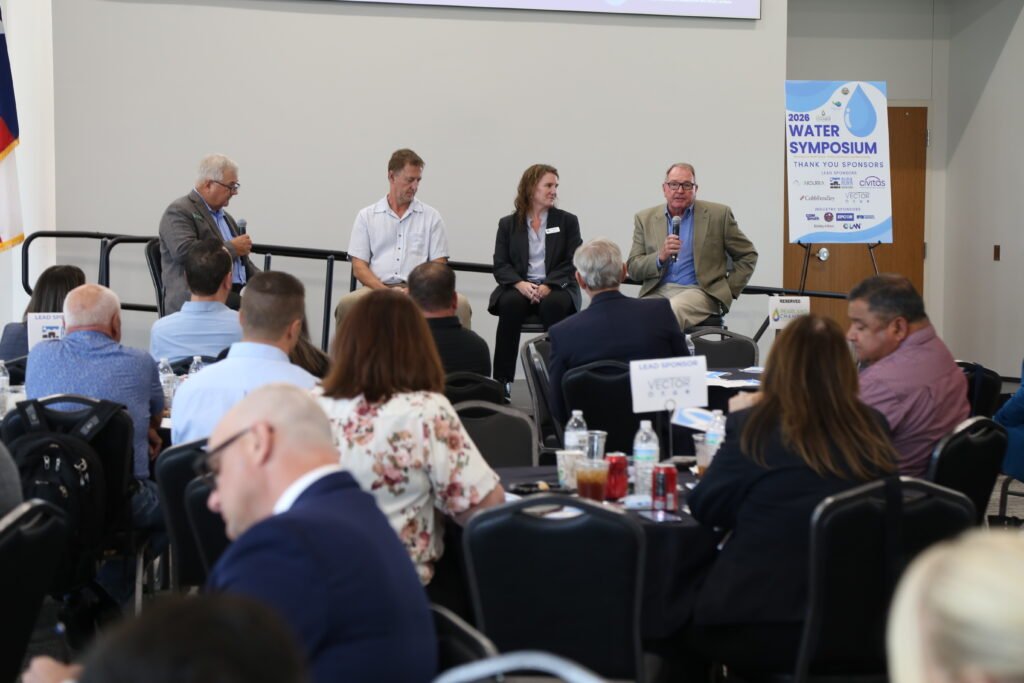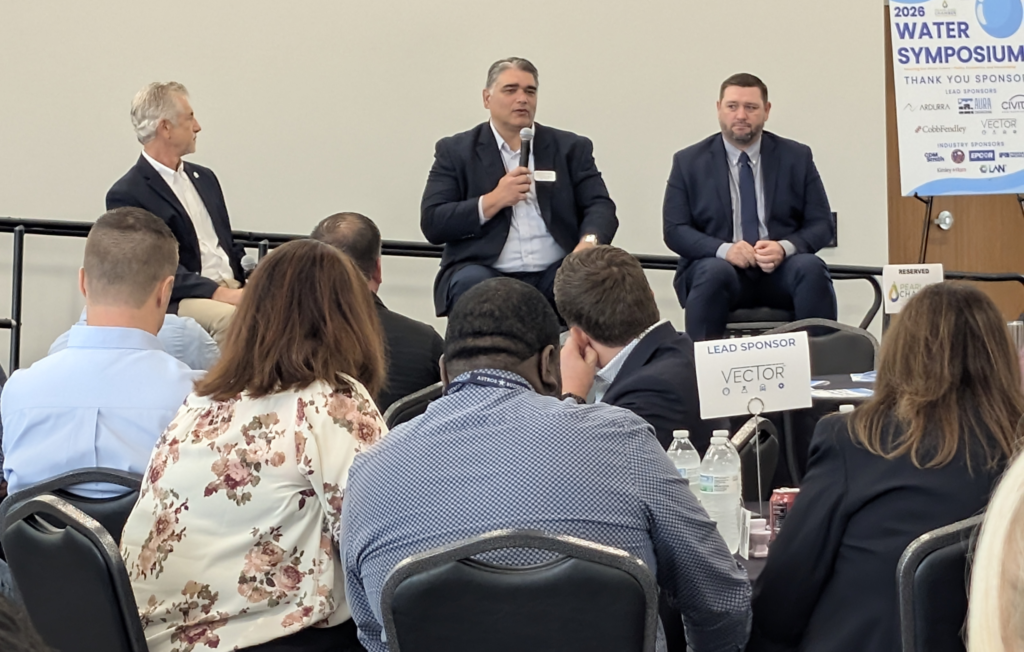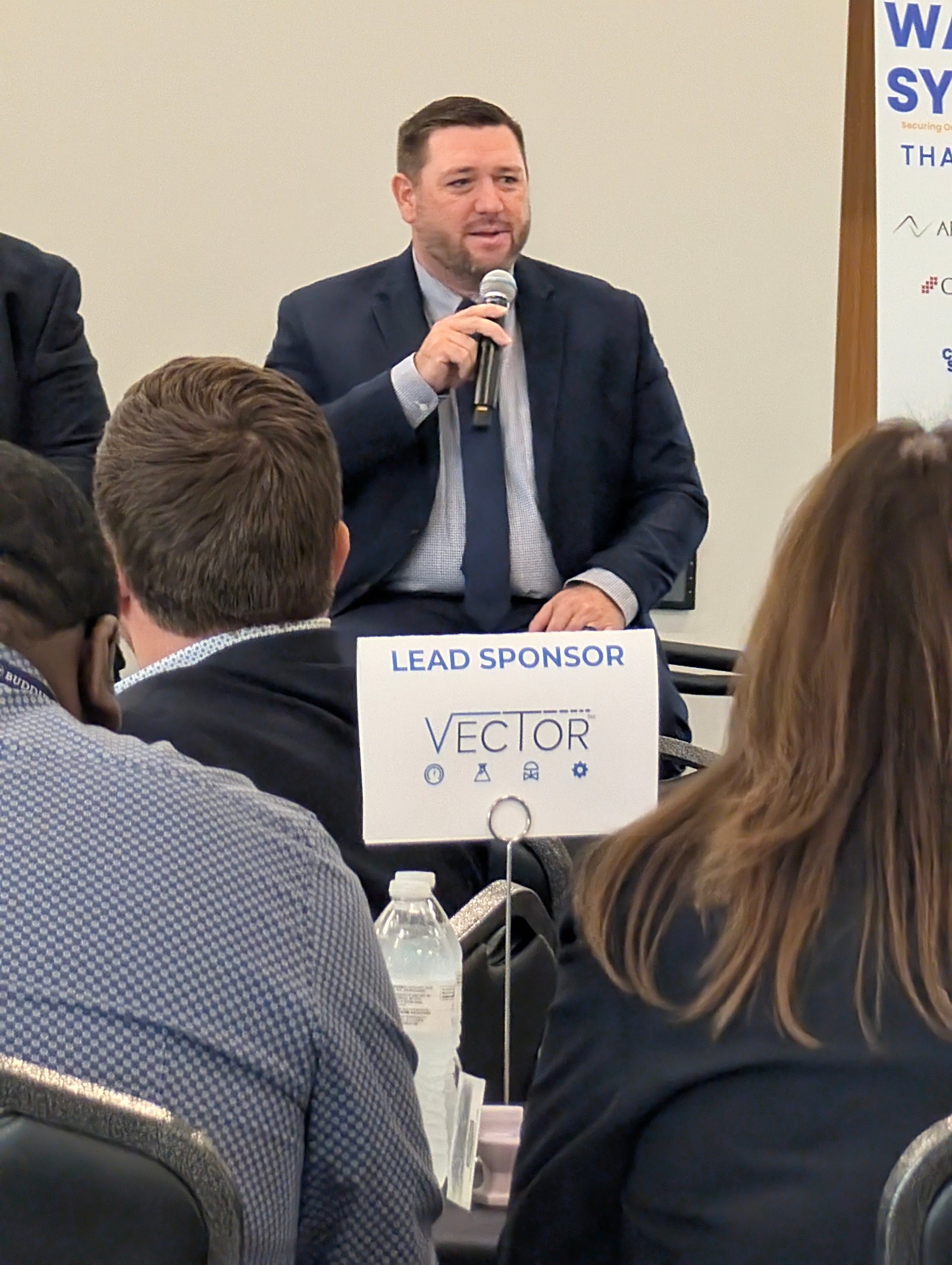
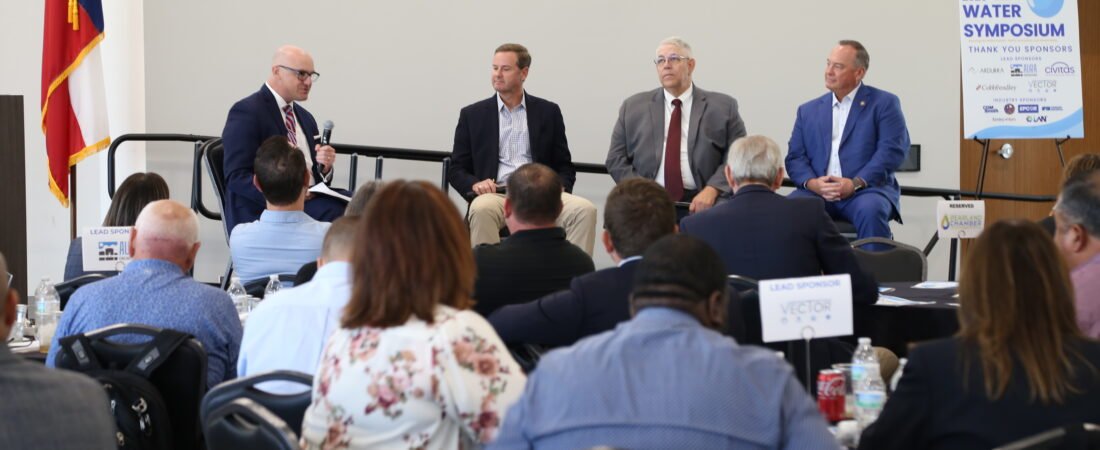
More than 150 elected officials, water professionals, business leaders, researchers, farmers and community stakeholders gathered Aug. 27 at Alvin ISD Liberty Alumni Hall for the Pearland Chamber of Commerce’s second annual Water Symposium, a daylong examination of the decisions shaping Texas’ water future.
The event, themed “Future of Water: Innovation, Collaboration and What’s at Stake,” moved from the history of Texas water conflicts to current regional supply systems, desalination, water reuse, agriculture, industrial demand, data centers and the legislative issues expected to shape the next session.
The conversations were technical at times, but the underlying question was simple: Can Texas keep pace with growth while ensuring there is enough reliable water for homes, businesses, farms, public infrastructure and the natural systems connected to them?
For Pearland and the wider Gulf Coast, that question is not theoretical. The region continues to add residents, develop land, support major industry and navigate the long-term shift away from heavy groundwater use. The symposium brought those pieces into the same room.
The Pearland Chamber organized the event with support from the City of Pearland. Speakers represented city government, regional water authorities, state agencies, Texas lawmakers, industry, agriculture and research organizations.
The symposium’s full discussions will be covered in a Pearland Stories series over the next week. Each article will take a closer look at one session, the speakers’ key points and what the issues could mean for Pearland, Brazoria County and the Texas Gulf Coast.
Water as a Growth Question
The symposium opened with remarks emphasizing that water is no longer only an environmental or utility issue. It is tied to nearly every major question facing a growing community.
New homes require water. New businesses require water. Schools, hospitals, roads, fire protection, industrial plants, farms and emerging technology infrastructure all depend on water systems that are reliable, affordable and capable of handling future demand.
The symposium’s structure reflected that reality. Rather than treating water as one topic among many, the program followed the issue from historic water conflicts and supply systems through modern infrastructure, emerging technologies and future public policy.
The event featured representatives from communities across the region, including Pearland, Manvel, Iowa Colony and Brazoria County, as well as state legislators whose districts include Pearland, Brazoria County, East Texas and other parts of the state facing very different water challenges.
A History of Water fights
The keynote presentation, “Water in Texas: Who Fought for It, Who Moved It, and Why It Matters Today,” was delivered by Robert Mace, Ph.D., executive director and chief water policy officer at The Meadows Center for Water and the Environment and a professor of practice at Texas State University.
Mace traced Texas’ water history through decades of ambitious proposals to move water from wetter parts of the country into dry regions of Texas. Those ideas ranged from large canals across the state to pipelines stretching from the Mississippi River, and even massive concepts involving Canada and Alaska.
The historical projects often failed because they were expensive, politically difficult and legally complicated. But Mace used them to show that Texas has long understood its uneven water geography. The problem is not simply whether engineers can build pipelines, reservoirs or treatment plants. The larger question is whether communities, regions and governments can agree on how to pay for them, where to put them and who has the right to the water.
Mace also used Corpus Christi’s drought experience as a warning about overreliance on surface water. The city’s recent water challenges, he argued, show why communities need to plan for more than the historical drought record and create backup options before supplies become critically low.
His session set the tone for the day: water planning is ultimately risk management, and risk becomes more expensive when communities wait for a crisis.
Where the Region’s Water Originates
The second session, “From Source to Sustainability: Capturing, Managing, and Renewing Our Water,” brought the conversation closer to home.
Pearland City Manager Trent Epperson moderated a discussion with Jake Hollingsworth, MBA, deputy general manager and chief operating officer of Gulf Coast Water Authority, and Michael J. Turco, general manager of the Harris-Galveston Subsidence District and Fort Bend Subsidence District.
The panel explained how the Gulf Coast region shifted over time from extensive groundwater use to a more diverse system that includes surface water, groundwater management, conservation, reuse and future alternatives such as desalination.
Turco addressed the connection between groundwater pumping and land subsidence. For decades, the Houston-area region relied heavily on groundwater, but excessive pumping caused portions of the land to sink. That can affect flood risk, infrastructure and property values. The subsidence districts were created to manage that risk by reducing, though not entirely eliminating, reliance on groundwater.
Hollingsworth described Gulf Coast Water Authority’s regional infrastructure, which moves water through an extensive canal system and serves municipal, industrial and agricultural users. The authority’s core supply is tied to the Brazos River, though the broader system is increasingly shaped by regional contracts, surface-water treatment and planning for future demand.
For Pearland, the session highlighted the importance of decisions made years before the city’s current growth. Pearland has invested in surface-water infrastructure and water rights over several decades, positioning itself within a larger regional network rather than depending entirely on local groundwater.
The speakers also discussed water reuse, stormwater capture, conservation, leak detection, workforce shortages and the difficulty of maintaining infrastructure as farmland becomes subdivisions and industrial development expands.
Desalination and Corpus Christi
The symposium’s third session, “Desalination: Separating Fact from Fiction,” featured Drew Molly, chief water officer for Houston Public Works.
Molly drew from his recent experience as chief operating officer of Corpus Christi Water, where he helped advance the city’s Inner Harbor desalination project. The project was designed to provide a drought-proof water source through reverse osmosis treatment of seawater, but it was ultimately halted after a City Council vote.
His presentation offered a case study in why water projects are often more difficult than the engineering alone would suggest. Corpus Christi had permitting, financing, industry participation and design work in place. Yet the project still struggled with public skepticism, rate concerns, debate over brine discharge, competing proposals and the challenge of sustaining political support for a costly project after rainfall temporarily improved reservoir levels.
Molly’s larger point was that desalination should not be considered a cure-all. It is expensive and requires careful planning, energy, permitting and public trust. But it may become increasingly important for coastal Texas communities that need a supply source less vulnerable to drought.
He also discussed Houston’s own water future, including major treatment-plant investments, water reuse potential and the urgency of repairing and replacing aging water lines. A city cannot credibly ask residents to support major new supply investments, he suggested, while allowing substantial volumes of treated water to leak from existing systems.
Water and the Economy
The fourth session, “Water and Business: From Agriculture to Advanced Industry and Data Centers,” brought together perspectives from three very different sectors.
Don Strouhal of Strouhal Turf Farms moderated the panel, which included Cliff Mock, vice president of the Gulf Coast Water Authority Board and a rice farmer and consultant; Dr. Erin Kinney, manager of coastal resilience and communities and senior research scientist at the Houston Advanced Research Center; and Tim Finley, senior manufacturing and engineering fellow at Dow Inc.
The conversation examined water as an economic input. For agriculture, reliable water determines whether crops can be planted, harvested and sold. For industry, water supports cooling, manufacturing, treatment and daily operations. For coastal communities and ecosystems, water management decisions can affect bays, wetlands, drainage patterns and long-term resilience.
The panel also addressed the rise of data centers. The topic has gained attention in Texas because data centers can have significant power and water needs, particularly when cooling systems use water. Speakers emphasized that every facility is different and that public officials need detailed information about water use, cooling technology, wastewater, fire protection and infrastructure needs before evaluating a proposed project.
The discussion did not portray data centers as inherently good or bad. Instead, it focused on the questions communities need answered. What kind of water will a facility use? How much will it need? What happens to wastewater or cooling-tower discharge? Is the power system capable of serving it? Does local water infrastructure have sufficient capacity for normal operations and emergencies?
The session made clear that economic development and water planning cannot be separated. Growth can bring jobs and investment, but it also brings demand that must be understood before commitments are made.
The Policy Questions Ahead
The final session, “Legislative Outlook: The Upcoming Session and What It Means for Water,” focused on what lawmakers may confront when the Texas Legislature convenes in 2027.
Jeremy B. Mazur, director of infrastructure and natural resources policy at Texas 2036, moderated the panel with State Rep. Jeff Barry of District 29, State Rep. Trent Ashby of District 9 and State Rep. Stan Kitzman of District 85.
The lawmakers described water as one of the most significant issues heading into the next session. Texas has made substantial commitments in recent years through the Texas Water Fund, but panelists stressed that the state’s needs remain far greater than the money currently available.
The discussion covered infrastructure financing, water reuse, desalination, produced water from oil and gas operations, groundwater management, data-center demand, flood control and the difficulty of moving water from one region to another.
A major issue expected to emerge is groundwater. Ashby described growing concern in East Texas about large-scale commercial groundwater pumping and exports. That debate could place renewed attention on Texas’ longstanding rule of capture, which generally allows landowners to pump groundwater beneath their land for beneficial use, even when pumping affects neighboring wells.
The panel also discussed the possibility of conflicts between regional water plans. One region may identify a future reservoir, pipeline or water source located in another region, creating questions about local consent, water rights, property rights, eminent domain and how disputes should be resolved.
Data centers are also expected to be part of the legislative discussion, particularly regarding the information they provide about water and power needs, their cooling systems, the types of water they use and the infrastructure required to support them.
Deeper Series to Follow
The 2026 Water Symposium did not offer a single solution to Texas’ water challenges. Instead, it brought together people working from different parts of the same system: legislators who fund and shape policy, city managers who plan for local growth, water authorities that move and treat supply, researchers who study ecosystems and resilience, farmers who depend on irrigation and industrial leaders who manage water at scale.
Over the next week, Pearland Stories will publish five additional articles examining each session in more depth:
* Texas water history, drought risk and the debate over moving water across long distances
* Gulf Coast water supply, subsidence, surface water, reuse and conservation
* Desalination lessons from Corpus Christi and what they could mean for Texas
* Agriculture, industry, coastal resilience and data-center demand
* The legislative issues expected to shape Texas water policy in 2027
The symposium’s broadest message was that water planning is not a distant technical exercise. It is connected to what the Gulf Coast builds, how it grows, where businesses locate, how communities handle drought and flooding, and whether future generations inherit a system prepared for the challenges ahead.