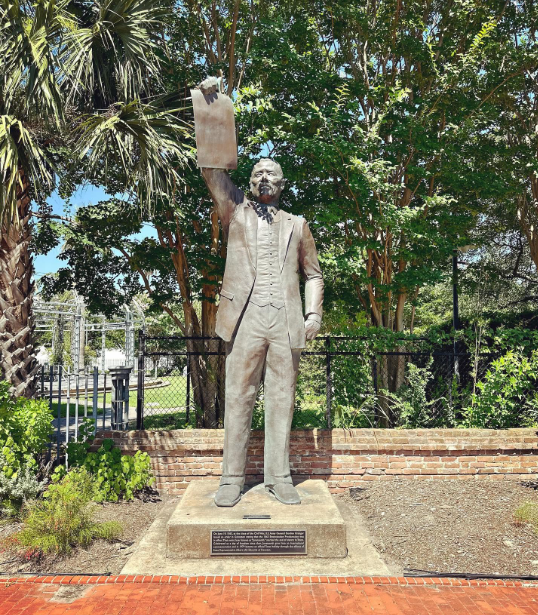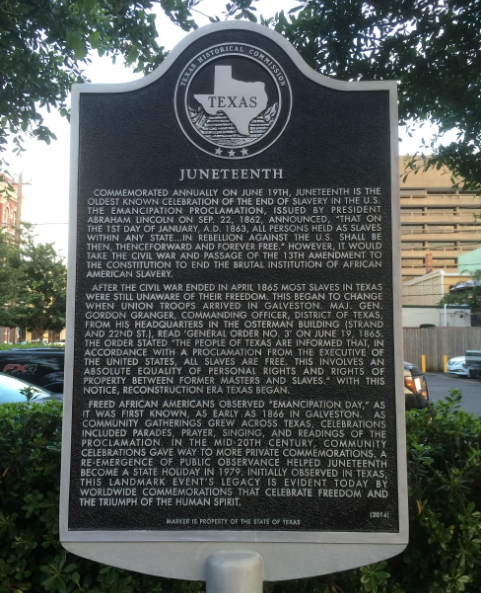
Juneteenth didn’t start as a national holiday. It started as a local story. And for those of us in the Gulf Coast region, that story unfolded just a short drive away, on the shores of Galveston.
Most of the country talks about Juneteenth as “the day the last enslaved people were freed” or “Black Independence Day.” Both are true in spirit. But the details matter, especially here in Pearland and the Greater Houston area. Juneteenth began on June 19, 1865, when Union troops arrived in Galveston and announced that more than 250,000 enslaved Black people in Texas were legally free. That moment on the island, is the spark that lit everything we now call Juneteenth.
Freedom Delayed in Texas
By the time soldiers landed in Galveston, the Civil War was effectively over and President Abraham Lincoln’s Emancipation Proclamation had been on the books for more than two years. On paper, enslaved people in the Confederate states were already “forever free.” In reality, Texas was different. Its distance from the main battles of the war, the light presence of Union forces, and the determination of slaveholders meant that slavery continued long after it had been outlawed.
As Union lines advanced elsewhere, many slaveholders actually moved enslaved people into Texas, treating the state as a last safe harbor for a collapsing slave system. That is how, in June 1865, you had a quarter of a million people still living in bondage in Texas, including in communities that now sit squarely inside our region. Freedom was not just late. It was deliberately delayed.
On June 19, 1865, Union General Gordon Granger arrived in Galveston with federal troops and read General Order No. 3. The order made it plain: enslaved people in Texas were free, and the relationship between former masters and formerly enslaved people would shift to one between “employer and hired labor.” The words themselves were imperfect and limited, but they carried immense weight for the people hearing them on that day.
For black Texans, especially those in and around Galveston, this was not an abstract policy change out of Washington. It was the first official acknowledgment, delivered in person and backed by armed soldiers, that they were no longer legally property. That moment on Galveston Island is what we mark when we say “Juneteenth.” It is why this holiday is not just a general “black history” observance for us. It is a Texas story and a Gulf Coast story, from our own backyard.
How the First Juneteenth Looked
The following year, in 1866, newly freed black communities in Texas began organizing what they called Jubilee Day to remember that day of announcement and to claim space for joy after generations of forced labor. The earliest Juneteenth gatherings were centered in churches and open fields, with worship services, shared meals, music, speeches, and readings of both the Emancipation Proclamation and General Order No. 3.
Because public spaces were often closed or unsafe to black residents, people pooled resources to buy land specifically for Juneteenth celebrations. Those parks and fairgrounds became rare places where black families could gather, picnic, dress in their best clothes, and celebrate freedom without constant harassment. In that context, even choices like wearing your finest outfit or serving particular foods became subtle acts of resistance and pride.
How the Tradition Spread from the Coast
For many years, Juneteenth stayed strongest in Texas. But as black Texans moved to other states they carried the tradition with them. By the early and mid 20th century, you could find Juneteenth celebrations in places like Oklahoma, California, and Midwestern cities, often led by families whose roots traced back to Texas and the Gulf Coast.
Those gatherings were never just parties. They doubled as political and civic spaces, places where people registered voters, discussed civil rights, and taught younger generations about both slavery and freedom. Even when large public celebrations declined during the harshest years of segregation and economic pressure, the memory of Juneteenth stayed alive in black churches, families, and neighborhood traditions.
From Local Observance to National Holiday
In 1980, Texas became the first state to formally recognize Juneteenth as a state holiday. That decision put legal language around a celebration black Texans had already kept for more than a century. Over time, more states followed with their own forms of recognition: official holidays, annual proclamations, educational events, and large citywide festivals.
On June 17, 2021, the Juneteenth National Independence Day Act was signed into law, lifting a Texas-rooted, Galveston-born commemoration onto the national calendar. This bipartisan legislation made June 19th the 12th legal federal holiday, marking the first new federal holiday since Martin Luther King Jr. Day was adopted in 1983.
Juneteenth Today
For communities like Pearland, just a short drive from Galveston, Juneteenth is not distant history. The roads we take to the island for day trips to the beach trace the same general paths along which people and news moved back and forth across the region in 1865. When we talk about “what happened in Galveston,” we are talking about a decision that reshaped the lives of people living in and around what we now know as Brazoria County and the greater Houston area.
Local Juneteenth events often blend celebration and education. You might see parades, cookouts, concerts, and family festivals alongside history talks, exhibits, and conversations about ongoing racial inequities. Many families serve red foods and drinks such as hibiscus tea or strawberry sodas or red punch along with desserts like red velvet cake and barbecue, a tradition that has come to symbolize resilience, sacrifice, and the bloodshed tied to the long fight for freedom.
For Pearland residents who did not grow up with Juneteenth, understanding Galveston’s role is a way of grounding this holiday in local soil instead of treating it as a generic date on the calendar.
References and Sources:
National Museum of African American History and Culture. (n.d.). Juneteenth. Smithsonian Institution. https://nmaahc.si.edu/explore/moments/juneteenth
National Museum of African American History and Culture. (2026, January 4). The historical legacy of Juneteenth. Smithsonian Institution. https://nmaahc.si.edu/explore/stories/historical-legacy-juneteenth
Office of the Historian. (2021, June 15). Understanding America: The history and meaning of Juneteenth. U.S. Department of State. https://2021-2025.state.gov/briefings-foreign-press-centers/understanding-america-the-history-and-meaning-of-juneteenth/
Texas State Historical Association. (n.d.). Juneteenth. Handbook of Texas Online. https://www.tshaonline.org/handbook/entries/juneteenth
Texas State Library and Archives Commission. (2025, April 27). Texas observes Juneteenth. https://www.tsl.texas.gov/ref/abouttx/juneteenth
U.S. Census Bureau. (2025, May 31). June 2025: Juneteenth. https://www.census.gov/about/history/stories/monthly/2025/june-2025.html
National Park Service. (n.d.). Juneteenth National Independence Day. U.S. Department of the Interior. https://www.nps.gov/subjects/npscelebrates/juneteenth.htm
St. Petersburg campus, University of South Florida. (2024, June 16). Juneteenth: The complicated history, significance and celebration around struggle for freedom. University of South Florida. https://www.stpetersburg.usf.edu/news/2023/juneteenth-complicated-history-significance-celebration-around-struggle-for-freedom.aspx
U.S. Capitol Historical Society. (2024, March 11). The long history of our new federal holiday: Juneteenth. https://capitolhistory.org/capitol-history-blog/the-long-history-of-our-new-federal-holiday-juneteenth/
University of North Carolina Press. (2017, June 18). The history of Juneteenth: 5 facts you need to know. University of North Carolina Press Blog. https://uncpressblog.com/2017/06/19/the-history-of-juneteenth-5-facts-you-need-to-know/
KidsOutAndAbout.com. (n.d.). Juneteenth Freedom Celebration – Pearland, TX. Kids Out and About Houston. https://houston.kidsoutandabout.com/content/juneteenth-freedom-celebration
City of Pearland. (n.d.). Juneteenth Freedom Celebration volunteer opportunities. City of Pearland. https://volunteer.pearlandtx.gov/need/detail/?need_id=1071118
Visit Galveston. (2026, May 14). Galveston Juneteenth celebrations. Visit Galveston. https://www.visitgalveston.com/events/annual-events/juneteenth/
Galveston Historical Foundation. (2026, January 2). Juneteenth 2026 events. Galveston Historical Foundation. https://www.galvestonhistory.org/news/juneteenth-events
Galveston College Library. (n.d.). Local Juneteenth events. Galveston College. https://library.gc.edu/juneteenth/local
United States Congress. (2021). S.475 – Juneteenth National Independence Day Act, 117th Congress (2021–2022). https://www.congress.gov/bill/117th-congress/senate-bill/475/text
Additional Notes:
The Texas State Library highlights that in many parts of Texas, freedmen and women bought land explicitly for Juneteenth gatherings, commonly called Emancipation Grounds or Emancipation Parks, and lists several examples. Houston’s Emancipation Park was purchased in 1872 as a ten acre site for Juneteenth commemoration, while similar emancipation grounds were acquired in Mexia (now Booker T. Washington Park) and in Austin for Emancipation Park.
The Texas State Historical Association likewise records that African American groups, after being pushed to town outskirts for emancipation festivities, raised funds to purchase their own tracts of land for these celebrations, again highlighting Houston’s ten acre Emancipation Park in 1872, Austin’s park acquired by the Travis County Emancipation Celebration Association in the early 1900s, and thirty acres obtained by the Nineteenth of June Association in Limestone County for Juneteenth events.