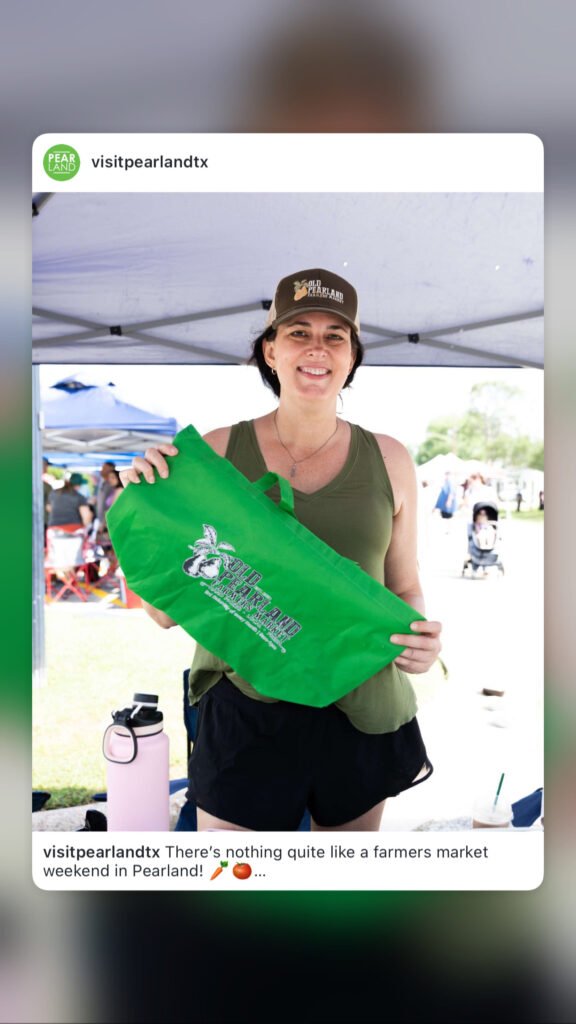
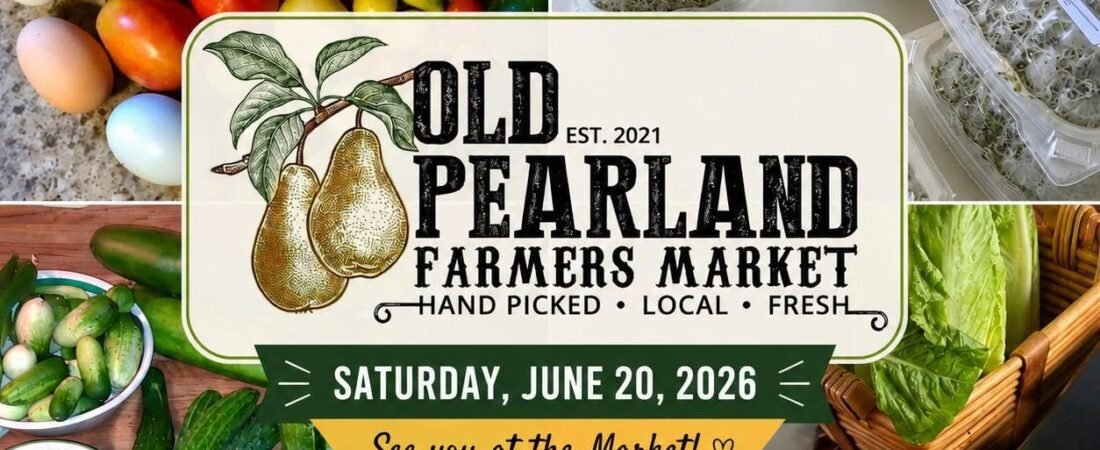
On the third Saturday of each month, Pearlanders anticipate the familiar smell of fresh roasted coffee, the sound of live music, and the steady shuffle of families, strollers, and friends hanging out and visiting their favorite vendors. But the origin story behind Old Pearland Farmers’ Market is unique. The foundation was built by a former counselor with a heart for community looking for a fresh start.
It began with Julie Waguespack’s counseling practice. She had poured herself into her work, only to find herself forced to close everything down. In the quiet that followed, she prayed a simple question: “now what am I supposed to do?”
The answer that came surprised her. It was not another private practice or a new clinical role. It was a farmers’ market. And it launched in October 2021 when people were still isolated and fearful of gathering with others in the wake of COVID. They were also in desperate need of community.
For the first year, she privately called it “the silly farmers’ market” when she talked with family and friends. She struggled to reconcile her professional identity as a therapist with the idea of running a market. She didn’t really know much about farmers’ markets, regulations, or vendor lists. What she did have was a sense that this was what God was asking her to do, and a willingness to move forward even before it made sense.
It quickly turned into action as Julie shared the idea with her friend Layni Cade who immediately came alongside her as a business partner. Layni knew who to talk to at the city, which forms they needed, and how to navigate the practical side of launching something new on public land. Together they met with the City of Pearland’s Parks and Recreation Department to pitch a simple idea: let’s build a true farmers’ market in old town Pearland.
City staff had wanted something like this for years but did not have the staff capacity to launch and manage it. Other people had come forward with ideas but did not follow through. Julie and Layni did. The city said yes.
How a New Market Became a Pearland Staple
Once they had the green light, they did not wait for the perfect calendar date or ideal lead time. They already had a growing list of people interested in being vendors, and they knew that if they delayed, they risked losing that early momentum.
So they picked a date and launched. The very first Old Pearland Farmers’ Market opened with 12 vendors. Every single one of them sold out of their products. The pavilion was packed, and this was right after Covid, masks and all.
By the second month, vendor applications had exploded. The market jumped to 45 vendors almost overnight and hovered around 45 to 50 for the first year. Over time, the market continued to grow. On Julie’s active email list today, there are more than 150 vendors. On a typical market day, about 60 to 70 of them set up under the old town pavilion, and the market has held steady at roughly 60 vendors month after month.
Foot traffic has grown along with the vendor list. The market runs just four hours each month, yet it regularly welcomes more than 2,000 people through the pavilion. Anniversary markets in October are even bigger. One recent anniversary day drew about 3,500 people and 80 to 90 vendors for a holiday-style market.
All of that growth has required more than just event logistics. As the market matured, Julie found herself meeting with city council and permit staff, advocating for updated food permits and clearer regulations that would make it possible for small farms and food producers to participate. What began as her “silly farmers’ market” slowly became a piece of Pearland’s civic infrastructure, with its own voice at the regulatory table.
What You’ll Find on Third Saturday
Old Pearland Farmers’ Market has always been clear about its identity. It is a farmers’ market first, not a craft fair that happens to have a tomato or two. When you walk up from the main parking lot, you typically hear the live music first. Then the smell of freshly roasted coffee hits you.
Near the entrance there is a welcome table where someone greets you, answers questions, and orients you to the layout. Just beyond that, right up front, are the farms. Their placement is intentional. If you come only for eggs, produce, or meat, you can find what you need quickly. Most people, however, end up wandering further and discovering more.
The market typically includes:
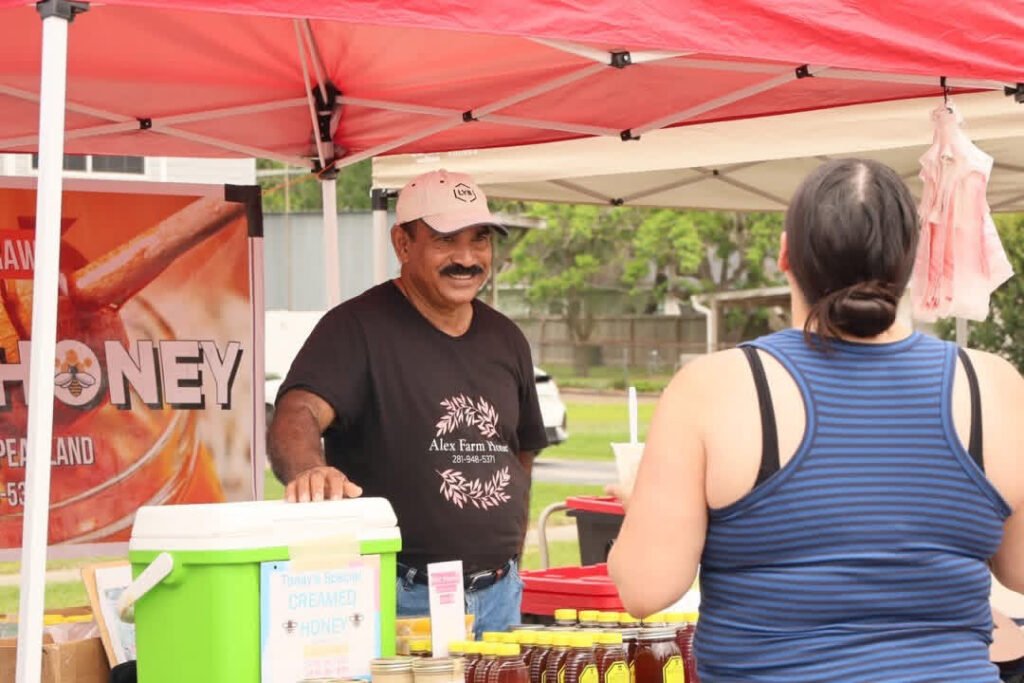
• Fresh eggs and local honey.
• Poultry from a small chicken farm.
• Beef raised by a local rancher.
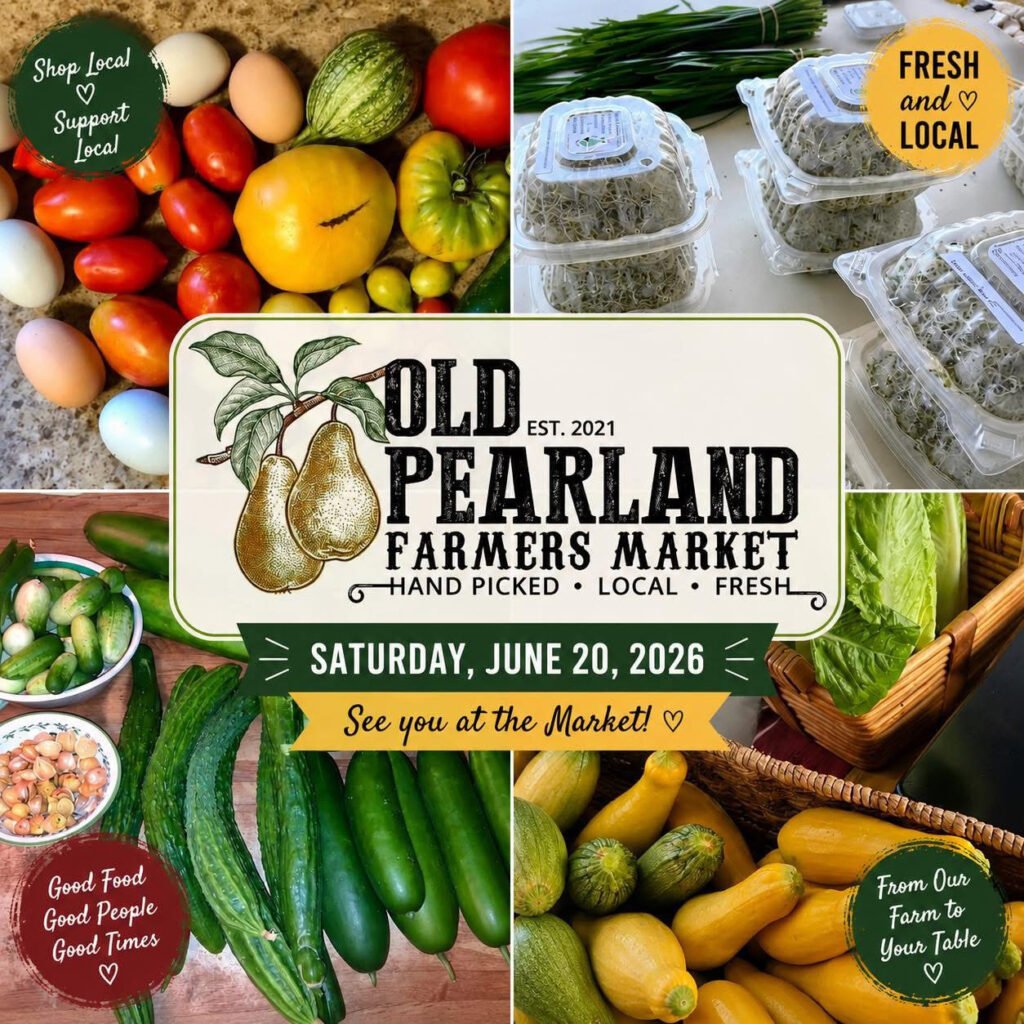
• Seasonal produce harvested right before market day.
• Occasional seafood and shrimp.
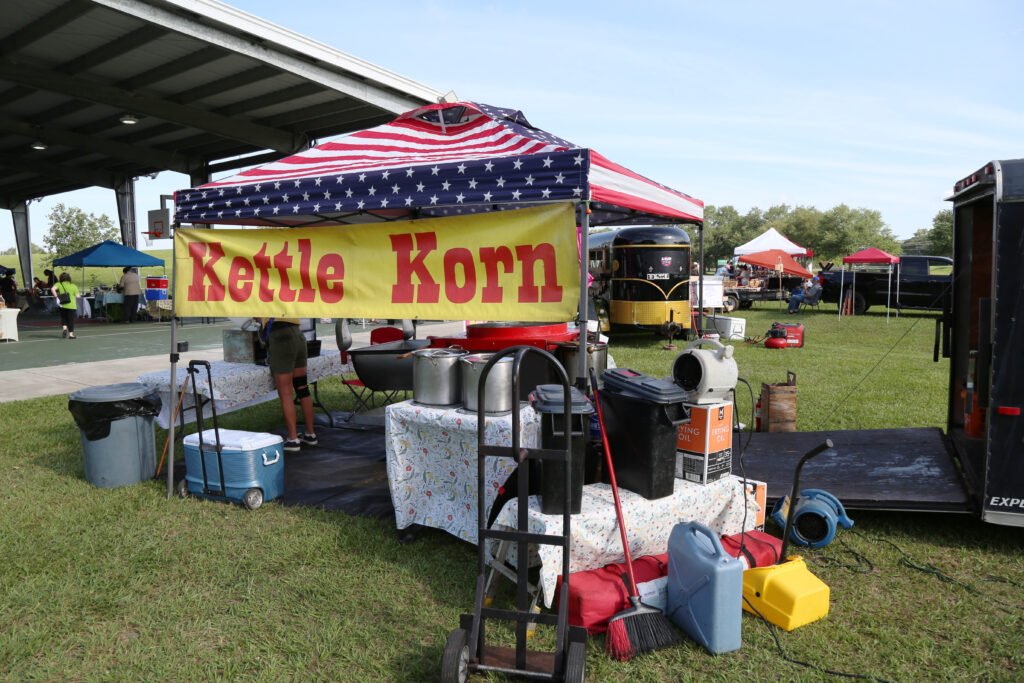
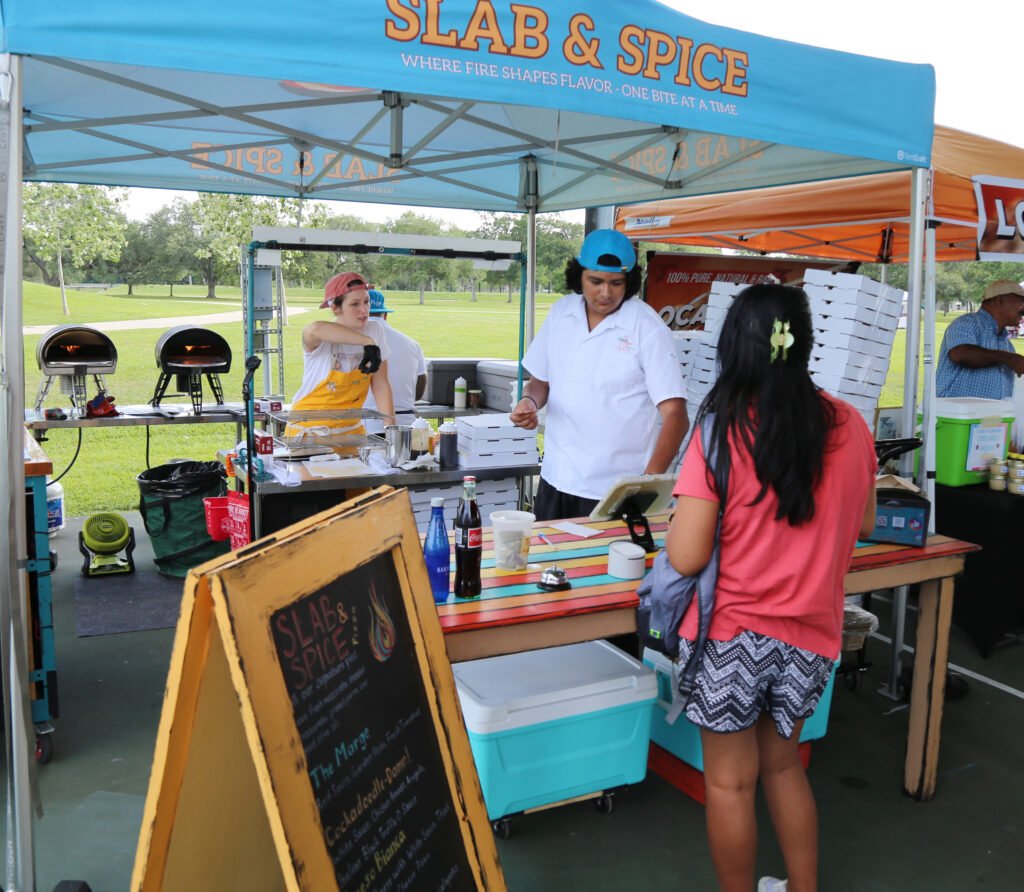
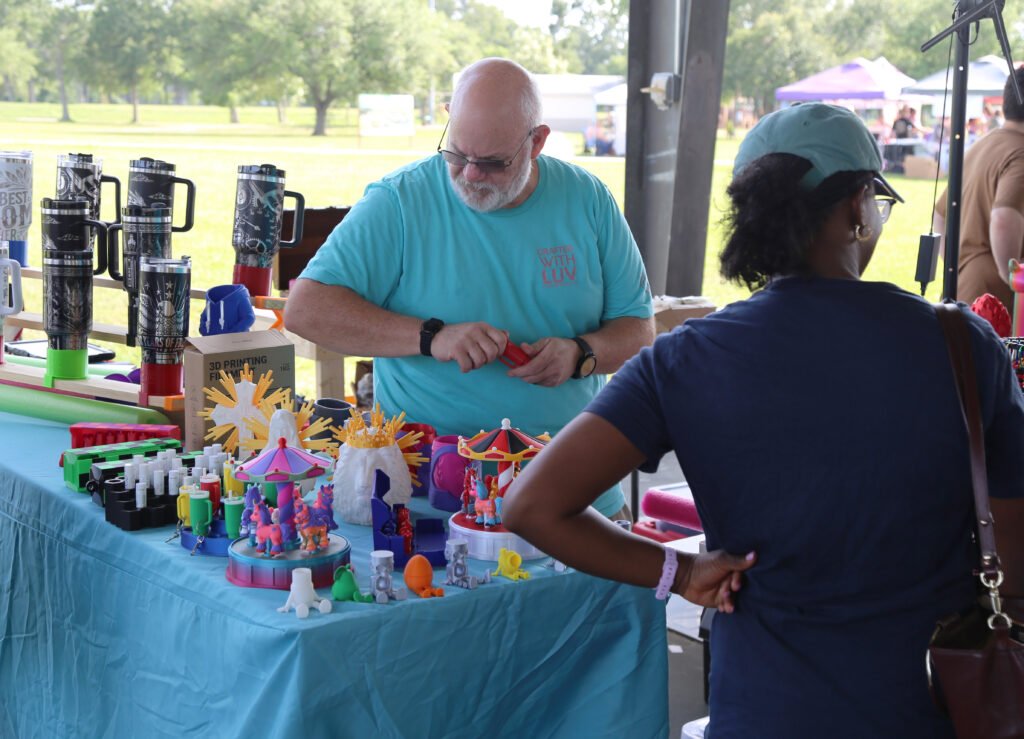
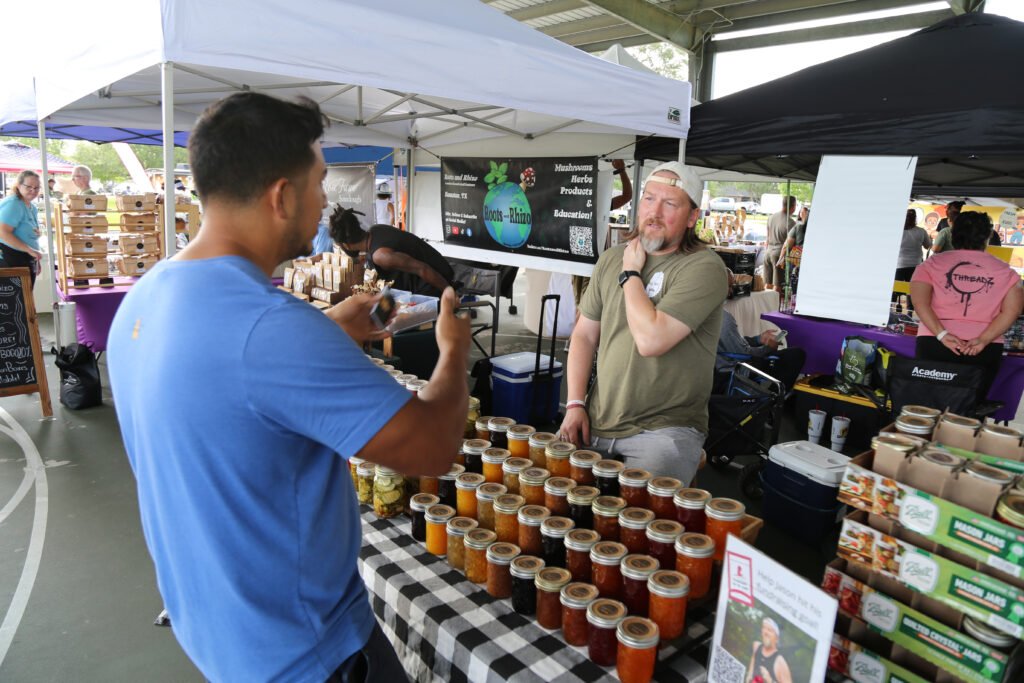
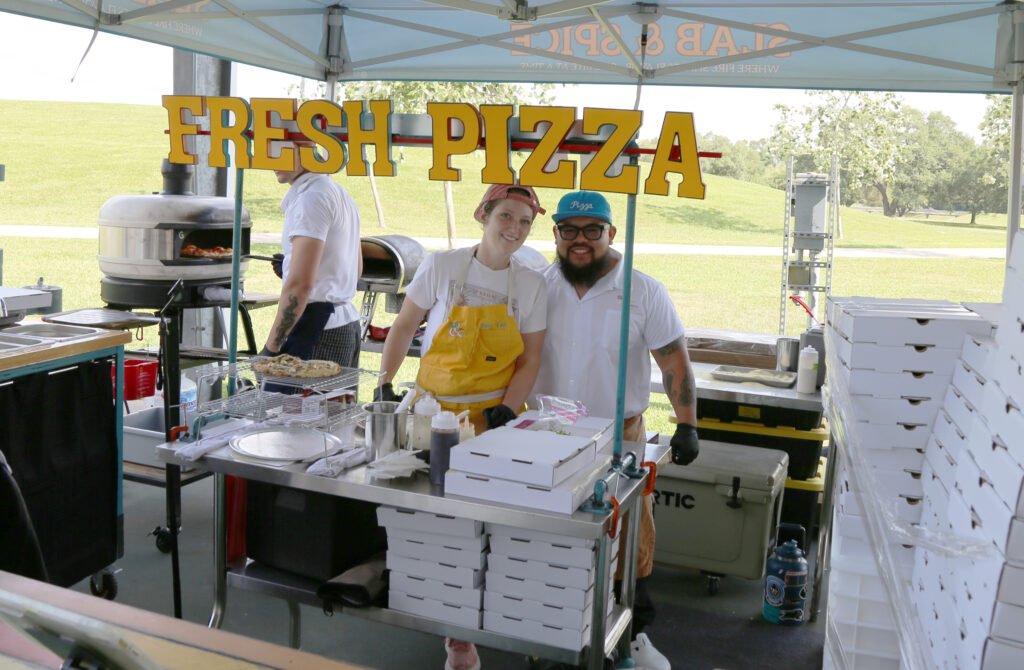
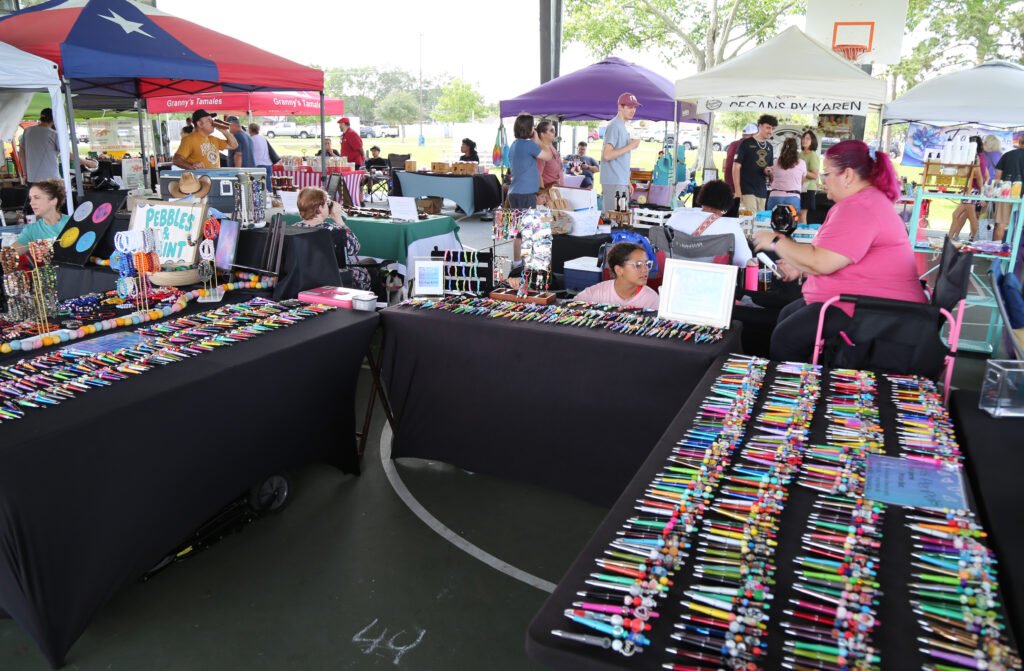
Beyond the farm stands, the market is full of food vendors and artisans. You might find baked goods for your pantry, prepared foods, jams, and a lineup of sweets running from classic chocolate chip cookies to gluten-free muffins, macarons, sugar cookies, and banana bread. There are often artisan items such as cutting boards, aprons, jewelry, and hand-carved wooden kitchen tools.
One example Julie loves to tell involves a woodworker who normally sells carved pieces at his booth. One Christmas, she asked him for simple wooden spoons, one for each household in her large family, engraved with their last names. He did not have that many spoons on hand, so he suggested wooden spatulas instead. When Julie picked them up, they were beautiful, flat-edged spoons perfect for stirring roux. As a Louisiana native, her sister immediately recognized what she had in her hands. Julie posted about the custom spatulas on social media. The vendor sold out of them for the next three months.
Stories like that are common at the market. Many vendors can customize orders or tailor products to a specific family or occasion. For shoppers, the experience is less about grabbing a quick item and more about discovering something you did not know you needed until you see it on a table and hear the story behind it.
More Than a Market: A Space to Slow Down
If you show up as a first-time visitor, your experience starts before you buy anything. You hear music, smell coffee, and see rows of tents and tables tucked under the pavilion, with people moving at an unhurried pace from booth to booth.
Julie has shaped the market as much around community as commerce. Outside the pavilion there are picnic tables where families and friends gather to eat, listen to the music, and take a break. Kids run back and forth between the tables and the open areas.
She keeps a stash of sidewalk chalk and yard games available every month. Children are encouraged to draw all over the pavement, filling the area with colorful doodles by the end of the day. There might be a giant game of Jenga in one corner and a Connect Four game going in another, with parents relaxing at a table nearby while the kids play. Julie often snaps photos of the chalk art before she packs up, because it captures what she loves most about the space: people enjoying themselves together.
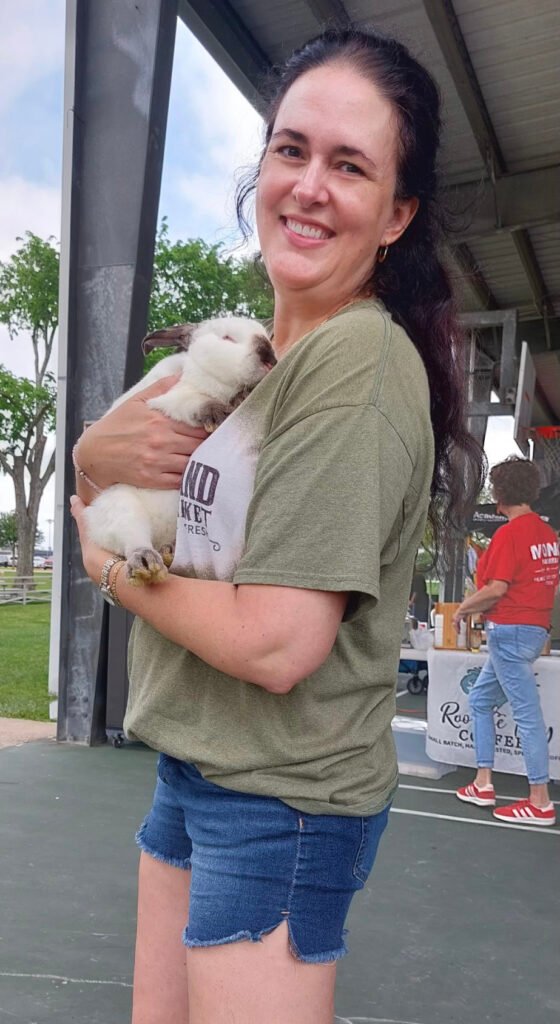
The market typically includes special entertainment or community demonstrations. Over the years, visitors have seen martial arts demonstrations, exercise classes, a petting zoo, musical performances, and even traditional Chinese lion or dragon dances similar to what you see at Lunar New Year celebrations. Julie is constantly looking for ways to incorporate what is happening in Pearland into the market, so you never quite know what extra experience will show up on a given Saturday.
Know the People Who Grow Your Food
It’s not just about what you can buy, but who you talk to. The farms and food vendors are small, often family-run operations. They are not sending representatives or hourly staff. Most of the time, the person behind the table is the same person who planted, harvested, cooked, and packed what you are taking home.
That means you can ask the chicken farmer what they feed their birds, how long the eggs will last in your refrigerator, and why they believe their eggs are different from the ones at the grocery store. You can talk to the rancher about how their cattle are raised, how the meat is processed, and the best way to cook a particular cut you have never tried.
Produce tells the same story. When vegetables are picked right before the market instead of spending weeks in transit, they last longer in the fridge and carry more flavor. If you pick up something unfamiliar, you can ask the farmer how they cook it at home. They are often ready with an easy preparation method and a favorite recipe idea.
The market is intentional about welcoming vendors who bring a diverse array of cultural dishes and flavors that may be new to some shoppers. Most food vendors offer samples, inviting people to try something outside their usual routine.
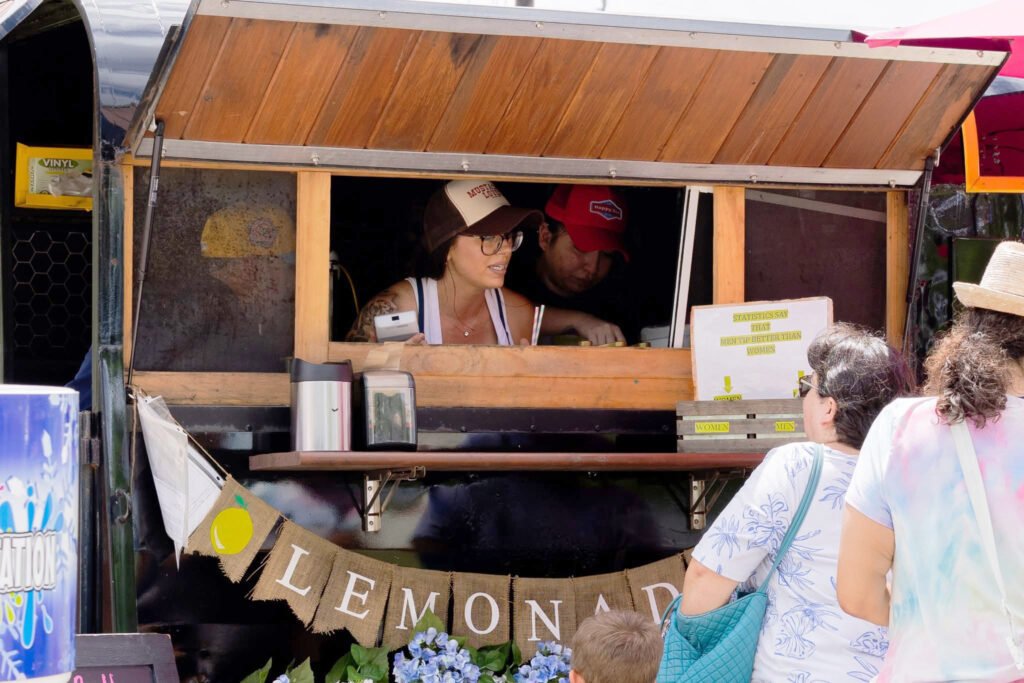
Then there are the offerings that get people talking, like pickle-flavored lemonade piled high with ice and crowned with a full pickle on top. It sounds strange until you see people walking around the market with those cups, laughing as they try something playful and new.
Loyal Vendors Mean Long Wait Lists
Behind the scenes, the application and selection process is deliberate and careful.
Would-be vendors start by visiting the market’s website, where the application form lives alongside detailed food handling and permitting requirements. Selling food to the public is not the same as sharing a batch of cookies with friends at home, and the market provides clear guidance on what is needed, from cottage food rules to farm and processing regulations.
The form itself is short, but the review process is not. The market receives a high volume of applications because it has become such a popular place to vend. On top of that, finding local farms with fresh produce, eggs, meats, and honey can be challenging. There are fewer active farms in and around the city than there used to be, and those relationships are precious.
Julie also manages the mix of vendors with a long view in mind. She does not accept every applicant who meets the legal criteria. If she approved five sourdough bread bakers, for instance, none of them would make enough money, and some would stop coming. Instead, she shapes the lineup so that each vendor has a real chance to succeed, and the overall market offers variety without unnecessary duplication.
That approach means many applicants land on a wait list. When people ask how long they might be waiting, Julie’s honest answer is that it could be a couple of months or a couple of years. Once vendors get a spot, they rarely give it up.
Unlike some markets that require long-term contracts and rigid commitments, Old Pearland Farmers’ Market gives vendors flexibility. Vendors sign up and pay for the specific months they plan to attend rather than being locked into an entire season. That flexibility is part of why they stay, and why the community of vendors feels more like a network of small businesses Julie is trying to care for than a revolving cast of booths.
The Future of the Market
Today, Old Pearland Farmers’ Market stands as a regular monthly rhythm on Pearland’s calendar, typically drawing about 2,000 people and around 60 vendors available for just four hours. It has come a long way from that first 12-vendor launch.
Each year the market highlights its anniversary with a special celebration. October 2026 marks the five-year milestone from their first opening. In recent years, the anniversary has included all-day festival partnerships with Parks and Recreation, complete with movies, trick-or-treating, costumes, and contests layered on top of an expanded marketplace. This year’s plans are in flux, but Julie is clear about one thing: this year they’re going to go big.
Outside of the market itself, she continues to invest in community projects. Recently, she served as one of the organizers for the Pearland Arts and Eats Festival, collaborating directly with city development staff. She also spends a lot of time networking, volunteering, and listening, which often leads to new partnerships and pop-up experiences back at the market. Many of the extra touches at the pavilion start as conversations at another event or meeting.
If you want to know what special activity, demonstration, or feature is lined up for the next market, the best way to keep up is to follow Old Pearland Farmers’ Market on social media. That’s the quickest way to learn about themes, special entertainment, and any new additions to a particular month’s lineup.
Planning Your Visit to Old Pearland Farmers’ Market
If you have never been, it is not hard to picture yourself there. You park, follow the music and coffee, and step into a space that feels like a mix of neighborhood block party and open-air grocery run. You pick up eggs and beef from someone who can tell you the story behind both. You let your kids draw all over the concrete with chalk while you finish your coffee. You try a sample of something you would have scrolled past in an online menu.
Most importantly, you see other Pearlanders doing the same things. Neighbors bump into neighbors. Friends meet up. New families discover old town Pearland for the first time. And somewhere in the middle of it all, a former therapist who once used the phrase “silly farmers’ market” under her breath steps back and appreciates the vibrant community she helped build as she continues quietly making sure the farm booths are front and center, the vendors have what they need, and the market feels like a place everyone belongs.
Connect and learn more at:
Website: https://oldpearlandfarmers.wixsite.com/opfm
Facebook: https://www.facebook.com/OPFM21#